Call: +65 6012 3433 | Whatsapp +65 87792453
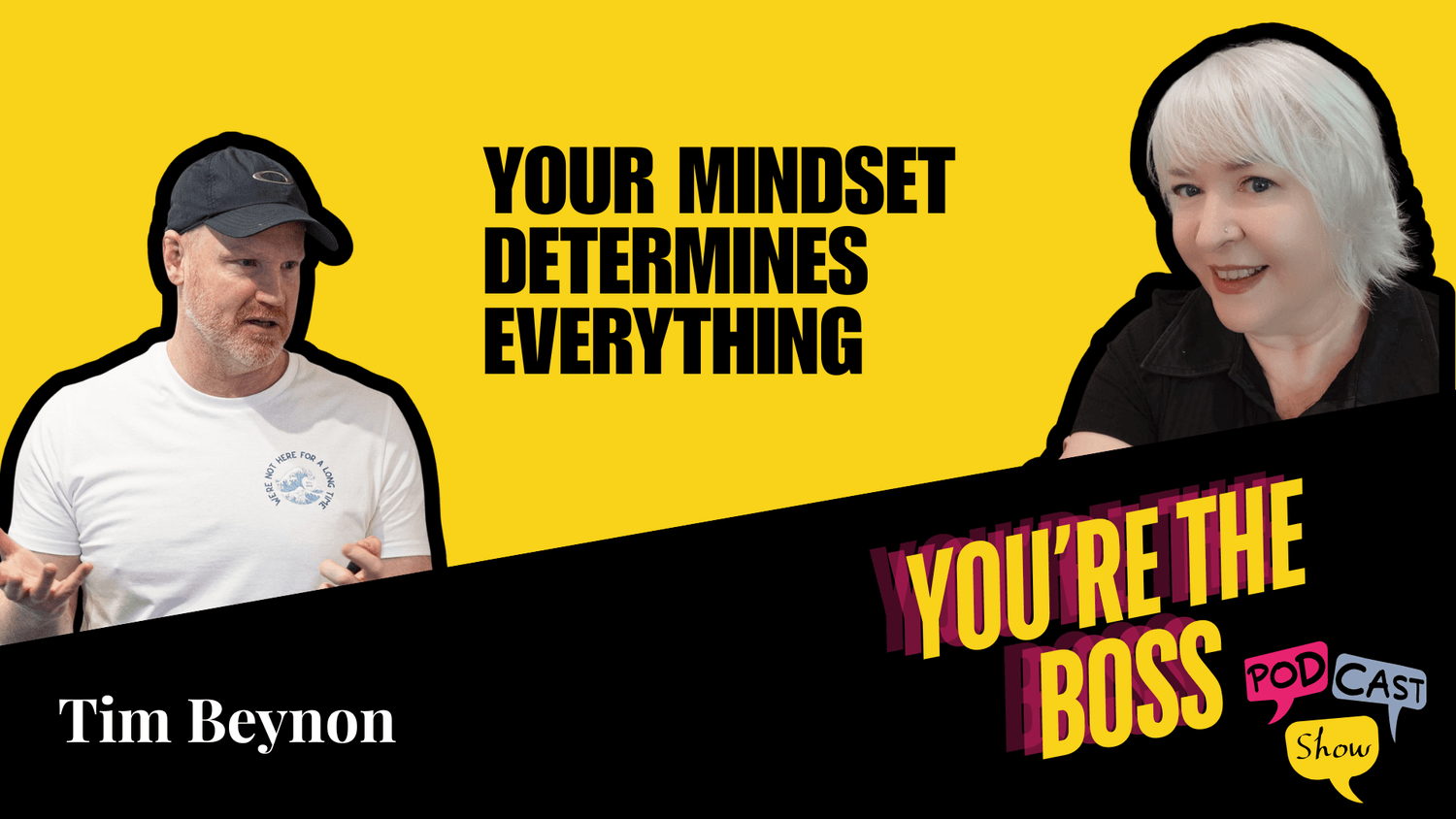
Your Mindset Determines Everything
Click the image above to watch
Ange Dove (00:01)
Okay, welcome to Your The Boss Podcast Show. And today I have a very special guest with me, and he is Tim Bainon. And Tim is the owner of Elite Ladies Kickboxing, Dancing, and Yoga. And he has built one of the fastest-growing community-driven fitness brands in the south of the UK, now serving over 2,500 members and generating 2.5 million in annual sales.
All through in person membership based business. So, Tim, welcome to the podcast.
Tim Beynon (00:39)
Thanks for having me, Ang. I'm excited to be here.
Ange Dove (00:42)
Yeah. We knew this is gonna be a good interview today because we're both talkers, so
Tim Beynon (00:47)
We we both like to talk. We're gonna have fun.
Ange Dove (00:53)
So tell me a little bit about first of all, because obviously this is you're the boss, so we're looking at things from a business angle and how people start businesses. So what was your journey? How did you end up running your own business?
Tim Beynon (01:07)
Such a good question. And I was just thinking about that because we were talking just before we came on, right? And I thinking, where did I start with running a business? Because it's all just such a wild journey. And for your listeners, viewers who are about to get into this or have just started, like strap in, it's gonna be wild and it's gonna kind of go a bit crazy. But I just want to say off the bat, if you feel a compulsion, if there's an impulse, a desire to go build a business, then please go do it. Whatever it takes, go and follow that dream and pursue it.
Tim Beynon (01:36)
But just know kind of what's coming down the road. Perfect. I knew we'd realize. I knew we'd realize.
Ange Dove (01:38)
That's what I always say. Yeah, that's what I always say. If you're even thinking, yeah. I also say if you're even thinking about it, it means you've got it in you, right? Because if if you're not destined to run a business, it wouldn't even cross your mind anyway, right? So I think.
Tim Beynon (01:49)
Exactly.
Tim Beynon (01:54)
Exactly that. I I feel like that impulse of desire is put there by something, someone, whatever your belief system doesn't matter. I've I feel like that's come up inside you for a reason. And I just feel like it's wild to get to the end of life and not go and explore that would be insane. So if you take nothing else from this podcast interview, listeners, please just go do it, go start it, go follow the dream, go have fun. And just know what's in store. It's kind of like parenting, right? If you are a parent.
Ange Dove (02:05)
Yeah.
Ange Dove (02:10)
Yeah. If you have it in your
Ange Dove (02:22)
Hmm.
Tim Beynon (02:22)
You know that if someone shared with you in depth all the challenging parts of being a parent, you might choose not to go right. And this is kind of feels the same, but you would never have it any other way. Come on.
Ange Dove (02:33)
I could do one better, it would be just having a baby in the first place. And giving birth would be another one. If you knew what was coming down.
Tim Beynon (02:41)
Yeah, I mean I I can't speak to that. I've I've watched it twice, but I didn't actually have to go through it, thank the Lord. So yeah I do not envy you fabulous women for that one. so my journey, so
Ange Dove (02:48)
Yeah.
Ange Dove (02:55)
Okay. So basically you're saying, yeah, go in with your eyes open, right? Know that th there's things to expect, right? But yeah, so how did it start for you?
Tim Beynon (03:05)
Yeah, so I I think my first class, I'm just thinking right back to the start. My very first martial arts class, that's my thing. We run a dance and yoga business. I always feel the need to tell people I'm not a dance instructor and I'm not a yoga instructor. In case you ever see me dance, because you'd think I'm lying about the business. I thankfully have got great people that do the teaching. But I'm more the martial arts side. I can kick and punch and all that good stuff, right? I fell in love with martial arts thirty-three years ago, and then about
Ange Dove (03:13)
Mm.
Ange Dove (03:26)
Right. Nice. Nice.
Tim Beynon (03:31)
Five, six years after I'd fallen in love with it, I was like 19, something like that. I opened my first class. So effectively, that would kind of be my first business, which is why I had to think, because it didn't feel like a business. We were terrible at everything. It was me and my friends, deeply passionate about the thing we were learning, this self-defense system. And our instructor said, Yes, we can go and teach it. So we opened up this class, and I I literally just did a note out to some of my clients recently about this. I said, Look.
Ange Dove (03:37)
Yeah.
Ange Dove (03:44)
Right.
Ange Dove (03:51)
Yeah.
Ange Dove (03:55)
okay.
Tim Beynon (04:00)
If you don't have a budget and you're just starting, just shout from the freaking rooftops about the thing that it is you are trying to provide. You've got 50, 100, 200, you've got like 300 contacts in your phone. Just go and message them all. Say, Hey, I know we haven't spoken for a while. This is a bit weird and out of the blue, but I'm starting this thing. I'm opening this business. Like, do you know anyone or would you be interested? Go and email everyone. Go and
Ange Dove (04:07)
Nice, nice.
Tim Beynon (04:23)
post on Facebook and Insta every single day. Like walk down the street and tell every single person you bump into that you're doing this thing. And that was kind of how we did it. And I shouted, Yeah, do you know I think people overthink marketing sometimes, right, Ange? You get it. You're in business. And obviously at the size of my business, we that that tactic alone kind of won't work for us, but we we have to do paid ads and all the other bits. But I think in the early days, just shout. Like tell everybody what you're doing.
Ange Dove (04:32)
Is such good advice. Yeah.
Ange Dove (04:39)
Yeah.
Ange Dove (04:47)
Yeah, yeah. Yeah, just to get started, right? Just to get started. Yeah. Yeah. Yeah. Yeah.
Tim Beynon (04:52)
And get some business, right? You'll get some business. Yeah. And so we opened that class. That didn't last too long. We didn't know what we were doing. We didn't know how to sign people up to the business. We we didn't know how to do good customer care apart from teaching them how to beat each other up. We thought that was the whole customer service bag and and then we kind of came out with that. Yeah, that's it. And then I I because I loved martial arts so much, I think, well, I really, really want to teach martial arts for a living, but I don't understand anything about this whole business thing.
Ange Dove (05:08)
That's the point.
Tim Beynon (05:19)
So I went and worked. There was a guy in my local town, and he had he had about 800 members across a couple of full time centers and he had all these little satellite schools, they called them. And clearly we're doing about it. He was driving around town in his Porsche, and then later his Ferrari. I thought, well, he's obviously figured the business bit out. Let me go and see if I can work for him. So I went and worked for him for six, seven months just to learn the fundamentals. Realized, okay. So if I say these things to someone when they come and try a class, they're gonna sign up. Okay, that's
Ange Dove (05:43)
Okay. Right.
Tim Beynon (05:49)
Interesting to know and and I can do this and I can do right, brilliant. So I kind of took his model and then I went on this wonderful journey, Ange. And this kind of alludes to what I was saying at the start, and you'll know this because you've built businesses and you get it. I went on this fab journey then of I opened my first business and it went really well for three years and then I crashed it in the following like 18 months. And that was 18 years ago. I walked away with a hundred grand English pounds of debt and my wife.
Ange Dove (06:03)
Yeah.
Tim Beynon (06:17)
And my car and my house all gone. Like it was it was a full crash. And then just before that, I'd opened a martial arts business in Australia as well. And I'd kind of then my visa ran out and I had to come home and I to close that down. So, point being, it was like it was like fourth or fifth go that we finally started to get it right. And I hear this story all the time from my mentors. And again, just a shout to your fabulous listeners and viewers.
Ange Dove (06:17)
All right.
yeah.
Tim Beynon (06:43)
It doesn't always go right first time. It sometimes it's like it takes three, four attempts and you gotta iterate and you gotta figure stuff out. And I've got a very dear friend of mine who's just trying to launch a business at the moment and it's it's food based. He's come up with this amazing chimmy shake thing and I love it. And and it all screwed up in the first iteration and these messages. I was like, mate, don't worry about it. That's normal. It's like third or fourth time you'll get it right and it'll be perfect. It's like just accept that maybe two, three times.
Ange Dove (06:46)
Yeah.
Ange Dove (06:51)
Yeah. Yeah.
Tim Beynon (07:12)
You're gonna have some challenges and you have to figure stuff out. And then
Ange Dove (07:13)
Yeah. 'Cause you you have to yeah, you have to learn the ropes, right? If you've never run a business before, you don't know you you you know, you you have to actually I think fail to learn for sure, right? Yeah.
Tim Beynon (07:25)
I couldn't agree more, yeah. And I think the I think what business does, I did a podcast a couple of weeks ago and the guy asked me, he said, What's the toughest thing about running a business? And I really had to think for a while. I'd love to hear your answer as well and see if it aligns with mine or if it's something different. But I had to think for a while because it it caught me off guard when he asked. I thought interesting. And what it I concluded in the end, and I stand by this answer for me personally, was it's facing all your own stupid stuff inside of you. It's all your insecurities and doubts and
Fears and terrible habits and perspectives on the world that don't serve you, that stuff gets such a spotlight shone on it. Like you can't hide. If you want to build a business, that spotlight gets shone, and you either run away, no business, or you have to stand in that spotlight and go, Okay, this is me, this is my faults and my fears and my doubts and all these insecurities. Like, I gotta deal with it. And I think that's the toughest part of business.
Ange Dove (07:58)
Yeah.
Yeah.
Ange Dove (08:17)
It's the whole mindset thing, right? Your mindset.
Tim Beynon (08:21)
Agreed, but I think it's the best part of business as well, right? Do you find that?
Ange Dove (08:22)
Sure, definitely.
Yeah. Yeah. I think for me it's like just even from one day one can be one hour to the next. It doesn't have to be a day. It's like from one hour to the next, your brain can just go like 180 degrees, right? Yeah, I I could do this to complete failure. So I think yeah, just being able to when things don't go right, ha being able to control your thinking, your mindset.
And knowing that yeah, you can get through this, you can get through this. And it's it is all perspective, it's all mindset, it's all inside here. It's not external most of the time, it's inside here. And then and then something goes right and it's like, Yeah, okay, now I'm fine, right? And it's like, Well, why was I freaking out an hour ago? It's even that kind of thing.
Tim Beynon (09:08)
Hundred percent agree.
Tim Beynon (09:17)
Then a month later you get boom, you get another stomach punch a month later and you're back in
Ange Dove (09:22)
Whew.
Tim Beynon (09:24)
Are we doing a good job of convincing your listeners and viewers that they want to start a business? So here's here's the flip side.
Ange Dove (09:30)
No, I think this is this is I think this is part of the thing like you said at the beginning of just know what you're letting yourself in for. So you've got to be prepared. You've got to know that it's not gonna be a bed of roses, right? It takes work, it takes resilience, it takes mindset, it's not something that's all just gonna just click into place, right? And and it's the reason why not everybody runs a business, because it is hard. Right? It is hard. Yeah.
Tim Beynon (09:57)
Except, yeah, yeah. Not everyone, not everyone's cut out for, I don't think, deep down. Yeah, I think you've got to be thick skinned and resilient and tenacious and dogged and determined and get through all that. And and I think the flip side though, Angela, and I'm sure you'll resonate and agree with this, is the beauty of that is off the charts. And it's why I said at the start, if you're thinking about starting a business we're kind of just at that early phase, like please go for it. Because
Ange Dove (10:01)
Yeah. Yeah.
Yeah.
Yeah.
Ange Dove (10:19)
Yeah. Yeah.
Tim Beynon (10:21)
I don't think I I used to say this, Angela. I used to say to people all the time for years, I used to say there's two things that will make you grow as a person indefinitely is being a parent and running a business. But then I've restructured that over recent years because well actually no, because I see some parents that are terrible parents and they haven't grown at all. So you can be a parent and not grow, right? You can still be a terrible person and parent. But business, I think it's literally impossible to scale and build a business without growing as a person.
Ange Dove (10:32)
Mm, mm.
Tim Beynon (10:49)
Because as the owner, you're always the ceiling, you're always the bottleneck. Like the business will only be able to expand as far as you've expanded as a human being. Like you've evolved and you've grown and you've let go of stuff. So I think that's the beauty of running a business. I think it's the one space that forces you to grow if you want to continue to stay in and build the business. I think it's a beautiful journey.
Ange Dove (10:50)
Yes. If you don't grow, yeah.
Ange Dove (10:59)
Yes. Yeah.
Ange Dove (11:08)
Yeah.
Ange Dove (11:12)
Yeah. And I think I yeah, I think as well is like this this whole idea as if you're as you're building a business, you you get a certain level of comfort and then the next stage of growth happens and then you're you're out of your comfort zone again and you have to get a comfortable being there and then you're out of your comfort zone. So it's like things like for me, well I started my business, I work from home.
Right. Then I when I got my first staff, I couldn't work from home because in those days you couldn't do remote work. I'd have to get an office. So then like all at once I had to get an office and hire staff at the same time. And then my thinking was, my god, now I've got to guarantee that I'm gonna pay this person and I'm gonna make the rent. Right. And so that was a huge change. But the amount that I was paying in those days, when I look back at it afterwards, it was like I would give anything just to have those as my expenses now.
'Cause 'cause then it grows and grows and grows and your expenses go up and yeah. Yeah. Yeah. Yeah.
Tim Beynon (12:07)
Yeah, yeah. And taxes, you get taxed more. Again, we're not helping your we're not helping your listeners out.
Tim Beynon (12:18)
I love it. I promise. It's worth a journey. so just to finish your question, Anj, I knew I knew me and you could talk and get on so well. Just to finish your question, though. So I then yeah, I then went and helped a guy build he he was kind of he'd stalled out a certain Ashley. We got chat and I helped him build his business. We went from 700 members to nearly 3,000 in about three and a half, four years. And then I sort of just took everything I kind of took from that journey, everything I'd learned from the failures and the wins before that, and started this brand.
Ange Dove (12:24)
Ha ha ha.
Ange Dove (12:41)
Right.
Ange Dove (12:48)
Mm. Mm.
Tim Beynon (12:48)
seven and a half years ago now. and it didn't start as ladies only. I was opening kids' classes and I was doing mixed adult self-defense, but I opened a ladies' kickboxing class knowing that it'd just be quite an easy class to fill and it'd probably be good fun to teach. And I'll just give it a go. And then I fell in love with it. And then we built we for the first four years ladies' kickboxing and then we added dance and then we've just added yoga. So that's kind of that's the short version of how I've got into business.
Ange Dove (12:52)
Mm-hmm.
Ange Dove (13:05)
Mm. Okay.
Ange Dove (13:15)
Right. Well that that's interesting as well because it's like you can only you can only decide who your ideal customers are really by going on that journey and trying things out, right? So you didn't know when you started that it was going to be a women's place, right? but then when you listen to the demand and then you found out what you personally liked as well about doing the business, then you niche down to something that
Tim Beynon (13:35)
Right.
Ange Dove (13:43)
you're comfortable with, right? But it's not something you can you can necessarily plan. Right.
Tim Beynon (13:51)
Yeah, agreed. Yeah. And I think you said a couple of things there that I want to highlight. I think niching, you know, there's there's a lot of talk of getting really niched in business nowadays, and for good reason. Yeah, for really good reason. And I think the big part of our success, interestingly, our growth rate has slowed down a chunk because we've now got about nine different things because we got juniors kickboxing and teens kickboxing and ladies' yoga.
Ange Dove (13:53)
Yeah.
Ange Dove (14:01)
Uh-huh.
Tim Beynon (14:14)
Now we got all these things, it it has actually hamstrung our growth. I have no doubt if we had just stayed with Ladies Kitboxing and that's all we stayed with, I think we'd probably be on five, six thousand members by now. But we spread our focus. So I think niching really, really good way to play the game. Like get really specialist. That thing you do is very often a good idea rather than scattering focus everywhere. And then I think you said about you sort of
Ange Dove (14:22)
Mm. Mm.
Okay. Okay.
Ange Dove (14:31)
Mm. Yeah.
Yeah.
Ange Dove (14:40)
'Cause I I did that. Yeah. Go on.
Tim Beynon (14:43)
Go on. I was just gonna say one more thing you said that triggered a thought about just choosing the right business path. And it's a bit unromantic. The romantic version is I taught the ladies' class, fell head over heels in love with it. The energy, the vibe. I'd been used to training around men all my life, and there's a lot of ego and testosterone in the room and aggression. And and I just loved when I taught these women like this is like night and day. It's just such a beautiful energy in this room. And funny story about it, in martial arts, I grew up in like quite hardcore martial arts. If you
Ange Dove (15:00)
Yeah.
Tim Beynon (15:13)
You talk out of line, you're doing a hundred push-ups on your knuckles till you bleed. And I used to dislocate things and I dislocated my knees and I'd strap it up and take some painkillers and I'd get back on and train. You know, really stupid, over-the-top, I'm a tough guy sort of stuff. And so if someone was injured, you wouldn't they wouldn't get any attention from anyone. People would go, well, you're gonna sort yourself out. We're gonna carry on over here. And then I opened this lady's kitboxing class and someone would cry for whatever reason.
Ange Dove (15:17)
Ha ha ha.
Ange Dove (15:29)
Right.
Tim Beynon (15:40)
And the whole class would stop and they'd all walk over to this woman and surround her and look after her and make sure she's okay. And I'm stood at the front of the class trying to teach. So I I I don't understand this concept. Like normally we just leave them on the side, they'll figure it out. We carry it on. So it was that's the romantic and true version. That was kind of like what pulled me into the ladies' side. But the business decision I made was really simple and a bit less romantic, but
Ange Dove (16:04)
Okay.
Tim Beynon (16:08)
I ran ads for ladies' kickboxing and I ran almost an identical ad for mixed adults kickboxing. Like the you the ad copy, the imagery was all very, very similar, as close as we could get it. I got ten times better return for every pound spent on the ad for the ladies' kitboxing than I did the mixed adults class. And so as a business decision, like no brainer, why on earth would we spend ten times the amount? Because I don't care who I teach. I just want to teach people martial arts because I love it. So I don't care whether they're kids, women, men
Ange Dove (16:15)
Mm-hmm.
Ange Dove (16:24)
Right. Okay.
Yeah.
Tim Beynon (16:37)
Doesn't matter to me. And so it was a simple business decision. Anyway, I just wanted to share that before that went out of my head, Ange, I think you were gonna say something.
Ange Dove (16:42)
So so was that Facebook then you were doing that on? Was it Facebook ads or Google?
Tim Beynon (16:50)
For for this business, yeah, Facebook meta. We're we're big on Facebook ads. Yeah, we've not really played with anything else. I
Ange Dove (16:53)
Facebook, yeah. Okay. All right. So they Facebook just decided that okay. 'Cause it it depends on your audience as well, w what the cost of your ads are gonna be. So obviously women are cheaper in martial arts than men then, right?
Tim Beynon (17:04)
Yeah, I I think getting men in men seem to take a little bit more effort to get in. Ladies kitboxing, I think we were lucky with the timing. It was is it was starting to become a bit of a thing seven years ago and we caught the timing of it well. You know, now we just work hard on ads and and getting people in.
Ange Dove (17:11)
Yeah.
Right.
Yeah.
Yeah. Yeah. So so this thing on niching I was I was gonna say, I s when I started my business it was purely copywriting, right? And then over time we grew it, we grew it, and then it became a full marketing agency. So we had we we had design in house, we had web development and everything was going on. Then after a while we decided, no, we're just like every other agency in Singapore, right? And there's
Tim Beynon (17:32)
I remember you saying that.
Ange Dove (17:49)
thousands of them. It's tiny little island is just jam-packed with design agencies. So then it was like, okay, well now there's no differentiator. We're just the same as every other agency that there is in Singapore. So then we decided to bring it back to just copywriting. So then we've just focused on that and that was a lot better. Until
Tim Beynon (18:05)
Interesting. What happened when you bought when you leaked back in, what happened?
Ange Dove (18:12)
When what, sorry?
Tim Beynon (18:13)
When you niched back in, when you went back to just copywriting, what happened? Until AI came and ruined the business of course, but did it go back up? Yeah. I mean I love AI, but I shouldn't say that to you, right?
Ange Dove (18:16)
Yeah. So then it we it was Yeah, until Chat GPT came and killed the whole thing. Yeah.
Yeah, it was No, yeah, I mean it that's been a journey for me, for sure. It's like I hated AI at the very beginning, but now I love it. I just love it. And I teach it as well.
Tim Beynon (18:33)
Yeah.
I bet. Terrify terrifying when it's about to literally take your business, right? That's a scary thing to look at, isn't it?
Ange Dove (18:41)
yeah, we were the first the first victims, I would say, of it, right? was the copywriters for sure. but yeah, it it got easier when we when we niche down, when we niche back down, it got easier because it's easier to mark to market and you've got one message to one group of people kind of thing and you're just saying one thing. so that's easier in terms of marketing as well. But yeah, until ChatGP takes it away.
Tim Beynon (18:49)
I love that. It will be me.
Tim Beynon (19:04)
I agree. And I'd reiterate that for your listeners as well. Again, whatever business they're in, the the biggest fallacy with business owners, and we all go through it, you probably went through this, Angela, I'm sure. And I've been through it plenty of times. I did it recently to myself like an idiot, even though I know better. And one of the biggest challenges we face is the lady in the red dress syndrome or the shiny object syndrome, where we we do something to a certain degree. And it it's really weird how we do it, because we get to a level where like
Ange Dove (19:11)
Yeah.
Tim Beynon (19:34)
We're not even got that far in, but we've got some modicum of success. We've just started making money. And then for whatever reason, maybe it's because we think we're untouchable and we can do anything now, or this, or this is just boring now. Cause building business can be boring because you've just got to do the same fundamentals over and over. And we go and start looking at all this other shiny object stuff over here. And invariably, I've seen I've seen worst case of this so many times that and I've I've
Ange Dove (19:48)
Yeah.
Ange Dove (19:51)
Uh-huh.
Ange Dove (19:56)
Yep.
Tim Beynon (20:02)
Of almost done this to myself a few times where you've got this business making money and it's doing okay. And actually, if you just put all your time and energy here, you could double, triple, quadruple that business quite quickly and start making a lot more money and have a lot more fun. But we get sidetracked, we go and look at all these things over here and get excited by shiny objects for other businesses. So we go and put our time and energy over here. But this this is a less this is kind of a point I really want to give your listeners because they're kind of like you said, most of them are new to this. Is we tell ourselves an absolute fabrication.
Ange Dove (20:09)
Mm, yes. Yeah.
Ange Dove (20:19)
Yes.
Tim Beynon (20:31)
That we can do both. And it is a myth. You cannot, under any circumstances, run both of those businesses well if you're trying to CEO and run two of them. It just doesn't work. And unbelievably, sometimes people get into three or four. Once you've got this to like multi-millions and your whole team's running it, and you don't even need to CEO it, yeah, of course. Go play over here on something else. But until then, stick with that. Because you go over here.
Ange Dove (20:40)
Yeah. It doesn't wait. You're right. Yeah.
Ange Dove (20:53)
Exactly. Exactly.
Tim Beynon (20:57)
Then what I've seen, the worst case scenario is this thing not only drags all of your attention, it starts taking all the resources out of this business. Because also, this business is making some money, you know, 10 grand a month, 100 grand a month, million a month, wherever you're at in business. And then you start take stealing all the profit and resources from here to put into this business because this business kind of is not profitable yet. And potentially, and I've seen worst case, you end up losing both. So so again, I've that was a I'm glad that came up.
Ange Dove (21:06)
Mm.
Yeah.
Ange Dove (21:16)
Yes. But yeah.
Tim Beynon (21:26)
That's not normally something I talk about, but I think good lesson. Build the thing. I'd say get get the thing to like
Ange Dove (21:28)
Yes. That is that is very true. Definitely focus on one thing, right?
Tim Beynon (21:34)
You've got it. Get it to like five million bucks a year before you start thinking of going and trying to run other like show that you can break through those first couple of ceilings, which I think in my experience I call swamp one is like at the end of the point where you where it's just you. So like you're doing everything as the business owner. Like you've got no team, no support, no way, you do everything. And then you hit that ceiling. I call that swamp one. You just hit that limit. You can't do any more. You maybe you've got to fifty hundred, two hundred grand a year, whatever, but you're kind stuck there. And then
Ange Dove (21:38)
Yeah.
Ange Dove (21:50)
Yeah. Mm-hmm.
Tim Beynon (22:04)
Then we start bringing team in, of course, and we start trying to delegate and give people things. And then swamp two for me is where the owner then won't let go. And they're still they've got team in, but they're not letting them take control and have autonomy and leadership in these areas. So they're they're kind of sticking and controlling. So I think as a business owner, we've got to like get through at least get through those first two phases and then get to the at least like a two, three billion. Yeah, a hundred percent. And I think that's why most people go to the shiny object is because
Ange Dove (22:17)
Okay. Right.
Ange Dove (22:25)
Yeah. Learn how to do it. Learn how to run the whole business first. Yeah. Definitely. Definitely.
Tim Beynon (22:33)
This one gets difficult or boring or tiresome and why they end up switching up again.
Ange Dove (22:36)
Yeah. Yeah.
Yeah, I I was speaking to a guy on the podcast a few weeks ago and he actually made that exact mistake where he started more or less at the same time, I think three different businesses thinking he could manage them all. And then realized very quickly that and it the same thing is that the whole thing collapsed because he couldn't focus on one over the other. And and you're right as well that the if one that is doing okay is then funding the ones that aren't and would have normally just died if they hadn't been helped.
Right. So yeah, definitely focus, don't do too much, focus. And and I think as well, for me as well, it was a case of I got into this this thing of you have to grow, you have to grow, you have to grow. So it's constantly grow, grow, grow until I got to the point where I just remember standing in my office one day and just like, why am I doing this? Why am I doing this? I'm killing myself here, right? And it's like I didn't plan this, I did not.
Tim Beynon (23:10)
Yeah.
Ange Dove (23:39)
I didn't want this size of business, right? I just then I started to sort of take things back down because it got to the point where it's like, what actually is it that I want? What kind of life do I want to live?
And I had never really considered this before. I just just I just there was no plan really. It just grew and grew and grew. And then but I'd never actually decided for myself what did I want my life to be like? What, you know, and it was just the business was at this point just consuming.
me completely. Everything I was doing was if I was awake, it was on the business. I didn't have any balance in my life at all. So I think you've got to go in at the beginning, build the business around what you want, not let the business control you.
Tim Beynon (24:25)
Such a good point. Here's a question for you, Angela. It's a really good topic. This, I like this. Do you think it's necessary for a business owner to have that experience to get the lesson? Or could they be coachable to avoid it? Do you know what I mean?
Ange Dove (24:29)
Hmm.
Ange Dove (24:42)
I mm I think they can be coachable to avoid it. If if someone had told me at the beginning, right, you've got to plan this out and just decide what do you want? Right. What what is it that if somebody had asked me the question, what do you want? Then maybe I'd have had more direction. Right. I remember with one one coaching student one time. I thought she was coming. We did a one-day VIP thing where she'd come in and she was gonna spend the whole day with me.
Tim Beynon (24:59)
I get ya. Yeah, a hundred four.
Ange Dove (25:09)
And she came in and I thought we were going to deal with her accounting business. And so at the very first question I asked her was, What is it that you really want? And then she gave me a completely different answer that was no relation to her her accounting business whatsoever. And it's like, Okay, let's yeah, let's start a different conversation here. So we ended up actually planning out a completely different business for her, and then the rest of the day.
Tim Beynon (25:23)
Like very different conversation, yeah.
Ange Dove (25:37)
working out how to automate the processes in her accounting business so she didn't have to be there so much so she could do the other one. Right. So it was still yeah that question of what is it you really want to do, right?
Tim Beynon (25:45)
Love it. Love it.
Yeah. Well interesting. Here's here's a little here's a little I don't know qu I was gonna say technique, but a question I ask, which is exactly what you said. But I love asking this and I tell my team this all the time to always be asking regularly, what do I really, really, really, really want? And I always laugh at them. I was like, you gotta get the four really, it's not three, it's not two, it's not one. You gotta get that fourth really. And for me personally, and and most people I share this with, they kind of feel it. So if your listeners just want to do it now and just feel it.
Ange Dove (25:56)
Mm. Mm.
Tim Beynon (26:19)
is just literally close your eyes and go, what do I really, really, really, really want? And that fourth really just seems to go a bit deeper. It's like, because you ask someone, don't you get this and you ask someone, what are your goals? I've been to a million and one seminars where I have Tony Robbins and flown all over the world and all these things and you do the goal setting workshops. And it's just all I'd love to play piano and speak French. Or it's have all this top of mind kind of gump that isn't really that important. And so I find like when I go really, really
Ange Dove (26:25)
Yeah.
Ange Dove (26:34)
Yeah.
Yeah. Yeah.
Tim Beynon (26:49)
Really, really, what do I really want? It just kind of it takes me deeper. It kind of just takes me down into my heart. You know, and I kind of get like start touching my soul and kind of like what really matters to me and it kind of pulls all this stuff from my life and my journey up and and I go, Yeah, that's what I really want. And I think you'll bang on with it.
Ange Dove (26:58)
Mm.
Ange Dove (27:03)
Yeah.
Ange Dove (27:09)
Yeah, 'cause otherwise you could just go on autopilot. If you're on autopilot and you just don't see five years can go by. Yeah. Yeah. Yeah. Yeah.
Tim Beynon (27:14)
And then you build something you don't like. You build a beast, right? You build a business that you hate and want to escape from. And and I did this a good little story with this two probably two years ago. I'd got to a point where we were doing really well. We'd had a really fast growth and I was earning really well. But I was an incredibly well paid admin person and comms person for the business. And I got to a point where I was getting anywhere between about thirty and fifty WhatsApp messages a day, even on Sundays. I was getting like thirty was a minimum.
Ange Dove (27:40)
Uh-huh.
Tim Beynon (27:43)
And because I just built this culture where I hadn't put any system in place for people not to come to me. So I had every question, every fire, every challenge, every decision. And so I'd wake up. I I just ended up hating the job. I I I could have left at that point, honestly. I was sickening. It was I hated the work. I hated my own business that I built, even though I loved what it stood for and what it was doing to people's lives. My experience of it became rubbish. And this is something I think all business owners go through at some point. You build a beast.
Ange Dove (27:48)
Mm.
Ange Dove (28:08)
Because 'cause it had taken you away from what you you had originally started it to do, right? You weren't doing the sport anymore. You were doing admin. Yeah. Yeah.
Tim Beynon (28:13)
Yeah, but I'm good at I like coaching people and inspiring people. I don't want to answer someone's admin crap. I like, I won't be I won't even touch admin. Now I like, my team trying to get me to do admin. No, no chance on earth, under any circumstance, am I doing any admin? Sod off. Go do it yourself. And so I I was getting so many messages and I'd respond to 40. You know, 20 of them would be a follow-on conversation, and it ruined me. And then, you know, I just
Ange Dove (28:28)
Ha ha
Ange Dove (28:39)
Mm.
Yeah.
Tim Beynon (28:41)
went read some books and figured some stuff out and go, I can just make them answer their own question and totally transform the business. We kind of exploded from there and I I got my freedom back. But I think the message that I feel your listeners should take on if they're new in business is like Ange said, like the what do you really, really, really, really want whatever sort of floats your boat, however you look, but take time regularly to really focus that how do I want this business to look? How do I want it to feel? What type of people do I want working in it?
Ange Dove (28:49)
Nice. Yeah.
Ange Dove (29:02)
Ha ha ha.
Yeah, come back to it. Mm.
Tim Beynon (29:08)
What sort of culture, what sort of margins? I think people don't pay enough attention to like what do I want to generate in cash flow? What do I want the margins to be? Like clarity is king in business. And the more times you ask for clarity, the more clarity you get. And so a process I do, Ange, hopefully this is helpful for your listeners, is I sit down, pen and paper, two, three times a week, and I just, I just, I just visualize and play with the numbers and the structure of the business over the next 12, 24 months. And that
Ange Dove (29:16)
Yeah. Yeah.
Ange Dove (29:24)
Yes. Yeah.
Ange Dove (29:36)
Mm nice. Yeah.
Tim Beynon (29:38)
constantly just brings me back to a really motivated, energized, excited, passionate state to go build, build, build, do the work, push through, break through, face the tough challenges, all that stuff. And and it helps me kind of like steer it in the direction I need to and not let it get too sidetracked.
Ange Dove (29:45)
Yeah.
Ange Dove (29:48)
Yeah.
Ange Dove (29:56)
Yeah. And I think also it's it's important that you do know your numbers, right? Even though I mean I'm I'm a writing person, I'm not a numbers person, but if you're running a business you have to know your numbers and you have to know that line you can't go below. Yes. Yeah. And that's yeah. Yes.
Tim Beynon (30:08)
Kind of important. Yeah. That's it. Well, you look at the bank one day and there's no cash left. So what happened?
Ange Dove (30:18)
But I thought this was okay to bring this amount in. Yeah, but you forgot about that, right? Yeah, that
Tim Beynon (30:23)
Yeah. Yeah. He's like, Great, you generated a million pounds in sales, but you spent one point two million, not so good.
Ange Dove (30:33)
Yeah, yeah. And yeah, that's the thing is like revenue's one thing, but that if you you might have a high revenue doesn't mean you're doing great, right? It's if you've got the expenses that are higher than revenue or as you say, your cash flow is another thing. Yeah. Yeah.
Tim Beynon (30:45)
All about the margin. Yeah. You could have a 200 grand a year business and make more money than having a two million pounds a year business, right? So all about the margin. Yeah. And I think again, I think a lot of business owners don't focus on the margin closely enough. And I think that's a lesson I had to learn because I didn't used to look at the margin and and now I'm very avid at understanding like where's that margin? You know, where's our profit? Where does it sit? And how do we expand that? And as a consequence, then where your focus goes.
Ange Dove (30:52)
Yeah. Yeah. Yeah. So the c
Ange Dove (30:59)
Yeah. Yeah.
Yeah.
Ange Dove (31:08)
Yes. So I I was working with a a company yeah, I was working with a company a f a few months ago and it's the same kind of thing. It's like when we looked at their margins, it's like
It doesn't matter that goes, we just need to get more projects in like this. And it's like it doesn't matter how many projects you get in. You're not gonna make a profit because your expenses are this high. And then you'd have to bring more people in to manage the work to do the more of the projects, but because you you
cutting your margin so narrow and then it it just takes one client to decide, No, I wanna do it for this price and then everything's out the window kind of thing. So it's like, yeah, you've got to you've got to realise how much of a margin you have to make to be comfortable, right? in your business.
Tim Beynon (31:56)
Yeah. And again, I think that starts right at the beginning of just that process I love where I just sit down and go, like when I'm talking to my franchisees and I'm kind of mentoring clients, I just always said, like, how much do you want to be earning? Like, let's not mess around it. Do you do you have swearing on your podcast, Ange?
Ange Dove (32:10)
Yeah.
Ange Dove (32:14)
No ch I don't know, but
Tim Beynon (32:16)
I'm such a potty mouse and I've held it in for the whole interview so far. I'll I'll keep being good. I'm gonna be good. But I like sometimes emphasis of words I love, but I'll keep as is. But I say, like, stop kicking around, as we say in Britain, and like what do you actually want to make? Because if you don't get clarity on that, you can't build a system and a model and a structure and a business that actually gives you what you want. And then before you know it, you'll be two, three years in, you'll be deep in stress and endless faff and fuzz.
Ange Dove (32:49)
Yeah.
Ange Dove (32:53)
Yeah.
Ange Dove (32:57)
And you're you're paying your staff first and you're not coming home with anything.
Ange Dove (33:43)
Mm. Yeah.
Ange Dove (33:49)
But you'd have no life. Yeah. Yeah. Yeah.
Ange Dove (34:05)
Mm-hmm.
Ange Dove (34:16)
Yeah.
Ange Dove (34:31)
Yeah, going blind. Yeah. Yeah. Well, Tim, that is just such wise words to finish on there. Thank you. It's just so nice to get an experienced business owner who's been through the ringer and come out the other side, right? To be able to actually give to give wise advice and as you said, as you said, like go and do a business because you want to do a business and
But just go in with your eyes open and just realise there is there are some things that work, there's some things you can't avoid, there's some things you have to follow in order to build a successful business and find out as much as you can. Just be as informed as you can about starting a business so that you have you have the best success.
Ange Dove (35:21)
Mm.
Ange Dove (35:33.559)
Yes.
Ange Dove (35:37)
Yeah. Yeah.
Mm, yes. Mm. Mm.
Ange Dove (35:52)
Yeah.
Ange Dove (35:56)
Yeah, you are right. Yeah.
Ange Dove (36:03)
Yeah. What to avoid. Yeah.
Ange Dove (36:08)
Yeah.
Yes. Yeah. Yeah. I do. Yeah. Yeah. So yeah, really good advice. So Tim, thank you so much for being on today. It's a such a pleasure to talk to you every time. So where can people go to find out more about you?
Ange Dove (36:45)
Yeah. Yeah.
Ange Dove (37:12)
Okay.
Ange Dove (37:16)
Yeah, share it with me. Yeah. So as you're watching this, it's where wherever wherever you're watching or listening to this, we'll put the links in the show notes. So you can definitely go and check out your YouTube channel as well. Yeah. And
Ange Dove (37:48)
Fantastic.
Yes. Yes. Yeah.
Ange Dove (37:58)
Mm. Mm.
Ange Dove (38:04)
Lovely. Lovely. Okay, David, thank you so much. I know we've got a hard stop in and you have to go, but thank you so much for today. It's been wonderful talking to you.
Ange Dove (38:20)
Of course, of course.
Don't leave without your free gifts

Check out my page of freebies designed to help you make progress towards your goals.
From free training on making $10,000 months to how to create your brand message to access to the resources I use in my business that may help you too!
I've got some
gifts for you!
Check out my page of freebies designed to help you make progress towards your goals.
From free training on making $10,000 months to how to create your brand message to access to the resources I use in my business that may help you too!
About me

Hi there 👋 My name is Ange Dove, professional copywriter and messaging strategist. I help Gen X professionals find the words to express who they have become, and to build a career or business that owns it.

GET YOUR UNCHAINED AUDIT
Let’s have coffee online for 60 minutes on Zoom, where we'll look at your profile, your message, and your next chapter together and give you the roadmap to take your next steps.

GET THE NEWSLETTER
Straight-talking insights for experienced professionals who want to turn what they know into income, options and greater freedom over what comes next.


