Call: +65 6012 3433 | Whatsapp +65 87792453
Why Podcasting Beats Cold Outreach For Getting Clients
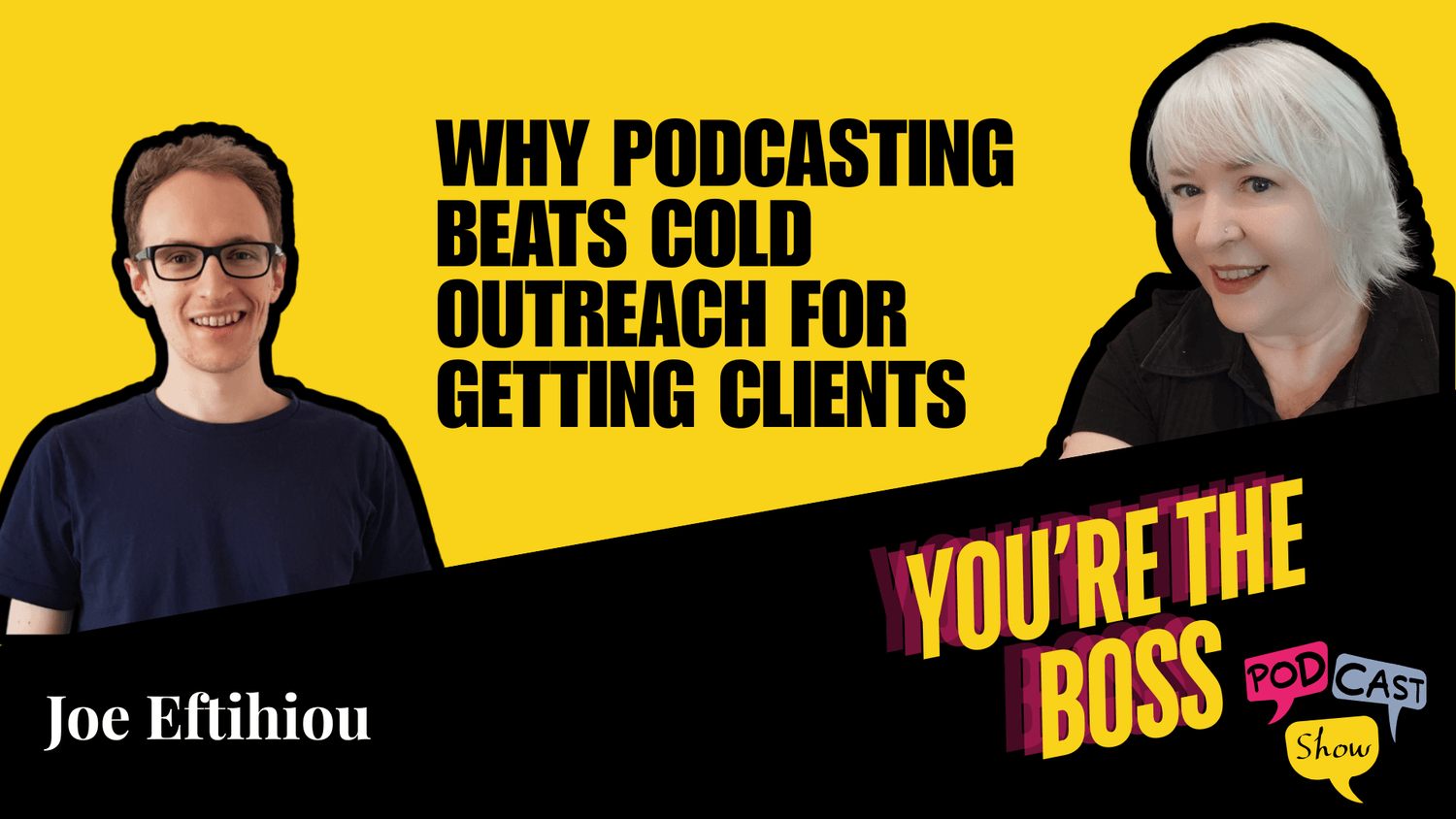
Click the image above to watch
Ange Dove (00:01)
Welcome to Your The Boss Podcast Show. And today I have with me a very special guest, and that is crap. Hola. I'll start that again. How do I say your name? I should have asked that before. FDHU, FTHU. Okay. All right. Okay. So welcome to Your The Boss Podcast Show. And today I have a very special guest with me today, Joe Ftyhu. And
Joe Eftihiou (00:12)
pronunciation.
Joe Eftihiou (00:16)
No, it's fine. FDHU. Yeah, that's it.
Ange Dove (00:30)
Joe is the founder of Claricast, a podcast production company that helps businesses launch and grow podcasts that support their business goals. He specializes in helping founders and marketers use podcasting to build authority, reach decision makers, and support business growth. One of Claricast's clients recently landed a £30,000 deal through their podcast within a month of launching.
So Joe, that sounds very impressive. So welcome to the show.
Joe Eftihiou (01:02)
Yeah, thanks, Ange. Thanks for the intro.
Ange Dove (01:04)
welcome, right. So just tell us a little bit more about the company, the business and what it does now, first of all, before we launch into everything else.
Joe Eftihiou (01:13)
Yeah, sure. So Claracast, as you said, we help businesses launch and run podcasts that support their business goals. without going straight into the, into the backstory yet, did originally start where it was just a case of we'll edit your podcast for you basically, but then, but now it's moved into more like, right, what do you actually want to get out of this podcast? Because there are plenty of editors out there, but we know that businesses want to
Ange Dove (01:36)
Right.
Joe Eftihiou (01:40)
to get a particular outcome, whether that's attracting sponsors so they can generate revenue through sponsorship, or what's normally the case is they want to attract ideal clients, basically, whether that's as listeners or as guests. And that's what we focus on tailoring the podcast so that it generates that kind of business.
Ange Dove (02:01)
So it's more strategic now rather than just editing. It's a strategic plan to grow the business through podcasting. Right. Nice, nice. so just tell me first of all, because we always go through this on the show, is what was your journey from employment through to setting up the business? Because I know you've got a very interesting story to tell there.
Joe Eftihiou (02:08)
Yeah.
Joe Eftihiou (02:25)
Yeah. So I started, my education was in audio. So I did music technology, but it was quite a varied course. was radio skills, media theory, music for film and things like that. And that led me into working in some recording studios. So I wanted to get started and get my foot in the door as quickly as possible. So while I was at uni, I researched all the local recording studios in my area, wrote a bunch of letters, sent them out and
Luckily, a couple of them responded. I think it was quite a novel thing to receive a letter even back then when I started. Yeah, exactly. So was like hardback envelopes with handwritten address. know a couple of them said to me, when something came through my door that seemed that formal, I thought I better open it. And then I figured that there was a studio about 10 minutes down the road from me and I didn't even know it existed.
Ange Dove (03:02)
I was gonna say that's old school, right?
Joe Eftihiou (03:25)
They were quite a big studio for recording classic rock and prog rock artists. So, and they said yes. And they were like, come down, we'll pay you 75 quid a day to press record basically, as well. was still in uni. So I was getting a bit of money from that. And yeah, it kind of expanded. Cause this is what I wanted my job to be. wanted to work in recording studios, but
there's a limit to how many recording studios around that has, has work. So I wanted to start doing some work from home because I have the setup to do recording for music and things like that. So I started working with some, some other kind of businesses within, within that space. So not just music, but voice acting and things like that, where they would send me their files and I would just do some editing and mixing. Then it came a point where
My partner and I wanted to move out and buy a home and have children and that. And at the time it just wasn't regular enough. It was too sporadic. had clients who just decided not to pay me. And this is before I had much business knowledge. Cause my background was just in audio. Yeah. So I thought I need to get.
Ange Dove (04:43)
They do. Yeah.
Joe Eftihiou (04:50)
like a full-time job now and do the, the audio stuff on the side. So I got a job doing IT support, which is something that's in that technology field. I, I did have some knowledge in that area and yeah, evenings and weekends, I was still working in studios when I could and yeah, doing mixing and finding clients through, freelancer sites like Fiverr and Upwork and People Per Hour.
Just had various, like 10 different listings on there of different things that I could do within audio. And at the same time, I was just pushing as hard as I could within the, the full-time job that I had within IT, because I knew that once we secured a mortgage and got where we wanted to be on that side of things, I would have a lot more freedom. wouldn't have to worry about, you know, what the mortgage lenders see my
my income as and things like that, because it's so much harder when you're self-employed. So I got a couple of promotions in, in that IT job. And then, yeah, we managed to get somewhere to live. And then it was a case of just kind of tapering down the employed work and bringing up the audio production side of things. And at the same time,
I thought of another way of generating some revenue and generating some interest, which was starting a YouTube channel and educating people on all this stuff. So I quit that job. I took a part-time job, which gave me a couple of hours in the morning. So I could start ramping up a bit of that. I started to get more podcasters reaching out to, cause they needed podcast editing. Now I'd always listened to podcasts, for some reason I just never
put two and two together and thought, wait, people actually need these things produced. but yeah. And I found that it was much more reliable income. was much more results focused rather than just, you know, mix our song and then you'll never hear from us again. it was more of a long-term partnership, which felt more rewarding. And I got a little bit lucky. This full, this part-time job that I landed myself in, it was in a university library, which was very quiet.
Ange Dove (06:46)
Yeah, together. Yeah.
Joe Eftihiou (07:14)
as libraries are, and there was no oversight. Like it was on a separate location and there was no management there. So when it was quiet, I had a copy of Reaper and audio production software on my memory stick, which, so I could run, do a little bit of editing on the side and, and, you know, sort through my emails and things like that. So I just gradually kind of shifted the scales in.
until the point where I was making enough money that I could quit that part-time job. And then at that point, it was like, right, I'm to go all in on podcast production. And then a couple of years later, rebranded as Claracast as an agency. And now we work with a small team of freelancers, but we're growing and looking to hire more permanently going forward.
Ange Dove (07:52)
Okay.
Ange Dove (08:07)
Nice. So just a little bit off topic but it's kind of it's related to business, right? It's you mentioned earlier that in those very early days when you had a few clients when you were a freelancer and then some just didn't pay you, right? It happens sometimes, right? So is is that the case now or is the business more stable and
Joe Eftihiou (08:23)
Mm.
Ange Dove (08:28)
they see you as more professional and they can't get out of it kind of thing. Is that that the way things as your brand has grown, kind of thing?
Joe Eftihiou (08:34)
Yeah.
So when I worked in studios, it wasn't a problem because there was a studio owner who would deal with all that. But when it was like, was just getting somebody, a musician around and recording some music for them. Yeah, there were a couple of times where, I dunno, I think because it felt a lot less formal, even though I did tell them what it would cost at the beginning. Sometimes if they just sort of changed their mind at the end or weren't happy with the result rather than talk to me about it, they just disappeared. Yeah.
Ange Dove (09:04)
Yeah. Disappeared, yeah. Ghost ditch it.
Joe Eftihiou (09:07)
And then it was like, yeah, exactly. And a couple of them I chased up and they were like, yeah, yeah, let's, let's sell that up. And then a couple of them just never heard from again, but now, yeah, it's a lot different. think partly because it's a B2B service now and there's a lot more formality and people, the people that I was working with and working with now, they know that they know the ropes, you know, they're running a business too. And also
Ange Dove (09:16)
Yeah.
Ange Dove (09:22)
Hmm. Hmm.
Ange Dove (09:30)
Yeah.
Yeah.
Joe Eftihiou (09:34)
they're on a direct debit. at the end of the day, if they canceled the direct debit, because it's monthly podcast editing, then we would stop working for them. So it hasn't been a problem now. Now I do find that when you're working with some larger businesses, not individuals and not small partnerships, but much larger sort of hundreds or thousands, it's harder to get paid because they have to go through certain processes and they're
Ange Dove (09:36)
okay.
Yeah. The circuit stops that.
Ange Dove (09:56)
Yeah.
Joe Eftihiou (10:03)
finance teams and they only pay invoices a certain time of day of the month and things like that. there are some times where we do need to chase, but generally it's not a problem.
Ange Dove (10:07)
Yeah. Yeah.
Ange Dove (10:13)
But gen yeah, generally I think those ones are okay though, 'cause you know you are gonna get paid. It's just they have a process and they have certain like you know, it's either forty five days, thirty days, sixty days sometimes, but you know, you know you are going to get paid. It's just yeah, you just have to wait longer sometimes. That's the
Joe Eftihiou (10:17)
Yeah.
Joe Eftihiou (10:24)
Yeah.
Joe Eftihiou (10:28)
Yeah, exactly. And if you've been working with them for years and you know, they're a few weeks late, it's not like you're just going to stop working with them. There's a bit more of a rapport built up already.
Ange Dove (10:33)
Yeah.
Yeah. Yeah. Exactly. Yeah. Yeah. Okay. So so you you built the agency. So I think this is fascinating that that there's this demand for a podcast agency. Obviously there's loads of podcasts around now and people they definitely need the service. So what what kind of service do you deliver exactly? Do you have different packages? How does it work if
Joe Eftihiou (10:54)
Yeah.
Ange Dove (11:04)
So if I came to you and I said, Okay, I want you to help me with my podcast, what could you do?
Joe Eftihiou (11:09)
Yeah. So we do have packages now at first, and this is kind of one of the biggest shifts in my business. I saw a huge revenue boost just compared to the low revenue that it was in that first year. Once I did shift from basically a pick and mix of services, because originally it was audio editing and mixing and mastering the audio. it's fits all the correct requirements for the platforms and sounds as good as possible.
you know, all the ums and ahs rude and things like that. But then very quickly I realised the businesses that I was working with, they don't want to have to do any of it. They just want to record it and then chuck it over to someone. I had to do some work in improving my own skills in terms of copywriting. So for show notes and titles, and then video came around and now that's a major part of podcasting.
Ange Dove (11:49)
Yeah. Mm.
Joe Eftihiou (12:08)
to improve my video production skills. And then just learning how to actually launch a podcast because I was a podcast listener, but I hadn't yet at the beginning of the business launched one myself. just understanding how everything's distributed and all those things. But at the beginning, it was still very, oh, you can have this or this or this, and you can have these three things, but not that. And what I found was a lot of the businesses I
Ange Dove (12:12)
Hi.
Ange Dove (12:25)
Mm.
Joe Eftihiou (12:36)
businesses that I was speaking with, they didn't really know what they needed. So when they looked at this long list of services, it was like, okay, well I'll do this, but I'll just write the titles myself because that seems easy. But really getting the title right for your podcast episode is actually one of the biggest, most important things, even though it potentially takes minutes. But if your titles aren't enticing, then no one's going to click on them anyway. Exactly. Yeah. So
Ange Dove (13:01)
The one you do want to outsource, right? Yeah.
Joe Eftihiou (13:05)
And then I worked with a coach as well who helped me package things up. And now it's split into three packages. So there's audio where we're just doing the audio production. That's kind of a, we don't generally do that very often, but if I'm confident that they've got an in-house team, marketing team who can handle those other parts, or they're just kind of getting their feet wet in the podcasting space. Then we have audio plus where we're...
Ange Dove (13:13)
Mm-hmm.
Ange Dove (13:16)
Okay.
Ange Dove (13:22)
Right.
Joe Eftihiou (13:30)
We're doing all the things you would need to help an audio podcast to succeed. So we're getting it on YouTube as audio. We're doing the show notes and titles, social posts, monthly strategy. And then there's the big package, which is the full video thing where we're doing trailers and shorts and helping clients book guests and just everything they need basically. And then there are three launch packages as well, which kind of align.
Ange Dove (13:54)
Okay. Okay.
Joe Eftihiou (13:58)
with each of those three. So you would do the podcast launch with us. We'd set it all up. We'd do your podcast brand. that all the, yeah, all the cover art and naming your podcasts and all those things, you need to set it up and distribute it. And then they'd go onto the monthly subscription for ongoing production.
Ange Dove (14:00)
Right.
Ange Dove (14:05)
then there'd be a red paint and then after that right. Yeah. Yeah.
Ange Dove (14:15)
Okay. Okay. So y so you would actually sort of design the brand of the podcast itself as well. That's included in the launch circles, right? Yeah.
Joe Eftihiou (14:23)
Yeah, again, to varying degrees. So if they just want to get their feet wet, then it's just the cover art. But then we go all the way to the other end of it where it's like a logo for the podcast, the cover art, banners for their website and social media and so on. Yeah.
Ange Dove (14:29)
Yeah.
Ange Dove (14:33)
Yeah. The banners for the YouTube and stuff, yeah. Yeah. my goodness. Okay. All right. So, what have you noticed? has been has there been a big change at all in podcasting? What's been the trend?
Joe Eftihiou (14:50)
Yeah. So video has been the main thing when I first started offering video, it was still a lot more about just having one person on one side, one person, the other board around it, just uncut, and then just throw it up on YouTube. And that's still fine. I'm not bashing anyone who still does that because doing the full multicam edit and things like that is a huge expense time and money. but now
because so many of these bigger organisations and celebrities and things are doing podcasts themselves and you've got like diary of a CEO with podcast teams spending millions. It's hard to compete with those, not that you have to aim for that same level, that same size of podcast, but
Now people have different expectations. Viewers have different expectations. So we are doing those, those trailers, those kind of 30 to 60 second high energy trailers at the beginning of each episode and doing multi-cam edits. Even if it's not recorded in a studio, but you give it that kind of vibe that it is swapping between the two cameras and things. So the level of production there has had to increase and we've just stopped doing the more simple video now.
Ange Dove (15:53)
Okay,
Ange Dove (16:00)
Yeah.
Joe Eftihiou (16:09)
The shit there's also, yeah, exactly. There's also been the AI influence as well on podcasting as with everything. I don't think it's really affected podcasting too much at present. I think it's still very much in that experimentation phase. There are thousands of podcasts out there which are completely AI generated, but from what I've seen, they're just not doing very well. Even.
Ange Dove (16:09)
That they've set the bar high right there.
Ange Dove (16:18)
Mm-hmm.
Mm.
Ange Dove (16:34)
okay.
Joe Eftihiou (16:37)
Steven Bartlett, Dario the CEO started a podcast that was completely AI generated, or his team did anyway, using his voice. And it was called a hundred CEOs. And the point was that it was going to be AI generated interviews, no, not interviews, kind of summaries and deep dives into the life of these CEOs. But I think it ended after about four episodes. just, it just didn't, like people don't want to hear the AI voice still.
Ange Dove (16:49)
Okay.
Ange Dove (17:01)
Yeah.
Joe Eftihiou (17:06)
So it hasn't affected it in that way, but it has affected it in terms of productivity, what podcasters and businesses sort of think they can get away with in terms of content or what they're willing to pay for versus what they now would rather just use an AI tool to do. So there's been a bit of friction there. But yeah, I do think you still need to have a human in the mix.
Ange Dove (17:23)
Yeah. Yeah.
Ange Dove (17:31)
So has that affected your business at all in terms of are people sort of trying to sort of DIY it now because they've got AI tools to help with the editing and things or is it have you not noticed anything with that?
Joe Eftihiou (17:44)
Not noticed anything for our business because it's generally business owners and marketing teams. They don't want to have to do all that because it's still a case of piecing everything together.
You can't just upload it to an AI and it does everything. still, you know, even with Riverside, they've got some great tools now where you can kind of cut up shorts and it helps you write social posts and things like that. But you still need to go in there and you still need to have a really deep understanding of who the ideal listener is to know which of these shorts will perform. You still need to edit them to make them engaging.
you know, you still need to go through all the copy, make sure that it's in the brand's tone of voice and things. So I think maybe on the lower end of the spectrum for hobbyists podcasts, I think there's probably a lot more impact in that area, but on the higher end of the spectrum, where it's more strategic and holistic approach to the production, haven't seen any, any impact to the business yet, but we'll see what happens over the next few years.
Ange Dove (18:53)
Yeah, it may become A may become a I mean AI is just advancing at such an incredible speed, you just don't know what's going be possible like even six months down the road. Yeah. It's yeah, yeah, yeah. Just keep your eyes open to it, right, as to what would happen. and then I think that's the importance of branding your company and right and knowing what it is that you do and getting that message out there so people understand.
Joe Eftihiou (18:56)
Yes.
Joe Eftihiou (19:02)
Yeah, don't want to be naive to it.
Joe Eftihiou (19:11)
Hmm.
Ange Dove (19:21)
that you know it is AI can be for some people but it's not for all, right? So that definitely I'm speaking from experience then, so because I was a copywriter, so I was the one first to go, right, because of AI.
Joe Eftihiou (19:27)
Yeah, for sure.
Yeah. Okay.
Right. Yeah, absolutely. Like copywriting. Yeah. It's a real shame. I guess it depends what kind of copywriting you do and, like, we, we'd every now and then it's not part of our main package because most clients don't need it, but we do transcripts. Now AI transcript software has been around long before, you know, generative AI, LLMs, JAT GPT and that. And
Ange Dove (19:42)
Yeah.
Ange Dove (19:51)
Mm. Hmm.
Ange Dove (20:00)
Yeah. Yeah. Yeah.
Joe Eftihiou (20:04)
We've always used that because it's like, why would you type out the entire podcast episode when you can get 80 % of the way there with the AI and then just go through it the last 20 % correcting everything. and I was looking for somebody, a freelancer to help fulfill these for just as and when we get them. And I spoke with a couple of people. One of them said she doesn't use AI tools at all. So she types out the whole thing. And that was kind of her.
Ange Dove (20:13)
Yeah. Yeah.
Yeah.
Ange Dove (20:23)
Right.
Joe Eftihiou (20:33)
her sort of selling point, but the other person they used, I don't know what software they used, Otter or Descript or something like that to do the transcripts then go through it, you know, much quicker just to get that last 20%. Yeah. Correcting those names. And yeah. And I went with the person who does use the AI tool because it would take them an hour rather than two to three hours. So there is that.
Ange Dove (20:48)
idea that yeah. Which I think makes sense, right? Yeah. Mm.
Ange Dove (21:00)
Yeah.
Joe Eftihiou (21:03)
space where using AI tools and getting good at them and having that as part of your package can be helpful.
Ange Dove (21:08)
Yeah.
Ange Dove (21:12)
Yeah, it definitely makes it much more productive. And these these transcription tools are just getting so much better as well, right? I I'm writing a book at the moment and I was I dictated the book for like for the first draft, I dictated the whole thing and it was not a wrong word. Not a wrong word.
Joe Eftihiou (21:19)
Yeah.
Joe Eftihiou (21:28)
Hmm.
Ange Dove (21:34)
incredible. It's just one hundred percent accurate. And half the time I'm just like speaking really fast and mumbling into the microphone and and it it captured everything. It didn't matter what I said, it was still right.
Joe Eftihiou (21:36)
Yeah.
Joe Eftihiou (21:45)
Yeah, I find it so much easier to dictate. It's like when I'm writing content, I'll just read it out loud and then yeah, it's just so much quicker.
Ange Dove (21:50)
Yeah.
Yeah. Yeah. I can speak faster than I can type. Okay. So so why let let's just get into for a minute why people need podcasts. Like why why do businesses need podcasts and with the depth that you go into it, with all the things that you do to get them guests, to get them business, how does that all work in terms of
Joe Eftihiou (21:57)
Yeah.
Ange Dove (22:21)
How can businesses add a podcast into their mix?
Joe Eftihiou (22:26)
Yeah. So I think loads of different businesses can benefit from podcasting for a number of reasons. We do have a little bit of a filter now in terms of what kind of businesses we'd work with that we know we're more likely to get a result out of. So one side of things is that you could start a podcast and the podcast is part of the business. So it's generating revenue on its own in terms of ad revenue. If you put the podcast on YouTube or getting sponsors. So
If you're a, whether you're B2C or B2B, but if you're selling products or selling a kind of coaching package through your podcast, then that's way of generating revenue or selling other people's products. So those are kind of the two camps. You're either selling something of your own or selling someone else's. But we generally work with clients who, whose buyers have a long buying journey for starters because
Ange Dove (23:21)
Mm-hmm.
Joe Eftihiou (23:24)
Podcasting is something that builds trust over a longer period of time than say an Instagram short, real or whatever on its own or even a YouTube channel. Now, if you have a certain type of business with a product that's quite low value, then you could potentially sell that to them after they've just seen one episode of your podcast on YouTube or a reel or something. But the clients we work with,
It's generally people who have like a recruitment business. So they're looking for long-term partners to partner with who they're then going to send candidates their way. Or, you know, tech businesses who have a tech solution that if they just make that one connection and then that connection is going to implement their tech solution across, you know, of sites or whatever, then that would be.
It would pay for the whole podcast basically. So that's who we're looking for because it doesn't rely on getting a huge number of views and downloads, which for starters can take years to build as we know. And secondly is slightly out of control. And also it's very difficult if you have a very niche podcast. But yeah, just, just an example is the one you mentioned from a company called Radium Search.
Ange Dove (24:34)
Mm. Yeah.
Joe Eftihiou (24:52)
who worked with us and got a 30 grand deal off the back of their podcast just after launching. It's because podcasting is a connection tool as well as just attracting people. You can use it to open doors, open conversations that you otherwise wouldn't have been able to. Because if you're looking for clients and you're doing outreach on LinkedIn, for example, most messages on LinkedIn get ignored.
Like, especially if there's any sniff that is that you're trying to sell them something. Yeah. But I mean, you know, I've, I've done cold outreach on LinkedIn for our business before. the, the percentage of people that reply is, very low, but we also do guest outreach where we're finding guests for our clients' podcasts. And as you can imagine, when you're offering someone a free PR opportunity,
Ange Dove (25:26)
Yeah.
Ange Dove (25:34)
Mm-hmm. Yeah.
Ange Dove (25:45)
Mm. Yeah. That's much easier. Yeah.
Joe Eftihiou (25:51)
the response rate is far higher, but in a way it can be even more valuable to a business owner getting someone on an hour long call. So Tony, the guy that I'm speaking about, he was looking to partner with financial advisory firms who are looking to hire basically because then it creates this long-term partnership.
Ange Dove (25:53)
Yeah.
Ange Dove (26:14)
Mm-hmm. Mm-hmm.
Joe Eftihiou (26:17)
So he got them on as podcast guests. And then at the end of the call, after they'd been chatting for a good hour, building rapport and getting a bit deeper on their background and things like that, it's like, they already feel kind of like they're a friend or, you know, at least an acquaintance. So by the end, it naturally leads into a conversation. Like, you know, thanks for this opportunity. Like, what can I do for you? Often they'll ask, or even just knowing what they do.
what, knowing, you know, what your business does, they now have somebody in the back of their mind, but they're probably not going to forget after, you know, if it's an hour long podcast call versus a 10 minute sales call. And they, yeah, they have you in the back of their mind now, for, know, if, they have anyone to send you away or if, they they're looking for support. So it's something where you can get a result before you've even started getting listeners. So that's why we focus on that strategy mostly.
Ange Dove (26:53)
Mm. Yeah.
Ange Dove (27:14)
Yeah. Yeah, I've started doing that with mine as well 'cause I do cold outreach on LinkedIn and if they say for my services, no, I'm not interested, I go and look at their profile. And then if I think they've got an interesting profile and it's related to something that I can talk about on the podcast, I'll go back to them and say, okay, no problem, but by the way, I run a podcast, I'll be interested in having you as a guest and they always say yes. So yeah. Yeah.
Joe Eftihiou (27:20)
Hmm.
Joe Eftihiou (27:40)
Yeah, yeah, exactly. And like you say, you have to look at their profile and make sure they're still going to offer value to your audience because that's going to help both of you if more people listen to it. So yeah, it does still need to keep the ideal listener in mind.
Ange Dove (27:46)
Yeah. Yeah. Yeah.
Yeah, exactly. Yeah. It's a win win. Yeah. Yeah. Yeah. Okay, so if someone was thinking of a business was thinking of starting a podcast, what advice would you give them?
Joe Eftihiou (28:07)
Yeah. Okay. So it depends on what result you want to get, but I think the big thing is firstly, get help. And this isn't me trying to sell my services. Like you can speak to other podcasters who have done it before, because there are so many facets to launching a podcast that it's easy to miss some of them or think that some of them aren't important. Like for example, you've got some really high profile guests. You've bought the microphone, you know, you've
Ange Dove (28:09)
Yeah.
Joe Eftihiou (28:38)
You've got a great title and some good ideas for episodes and things, but then you spend five, 10 minutes just rustling up a cover art, the picture that comes up on Spotify and Apple for anyone who doesn't know. And just like rustling up on Canva. And then basically to any new listener, your podcast looks like it's just really amateur and no one ends up clicking on it anyway. So yeah.
Ange Dove (29:00)
Yeah. So that's the brand part of it, right? Yeah.
Joe Eftihiou (29:06)
And that's just one facet of it. Like it's understanding all these different parts of it. And there's tons of help on YouTube. So even though the barrier to entry is very low with podcasting, you can just start it yourself within an hour. You can have an episode up. I would just slow down a little bit, not to the point where you're sitting on the idea for months and years, but just slow down a little bit and do a bit of research. Like I've got a half an hour video on YouTube, which
Ange Dove (29:07)
That's one facet, yeah.
Mm.
Mm-hmm.
Yeah. Mm-hmm.
Joe Eftihiou (29:36)
is free, obviously, where I go through all these different aspects that you need in place before you launch. So yeah, understanding that. And then also understanding who your ideal listener is. So that very specific person you want to reach, it should be one type of person with like a key pain point that they all share, not trying to, even if you have two different types of clients, like you'd be better off having two podcasts.
than trying to make one podcast for two completely different people, because there is plenty of other podcasts that they can choose instead that are tailored to them specifically. Yeah. And then thinking about what differentiates you from other podcasts, because if there's something that can just give them a reason to listen to yours over another one, whereas whether you've found a particular niche that's untapped or
Ange Dove (30:14)
Yeah, exactly what they want. Yeah. Yeah.
Joe Eftihiou (30:36)
you're a solo or co-hosted podcast, whereas all the other podcasts in your space are interview podcasts or the other way around. If there's just something that gives them a reason that kind of shifts that supply and demand in your favor, because there's plenty of supply in all sorts of different niches. But if, yeah, if you can come up with an idea that's just a little bit unique or that has a little bit of a concept to it.
As in, you know, rather than just interviewing business leaders, uh, you're, you know, interviewing business leaders who are at a very specific point in their journey or your, for example, auditing businesses on live on the podcast. Like if nobody's done that before, then that could be, I'm sure people have, but just, just as an example, like if you can think of something that's a little bit different.
Ange Dove (31:06)
Yeah.
Joe Eftihiou (31:33)
Like when I started my podcast, Podcasting Amplified, there were a lot of podcasts on podcasting, but there weren't really any or very few that were interviewing podcasters and going into their journey behind their podcast. Now that's changed now and I have shifted how I'm Podcasting Amplified. But yeah, that right off the bat is going to help you grow or it could be your personality.
Ange Dove (31:33)
Right.
Joe Eftihiou (32:02)
Like one of the, one of the podcasts we work with the angry designer. If you want a great example of a podcast, it like, there are plenty of podcasts out there talking to graphic designers, but they're co-hosted. This is two of them and they have loads of like rapport between them. They're good friends, their colleagues, and they just have this really unique vibe. They're not angry all the time, even though it sounds like it, but
Ange Dove (32:03)
Mm.
Ange Dove (32:16)
Mm-hmm.
Ange Dove (32:30)
okay. I was gonna say
Joe Eftihiou (32:31)
But they do talk, yeah, they do talk a lot about like struggles and irritating customers and things like that. There aren't really any podcasts, well, there weren't at the time, which were kind of...
Ange Dove (32:38)
Customers.
Ange Dove (32:45)
can imagine I mean that when you said angry designer I'm just looking I can imagine exactly what the conversation's gonna be. Having worked in that phase. Yeah.
Joe Eftihiou (32:52)
Yeah. So, you know, what is it about you even the differentiates you from the other people? Like don't try and hide that. If, if, if you have a personality trait that you can kind of lean into, then it generally will do you, do you good than bad.
Ange Dove (33:01)
Yeah.
Ange Dove (33:04)
Yeah.
Ange Dove (33:11)
So that kind of leads into my next question, right? I've heard that they say that the average podcast lasts about twenty episodes before they give up. Right. I don't know how true that stat is, but I would imagine a lot of them give up after a a very short space of time. So what would you give people advice on how they can keep it up? How can they continue doing it?
Joe Eftihiou (33:25)
Pretty much, yeah.
Joe Eftihiou (33:29)
Hmm.
Joe Eftihiou (33:36)
Yeah, a couple of things that lead to pod fading as they called it, as you mentioned.
Firstly, linking back to what I just said is understanding all the different facets of what's involved in a podcast. yeah, exactly. yeah, I think a lot of businesses start a podcast and yeah, then they realize, my God, I've got to find a guest, book a guest every week. Some of them aren't responding to me. I've got to get this edited, uploaded.
Ange Dove (33:49)
Mm. Mm. So going in with your eyes open, right? Realizing what you're actually at yourself in for.
Joe Eftihiou (34:12)
write show notes and titles and all these things. And it just very quickly becomes this. Yeah, like.
Ange Dove (34:16)
It's it's a lot of management. It's a a lot of management. I've actually told my VA just hold off now for the next few weeks. I don't want any more bookings for the next few weeks. We've got so many coming up from my ca I looked at my calendar for next week and I'm like, my god, no. So so I think like one of them for me is realising that I ha we've now put a special calendar in place that is only for booking the the pre interview.
Joe Eftihiou (34:24)
Yeah.
Joe Eftihiou (34:32)
Yeah, that's fair. I've had that before.
Joe Eftihiou (34:41)
Hmm.
Ange Dove (34:45)
interviews so that I just have them on certain days now instead of just all over my calendar. It's just let's let's just have two days dedicated to this and that's it, right? Otherwise you just get overwhelmed.
Joe Eftihiou (34:56)
Yeah.
Yeah, I did the same. think I limited my calendar booking for the podcast to a week. I just couldn't really handle the recording and research from more than two a week. But yeah, so going in, like you say, with your eyes open and you can always start small. Like you can always do, you don't want to do, you know, just every now and then when you get the chance to do an episode, you want it to be consistent. So your listeners know when you're going to show up for them, but you can still do bi-weekly.
Ange Dove (35:06)
Yeah.
Yeah.
Joe Eftihiou (35:28)
can start off rather than rather than every week. You can do audio only at first. There are still plenty of space for audio only podcasts to grow. Yeah.
Ange Dove (35:32)
Yeah. Mm.
Ange Dove (35:38)
'Cause actually mo quite a lot of the platforms are still just well the distribution platforms are still just audio only, right? Aren't they? If I'm not wrong. Like if we send this to Apple, it's audio, right? It's not there's no video on Apple, am I right?
Joe Eftihiou (35:46)
Yeah. Yeah, I mean...
Joe Eftihiou (35:53)
They've recently, I mean, you've been able to upload video on Apple for quite a while, but recently they've added the ability through HLS feed to link, upload video and link that to your audio podcast. Very similarly to Spotify, although the technology is different. But yeah, so you can now upload on those platforms, but you don't have to anyway. Like people still listen to audio podcasts. I mean,
Ange Dove (36:12)
Mm.
Ange Dove (36:18)
Mm, hm, mm. Yeah. Yeah.
Joe Eftihiou (36:22)
is one that we're working with. She's done very well. She's growing and it's audio only. It's about reading books. So it's something that people can just listen to when they're doing other things. Not everyone wants to see a video podcast. So that's one thing you can do. And then the other thing is like, also, depending on your goals for the podcast, if you want it to be a guest prospecting podcast, then you would need guests. But if it's more just to grow and get your...
Ange Dove (36:34)
Yeah.
Ange Dove (36:38)
Right.
Ange Dove (36:44)
Mm-hmm.
Joe Eftihiou (36:50)
personal name and brand out there, then you could consider doing short solo episodes, 10 to 15 minutes where you're just talking about, uh, whatever you did, the pain points of your ideal listener, or you don't have to get guests on. know it feels like a bit of a kind of support and a crutch almost to have guests, but not every podcast has to do that.
Ange Dove (36:53)
Mm. Yeah, yeah, yeah.
Ange Dove (37:10)
No, no. I think it's just knowing what kind of show you want to have and just going for that. So it's deciding to like do you do you want to just do it yourself where you're just the sole person speaking as you mentioned and it's just short little snippets like every week or whatever, or it could be every day, I don't know. or is it gonna be like two people or three people as the hosts, right, which you have as well, or you have one where it's like this one where it's guests.
My mine didn't start off as guests, wouldn't I suppose it did. Most of the time. I've done a few solo but basically it's all been guests all the way through. And I just I just love to have the chat, so it's me.
Joe Eftihiou (37:40)
Mm.
Joe Eftihiou (37:46)
Yeah.
Joe Eftihiou (37:50)
Yeah, yeah, that's fair. mean, again, if, if you're getting value out of having guests and your audiences, then obviously that's not an option for you. But yeah, I'd say that's the first thing understanding, going into it with your eyes open, understanding the full kind of depth of what podcasting is and potentially getting help if you can. The second thing is having a long-term outlook because I think some still believe that
Ange Dove (37:55)
Yeah. Yeah.
Yeah.
Ange Dove (38:05)
Hmm.
Ange Dove (38:10)
Yeah.
Joe Eftihiou (38:18)
can start getting results and get hundreds of listeners within weeks or even months. And unless you already have a very large audience or you have plenty of money to spend on paid ads, then that's rarely going to be the case. You need at least a kind of 12 to 24 month outlook. So I think some of the people who are pod fading, who are quitting after a few weeks, maybe it's because they saw...
Ange Dove (38:43)
Mm.
Joe Eftihiou (38:47)
I'd need to get, this is kind of anecdotal. I don't have like a lot of evidence on why people quit. But if they see the analytics and see sort of five people, 10 people listen to the first episode and feel instantly deflated, like that's something you can prepare yourself for. It's not gonna, people aren't just gonna come swarming through on Spotify as soon as it's launched. It's a long-term play.
Ange Dove (39:13)
Yeah, exactly. You just gotta know what the expectations are, right? So okay. Okay, Joe, so so thank you so much for sort of right. We've gone over time actually. So fascinating conversation. It's wonderful. So where can we send people to so they can find out more and maybe if they're needing help with their podcast they can book you?
Joe Eftihiou (39:17)
Yeah.
Joe Eftihiou (39:24)
Okay, yes.
Joe Eftihiou (39:34)
Yeah. So I'd suggest as you listen to a podcast, the easiest thing would be to just search for podcasting amplified on whatever podcast platform, whether that's YouTube, Spotify, wherever it's mostly solo episodes. It's for business owners or those starting a business who want to use podcasting to get results. So the kind of quite bite-sized episodes will be going to all sorts of how to launch, how to attract guests, how to convert guests to clients, how to get great audio and video quality.
everything you need to know basically. yeah, that's podcasting amplified or wherever you get your podcasts.
Ange Dove (40:08)
Right. Where do you get podcasts? And if they actually want you to book your services themselves, would do you have a website or something, they can go to
Joe Eftihiou (40:15)
Yeah, so you can go to claracast.com or just email me joe at claracast.com. That's C-L-A-R-I-C-A-S-T.
Ange Dove (40:26)
We will put the links below wherever you're watching or listening this to this podcast so you can easily get in touch with Joe. All right, Joe, thank you so much for your time today. It's been a really fascinating episode. Thank you.
Joe Eftihiou (40:38)
Yeah, thanks, Ange.
Don't leave without your free gifts

Check out my page of freebies designed to help you make progress towards your goals.
From free training on making $10,000 months to how to create your brand message to access to the resources I use in my business that may help you too!
I've got some
gifts for you!
Check out my page of freebies designed to help you make progress towards your goals.
From free training on making $10,000 months to how to create your brand message to access to the resources I use in my business that may help you too!
About me

Hi there 👋 My name is Ange Dove, professional copywriter and messaging strategist. I help Gen X professionals find the words to express who they have become, and to build a career or business that owns it.

GET YOUR UNCHAINED AUDIT
Let’s have coffee online for 60 minutes on Zoom, where we'll look at your profile, your message, and your next chapter together and give you the roadmap to take your next steps.

GET THE NEWSLETTER
Straight-talking insights for experienced professionals who want to turn what they know into income, options and greater freedom over what comes next.


