Call: +65 6012 3433 | Whatsapp +65 87792453
The Zero Regret Life
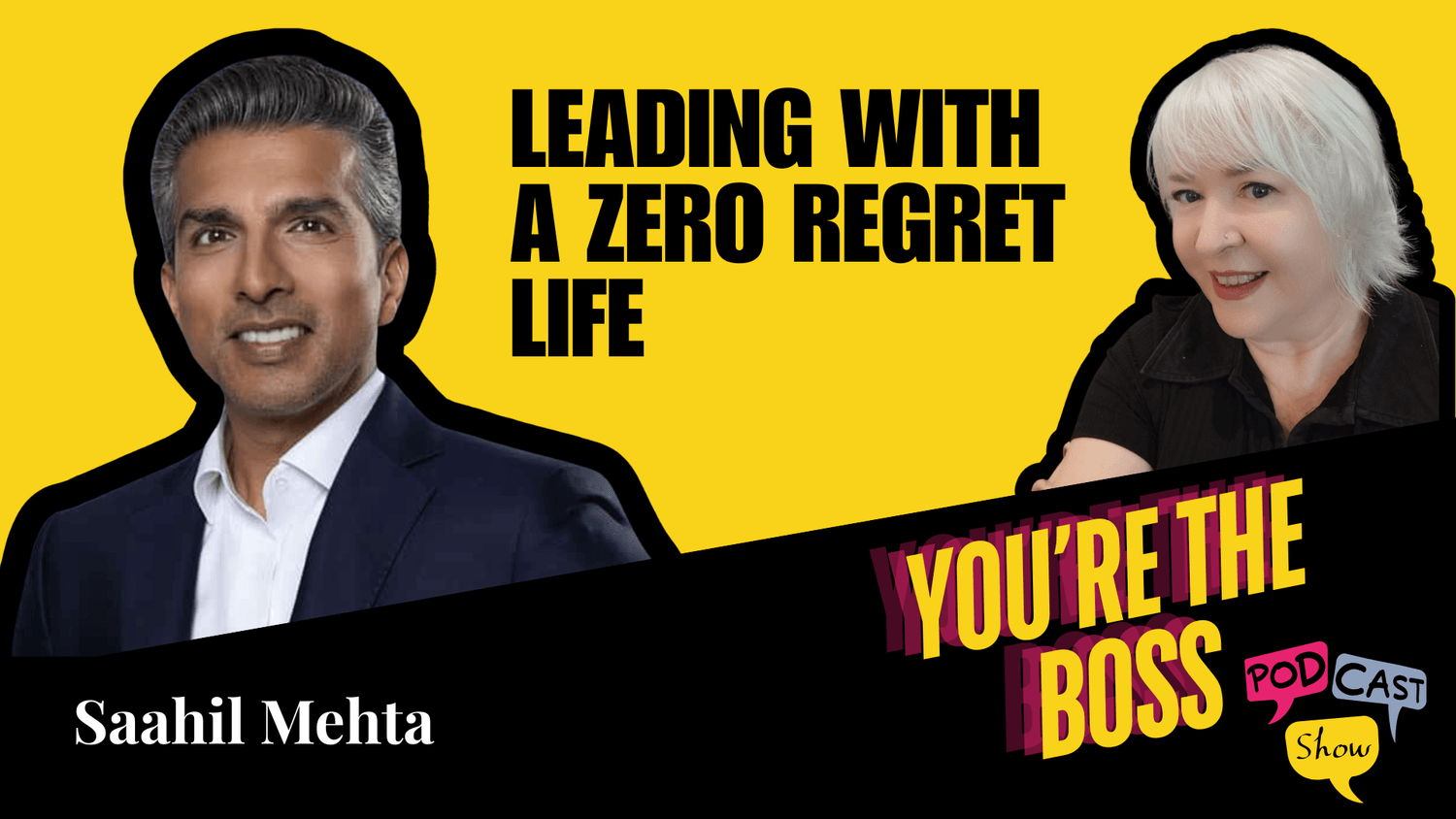
Click the image above to view on my Youtube channel
Ange Dove (00:06)
I'm so excited today to have Sahil Mehta joining us. So let me just give you a quick introduction of who Saahil is and then we'll get on to talking to the man himself. So Saahil is a global citizen, serial entrepreneur with businesses across two continents. He's an author, a keynote speaker, a success coach for leaders and a passionate mountaineer. We're asking him more about that later. So as an entrepreneur juggling multiple roles, family and passions, Sahil is the quintessential leadership voice today who shows fellow ambitious leaders how to actualize their potential and enjoy a zero regret life for the ultimate peace within. So again, we'll be exploring that zero regret life concept with him later on.
And Saahil's unique brand of conscious leadership wisdom inspires ambitious leaders of the world to aspire for holistic success, one which has an optimal balance of scaling your summits faster, leading to healthy lifestyle and enjoying wonderful personal and professional relationships. As a coach, Saahil has worked with hundreds of entrepreneurs and leaders from over 20 countries across Africa, the Middle East, India and Pakistan including for global brands like P &G, Dell, HP, Thomas Cook, and the Tata Group. Saahil is on a mission to enable ambitious leaders and entrepreneurs to lead with clarity that redefine success, actualize their potential, and enjoy a zero regret life. So Saahil, after all of that, welcome.
Saahil Mehta (02:35)
It's such a pleasure to be here. And I've made it a point that I'm going to have you introduce me wherever I go. That was amazing. Thank you.
Ange Dove (02:42)
That's great. All right. So thank you so much for joining us today. And I just want to uncover for the listeners your amazing story of how you've built your business or businesses and what your journey has been so you can inspire others, give some advice about leadership so that people starting the business can start off on the right foot. And we'll get into some of your concepts as well for your coaching and things like that.
So I know that you're in the hospitality space and also you run a family business in diamond trading, right, as well. And you're also running a leadership coaching business and you're a public speaker as well. So just tell me a little bit about how all of that happened, first of all, so we have a background to you.
Saahil Mehta (03:36)
Well, the, as you've mentioned, one of them is a family business. My father started that business and he actually started at the age of 54, if I'm not mistaken, or 55. Now some people may go, Whoa, that's, that's quite late. He was working in a company and he reached the retirement age and he said, Nope, I'm not going to retire. Uh, it's okay. If the policy says I can't work here, but I'm going to continue working. So that's when he started his entrepreneurial journey.
So it's never too late, right? That's the good news. mean, if someone can start at 50 plus, then anyone can.
Ange Dove (04:11)
Yes, exactly. I love that story.
Saahil Mehta(04:14)
Yeah. And when he started that business, I guess, you know, as a, as a son, felt I should be there to support him and help him. So he was really the forefront. was just kind of in the behind the scenes as a, as a support for him, just to make sure that there wasn't too much stress and there were certain parts of the business that, which maybe he wasn't so keen on and wasn't doing in the past. would support him in that manner. Nice. Apart from that, I had this
Ange Dove(04:39)
Okay.
Saahil Mehta (04:42)
You know, this, this, this inner desire to start kind of something on my own. My first entrepreneurial journey was we started this company where we were making air conditioning systems more energy efficient. Hence you would save on your electricity bills. And we were doing this in the Middle East where they're using air conditioners a lot, just because it's pretty hot throughout the year. So you think that it would be a raging success. However, it ended up being a failure and lots of learning lessons from that. one of the biggest lessons that I learned is that the co-founder, my co-founder, who was the majority shareholder, you when things are going great, we were very much eye to eye, but I guess we didn't have those in-depth conversations of what if scenarios. And as a result of that, when certain things happen, we just didn't see eye to eye at all. And I felt a big reason of why this company did not succeed is because
Ange Dove (05:31)
Right.
Saahil Mehta (05:42)
There was a problem at the top. Between the two of us, there was an issue and I'm not going to point fingers because it takes two hands to shake. However, it was a big learning lesson for me is that make sure that in any partnership moving forward, make sure you have those discussions on what if scenarios, just so you can see are your core values aligned, are your belief systems aligned, and if not, it's a good idea to discuss them now. Could the event happen, you can manage it. But anyway, that didn't work out too well. And then the next one, which is in the hospitality space, the chief operating officer of the first business actually came to me and said, look, I have this other opportunity and I used to work in this space before and we've dealt really well. he said, listen, why don't we start this business in the Middle East for this company, as in representing a company from the US.
This time around, learned the lesson, had those conversations that we needed to have. And we had similar core values. Obviously, they're not going to be exactly the same, but we saw it. And this time around, I made sure that I guess another learning for me was make sure that when you invest money, you have some sort of control and you're not just leaving control to someone else. So I made sure the way that the shareholders agreement was done, that I had a lot more stay in the company as well, should anything go wrong, to protect myself.
So that started in 2009 and still, you know, chugging along today. at some point, I mean, the business is doing good, but it's not doing wonderful. So at some point I realized it wasn't the best use of my time. And I transitioned the leadership to my co-founder who's now running the show. And I have to say, since he took over, things definitely started to get better humbling experiences where you think where you think to yourself, I'm pretty good at this. And then you realize, hmm, maybe I wasn't. Right. I think you're better than me.
Ange Dove (07:48)
Talk to me a little bit about that because, yeah, just discuss a little bit about that because I think that's useful for people to know when you're starting a business, especially when you start off by yourself and then you start to bring a team in. The trap I think a lot of people fall into is they don't delegate. And then all sorts of problems can happen from there. What advice would you give to people around delegation?
Saahil Mehta (08:15)
So I'm going to split this into two parts. is with me and Shane, my co-founder, he was the one who had more experience in the industry prior to starting the company. I was the one who had put in more money. Now, just because of that, we came to the conclusion mutually that I should be the one number one and he should be number two. Initially, it was just the two of us. We were the accountants, we were the salespeople, we were the...
you know, the cleaners, the coffee folks, I mean, we did everything. exactly. And as the company started to grow, we were hiring people in various positions.
Ange Dove (08:53)
Right.
Saahil Mehta (08:55)
But there's one thing that he understood much better than I, which were the people. And so I feel that sometimes he might have caved into a decision just because I was more in favor of it. And he said, put in more money, so perhaps we should go with that. Not like it was a bad decision, but just perhaps he would have seen it differently. And so I feel he was more connected to our target audience versus me.
Ange Dove (09:26)
Okay, because he's in the day-to-day operations.
Saahil Mehta (09:28)
Exactly. And since he was more connected at some point, one, because I had to, I didn't have the bandwidth to continue because there was more things that I was doing, but two, just made the, was the right choice for him to take over because he understood the clientele much better than I did. So when we walk into a room, the way I see him connect with stakeholders, stakeholders, meaning our board members, our shareholders, our employees, our clients, I mean, you name it. And he was able to connect much better.
Ange Dove(10:02)
Okay.
Saahil Mehta (10:03)
And even when we transitioned, by the way, it wasn't so easy because I'm so used to making decisions that I would sometimes people would still message me and I would make a decision. And then I'd get an email from him. Hey buddy, we agreed that, you know, we've transitioned roles. And I said, you know what, you're absolutely right. I apologize. It's not like an on-off switch where you just, you're number one and then you're not. There were a lot of, there was this gray period when I still was involved more than I should have been. But today, if I look today, it's a wonderful relationship. He's running the show and I'm supporting on the business development and strategy side. So that's one part of delegation. The other part I want to mention is, so that was the decision that we mutually made. The second part is when my father passed away during COVID, all of a sudden, because we were partners, right? He was handling certain responsibilities and I was handling some.
All of us, there were no other members who were in similar positions in our company. So now everything came on my plate. Right. And at that time I was also growing the leadership company for the coaching, speaking, retreats, et cetera. Being the newer business, that's probably what I should have shut down because the time is finite and I can't do everything. It'll just burn me out.
Ange Dove (11:30)
Yeah.
Saahil Mehta (11:31)
However, I didn't want to stop that business because it's the one that gave me the most amount of fulfillment, which for me is so important in life. So I asked myself, I Sahil, what are the decisions that only you can make or you're really good at making? And what decisions can others make or you're not so good at making?
And when I made this list, I realized I was getting myself involved in many things that others could potentially do. And the only way to continue to run more than one business was I had to empower, educate and delegate. And so I started to do that. And I'm not going to lie and say it was easy because in the beginning they would make mistakes and sometimes it was costly, lost money as well. However, I learned through my mistakes and I had to give them that space to learn through their mistakes. But fast forward till today. Oh my goodness. It's, it's a game changer. I realized I was getting involved in too many things that didn't need my input and it was just a bottleneck and wasting time and, all sorts of other things. And now everything's running more efficiently.
Ange Dove (12:33)
Yeah.
Saahil Mehta (12:54)
Results are greater than they've ever been. But yeah, was definitely, there was a bit of a dip and then it started to go up.
Ange Dove (13:02)
Fantastic. Yeah, I say that's something people have to watch when they start a business is make sure when you get a team that you are delegating, you're not doing it all yourself. And I think also understanding because I had the similar kind of thing as you did where ⁓ someone made a mistake and it cost money to the business. And when you have a system in place, when you have your SOPs, your standard operating systems in place and staff are following those systems, then that leaves room for you not to blame them for doing something wrong. It's if they're following the system, then what you need to do is tweak the system so that it doesn't happen again. So it's an ongoing, ever evolving process, right? When you something happens and you didn't foresee it and then it happens, now you can make changes and make sure it doesn't happen again. then, yeah, go ahead.
Saahil Mehta(13:53)
I love what you said. It's a living document. It's not static.
Ange Dove (14:01)
Yeah, yeah. And you can't foresee everything and then it's suddenly when something happens. Okay, right, we have to change this. Right. That's good. Okay, so tell me a little bit more about your coaching business because you said that's what fuels you, right? That's so what do you mean when you say it fuels you? What does it give you? And just explain a little bit about how that works.
Saahil Mehta (14:29)
2016, I kind of started on this journey where I started asking myself some very... some very open-ended questions such as who am I, why am I here, what is my purpose? And during that phase, I went on this journey of discovering or rediscovering myself. I felt I was wearing a mask for way too long and the mask specifically I wearing was that of people pleasing.
Ange Dove (15:00)
Yes.
Saahil Mehta(15:02)
And it was primarily a to a childhood experiences as well as the fear of judgment. in it down to a couple of events. But as I started to discover what my purpose in life is and why I'm here, I realized that I could have been born in a war-torn country. I could have been born in a family where they have to make a decision between food, healthcare and education on a daily basis. And by the way, I've met many such people because I'm involved in some social work as well. And I've met these people and they're making that hard decision every day. I've never had to that decision. My parents have never had to make that decision. Yeah. I mean, they didn't start off wealthy. They lived in homes where they didn't even have a bathroom in their apartment. It was a shared one in the building.
Ange Dove (15:40)
You're right.
Saahil Mehta (15:59)
However, they still had education, food and basic health care, right? They had all of them. They didn't have to worry about it. And I'm living in a place where I can walk around freely. I don't have to worry about some random bullet shooting me or someone that I'm walking with. What a privilege. And so I said, if I've been given this privilege, and this is my thought process, my belief system, I should not take it in vain and be selfish with it.
use whatever I can and share and share and serve others to the same way that I got elevated by lots of wonderful people in my life. I should share so that I can elevate the lives of others. And you know, sometimes I might think someone, you know, again, that voice in the back of my head, you're no expert. You're no expert. You know, you're not the best at this, but, and this is what I read once and it
Ange Dove(16:46)
Right.
Saahil Mehta (16:58)
Completely, it was like a ha moment. There's someone who's looking up to me and saying, I would like to learn from this person. I might not be a PhD student, but even if I'm in eighth grade, the person who's in sixth grade, I can help them. I can enable them, guide them. I'm not trying to go after the PhD student if I'm in eighth grade. So I said, I need to serve. And through coaching and speaking, I'm living in line with my purpose because when you elevate someone... It brings them more fulfillment. Yeah, when it brings them more fulfillment. It brings more inner peace. Yeah. And my purpose in life specifically is to spread the message of non violence. Nice. By having peace on the inside. That's what you start to give out. And that's what you attract in your life. And that's when I work with leaders, can then share these tools with their team members, and then they then so you have this amplification that's happening. That ripple effect.
Ange Dove (18:05)
Nice. Yeah, I think you've raised such an important point there. And I think it's what everybody goes through when they start a business, especially a coaching business, where you're thinking, who's who's gonna listen to me? Why am I important? You know, and I had the same experience as you and I had a coach that told me one day, look, and it's not about you. It's about who you serve. And that light bulb moment was like, my gosh, it doesn't matter what your hair looks like, doesn't matter what your makeup's like, the background on your camera, just get out and serve, put yourself out there. And I think a lot of people have this imposter syndrome.
Saahil Mehta (18:44)
And sorry, if I could just add to that, what you just said. So I'm part of Marshall Goldsmith's hundred coaches community. He's been rated the top executive coach in the world a couple of times. So he's a mentor. And in that community, there's some big hitters. Let's just say that. And when I go in the room, I'm thinking, how am I even here? Because these people are so experienced and have coached some of the top leaders in the world, governments et cetera. I'm kind of this, I'm not saying newbie, but I have much less experience than they do. Marshall came to me once and he said. If you share, will the world become a slightly better place? I said yes. They said, get over that imposter syndrome of yours and just serve.
Ange Dove (19:36)
That is so cool. And then you've mentioned another point with that as well. You're in a community that is basically up-leveling you as well. You mentioned there's other people that doing, know, they're in a higher position perhaps if you can, I don't know if you would say that, but when you're in a community where people can bring you up with them, that's where you level up, right? So I think that's something for people to bear in mind as well. Find people to surround yourself with that are going to be fuel for you to move forward with your goal as well. Okay, good. We're getting some good lessons here. So now tell me about the mountaineering. How did you get involved in that? What's all that about? And then what lessons from mountaineering do you apply to your business and your coaching and how you help other people?
Saahil Mehta (20:11)
Absolutely. So how I got into it, I guess it was one of those bucket list items. I mean, I was not part of Boy Scouts, so I didn't do much outdoor activity. I barely did anything in the outdoors in terms of staying on the mountain for overnight or days at a time. But it was one of those things that I want to climb a mountain, right? Just bucket list item. And eventually that became a reality when I chose Mount Everest. And I said, okay, I can't climb to the top. I'm not, I'm a beginner, but I can climb to the base and the base is still five and you know, it's a little higher than base camp we went is still five and a half thousand meters. It's no, but when I went on the mountain, um, I got bit by the mountain bug. Okay. Yeah. And since then, I don't know, I have this disease that just keeps me wanting to go back. Uh, and so I kind of fuel that passion.
Ange Dove (21:17)
Yeah.
Saahil Mehta (21:34)
And I had a six year break because we decided to have children. And once the kids were of a certain age, because my wife and I have done all the high altitude mountains together, we started again. And then we went for the tallest in Africa, the tallest in Europe, the highest ever one that we've done about 6,200 meters in Peru. And so we continued.
Ange Dove (21:56)
Wow.
Saahil Mehta (21:57)
And what I realized is I'm very much in my comfort zone here. I control the lighting on the mountain. I'm at the mercy of Mother Earth. know, here I can afford to make mistakes. The worst that will happen. I may lose a relationship. I may lose my job. I may lose a lot of money.
Ange Dove (22:09)
Okay.
Saahil Mehta (22:24)
But I'm not going to get severely injured or perhaps even have a, you know, death, right? On the mountain, when you have that mountain mindset, you ensure preparation, communication, selecting team members, going through the what if scenarios, because I'm telling you, when things don't go as planned and you're at 6,000 meters above sea level, you're not thinking straight. Oxygen is low, you're tired. That well for nights, good luck making an important decision. It's not easy. But we discussed the what if scenarios before we go up. Granted, we can't cover everything, but we cover a lot. We make sure that everyone's clear that what is the turnaround point in terms of timing? Because you may have heard this, that going up is optional, that coming down is mandatory. So I remember on one of the mountains, we were so close to the summit.
Maybe another hour, hour and a half.
Ange Dove (23:25)
Okay.
Saahil Mehta (23:27)
But we had to turn around because we had to make it down before sunset. Otherwise it's dangerous. Right. And the weather also changes and there's a lot more random in the afternoon than it is in the morning. And you think to yourself an hour and a half, that's not that far. I've been climbing for days. Yeah. But we have those discussions beforehand. So when you have that mountain mindset and you apply it into, into your day to day life.
Saahil Mehta (23:56)
Imagine how many errors will not be made. Imagine how much more focused you are. Imagine how much more momentum you will have.
And I'm just sharing some of the tools, right? There are plenty of lessons that we can learn from these kind of trips. And most importantly, it pushes me outside of my comfort zone. And that's where I realized that I grow as an individual. So every time I climb a mountain, I become a better version of myself. One, because I push myself. Two, because I'm not distracted by anything. mean, there's nothing there. Many times no internet, no TV. There's no, there's not a lot of people, you're not on your phone. You just with yourself and your fellow climbers and Mother Earth. So there's a lot of thinking and processing that's going on where I get to ask myself some questions and allow enough time to make some important decisions and not have to rush through them. So, yeah, lots of lessons to be learned from the mountain. can go on and on about.
Ange Dove (24:45)
Right.
Yeah, that's nice. That's really nice. So I have a coach who actually said to me the other day, another kind of mountain analogy. He was saying, you're sitting on the summit of a mountain that you've climbed over these years, you've built, why are you trying to climb another one? You've conquered this one. Go out and talk about this. Stop going on like, I think we have this kind of a shiny penny syndrome as well. I people fall into that trap where you're trying to do too much, right? And your focus is nowhere because of that. So what would you advise people in that situation?
Saahil Mehta (25:44)
Every time I do a retreat on the mountains, because I take people up metaphorical mountains when I'm working with them, but I like to take them up a physical one and take them from I can't to I did.
Ange Dove (25:55)
So wait, just one second. So part of your coaching program involves taking them up the mountains, is that?
Saahil Mehta (26:00)
Not necessarily that client. open it up to all the clients and whoever wishes to go. I'm not going to force someone. I will encourage, a little forceful, but I will not force them to come. Okay. Okay. Yeah. And as I'm taking them up and I'm taking them from I can't to I did. I love what you said because I always have one day to celebrate. A lot of people think, okay, I've come down time to pack my bags, go home, get back to work. I'm like, no, no, no, no, no, no, no, no, no, no, no, no, no, no, no,
And what new possibilities do you see for yourself? It's like, I've climbed this mountain. What's the next one? What's the next one? No, but you haven't let it simmer in. You haven't absorbed all that you've achieved. You've not celebrated with the people that you've gone up. You have to that pause. I love what your mentor told you. And the other thing that, you know, one very important lesson, which I forgot to share with you is as we're climbing up these mountains.
Ange Dove (27:17)
Yeah.
Saahil Mehta (27:28)
I'm also constantly asking these people, as you climb your metaphorical mountains, what excess baggage are you carrying with you? That's slowing you down. Because there are a lot of things that, yeah, just for whatever reason, we procrastinate or don't address. But that weight is slowing us down. And so when people say, you know, I just don't have enough time. Well, guess what? When you reduce the weight, you climb faster. You open up time.
Ange Dove (28:00)
Yes, I love that. Reduce the weight. So you're talking about rocks in the backpack kind of thing, right? Yeah, yeah. Yeah, that's, that's a really important thing. I think we, again, it's sometimes we try to make things too complicated, when actually it could be a lot more simple. And just take time to reflect and okay, what am I, what can I shed here? That's, that's not that's, you know, and it's a weight off your shoulders when you do, right?
So mentioning about what you said about when people are on this journey and they go from I can't to I did. And so now they're at another level. They've realized, OK, there's so much more that they can do. How do they keep that momentum going? Because it's so easy to slip back. How do they keep it going?
Saahil Mehta (28:50)
That's lovely questions. There's two ways that we do it. The break free framework that I've developed, the third and final step is actually momentum. And momentum, one, we have a WhatsApp group, so everyone's kind of updating each other. Even if you fall back a little bit, when someone shares an update or a message of a change in their life, it kind of propels you forward again. You you think, ooh, yeah. Reminder. Yeah, they did this. I want to share as well Yeah, the changes going on. not much has changed. Let me get on that bandwagon.
Ange Dove (29:29)
Yeah.
Saahil Mehta (29:31)
So that's one way, but the more effective way is through self, well, through accountability. That can be done by yourself or it can be done using a friend or a colleague, et cetera. You announce to something you're doing and then you have a check-in that's happening on frequent basis. Let me give you an example of both.
Ange Dove (29:54)
Yeah.
Saahil Mehta (29:56)
For the self accountability, I actually have something which I learned from Marshall is daily questions. I have this spreadsheet where I ask myself and I go on there every day and I answer about nine or 10 questions. Okay. It takes me maybe a minute, so it's not really time consuming. just have to get it.
Ange Dove (30:20)
Mm. Mm.
Saahil Mehta (30:23)
And it's hard sometimes because I have to be truthful to myself. And sometimes I'm giving myself a low score because I just didn't do it and it hurts. But by reminding myself every single day, or as much as I can possibly do, even if I do it 80 % of the year, that's still a wonderful result. It's front of mind. And so I'm thinking about it every single day. Now, luckily for me, I have it.
Ange Dove (30:48)
Right.
Saahil Mehta (30:51)
I have a reminder and all of that stuff. In fact, I'm developing an app for people which will not cost any money where it will remind them to notifications. But Marshall was telling me, go, Syle, I came up with this concept and I pay someone to call me every day to ask me these questions and record my answers because I know I'm not disciplined enough.
Ange Dove (31:00)
Nice.
Saahil Mehta (31:16)
And I love his humility. when he told me that, said, you know, if someone who comes up with a concept can't manage it themselves and needs someone else to them accountable, there's nothing wrong in having an accountability partner. Other than that, I have a group of people that I meet on a monthly basis, some entrepreneurs who are very successful in their own respective ways. And I share with them, this is what I'm going to get done by next month.
Ange Dove(31:45)
Right.
Saahil Mehta (31:47)
And so guess what? When we meet the following month, they're asking me. And by the way, because everyone says ego is bad. Everything has two sides to it. This is where ego is very good. I make sure I get that done. Otherwise I have to face seven other entrepreneurs and sit there and sulk or have them point fingers at me because I didn't do what I said I was going to do.
Ange Dove (31:58)
Good, yeah.
Saahil Mehta (32:11)
They're judging me. Yeah, it's reminding me that everybody you said you were gonna do this and you haven't done it Yeah, time is okay. The second time that happens you just you feel terrible So ego can serve you in many positive ways as well. This is one of them
Ange Dove (32:27)
Yeah, I agree. So I like what you said about this Marshall admitting that he has to get someone to call him, right. So I think it's important that you know who you are, you know, what you're like. And I think one of the parts of being a boss as well is that you have no one to answer to if you don't find that community to answer to, right. So you have to find that community. And if you if you're not the kind of person that can be self accountable, because it's easy to make goals. And nobody knows about it. So it's okay, I'll do it tomorrow. Right. So if you know that that's who you are, you've got to find some kind of community that you're going to be answerable to, right, to get you going. And I'm in a community where we have kind of a leaderboard. So
That adds a level of competition and it's kind of like ego as well. It's like, I can't be slipping down here. I've got to keep going. So it does hold you accountable. So yeah, I love all of that. All right. So just as a closing out on this, first of all, is there anything that you want to talk about that we haven't spoken about today that you think would be useful?
Saahil Mehta (33:46)
You know, I would like to add that when I went on this journey, I'm not going to pretend or lie and say it was easy. Whenever you're climbing your metaphorical mountains, a mountain is never going straight up. It has its peaks and valleys and the peaks are lovely. I mean, they give you a lot of momentum to keep going. The valleys, some of them can be very very, very dark and I had to really face some of my inner demons. And in one particular case, without going into too much detail.
Ange Dove (34:20)
Mm.
Saahil Mehta (34:30)
I was evolving at such a fast pace when I was on this inner journey. And we had young kids. My wife and I weren't at the alignment that we had just over time. We just went further and further. There was no alignment. We were so far apart. And it's not like anyone did anything wrong, but we were so disconnected. We were questioning our marriage.
And at that point, I said, Sal, just go back. Like, go back to how you were, because it's not worth it. You might lose someone you deeply care about. But then I asked myself, am I doing anything wrong? I'm not cheating. I'm not gambling. I'm not abusing. I'm not taking drugs. I mean, I'm not doing anything that's wrong as per societal norms.
Ange Dove(35:06)
Yeah.
Saahil Mehta (35:25)
But I realized that we were so disconnected.
that and we were arguing all the time as a result. And then I just asked, I said, listen, do you want in? Do you want this marriage? I'll go first. I do. And I'll do whatever it takes to get it right. And she said, I do. And finally, we agreed on that one thing because we were disagreeing on so many things, but we agreed that we want to climb the same mountain. Then it was just a matter of aligning ourselves and finding that the arts that would help us to get there. And so we there was a lot of communication where we created a safe space where we could openly share and not be worried about judgment or the other person yelling or et cetera, et cetera. So we kind of had, designed our rules of engagement, if you want to call it that.
And that brought us much closer together over time. And today we have a wonderful relationship. But, and this is the but is it was so easy for me to turn around and go back. It required a lot of courage. It required a lot of humility and it required a lot of self love to get through those dark moments. And so I just want to share with the audience that it's not always going to be easy, if you truly believe what you're doing is the right thing, focus on the outcome rather than your current situation that you that you decide outcome, because that's going to give you the strength you need to get through that dark valley.
Ange Dove (37:05)
Right. And I think as a kind of a balance where you can in life, it's not all about the business. You've got to take time to be with family and give them attention as well. Right. So this is something that I fell into the trap of as well. I found the business at one point just completely, totally all consuming. And it was all I was doing every day. If I was awake, that's what I was doing. I had very little sleep. I was still working. Right. And sometimes you've just got to, as you say, take a step back and kind of look at it from like a, I don't know, a fly on the wall type thing and just be detached and ask, what am I doing? What is my life? Just take a check in and what is my life? Is this what I want? Am I really doing the right thing? Right. And then because you hear so many stories of people that strive for something for so many years and they get to where they thought they were going and then they realize it wasn't what they wanted all along.
Saahil Mehta (38:07)
May I share a quick story on that? Yeah. One of my clients, and obviously there's confidentiality, so I don't mention names or industry or anything, but one of my clients was a little upset that one of his expansions in his business kind of fell flat on its face and the client ended up losing money. Right. And so I asked the question, I share with me what life would have looked like if that new business unit succeeded.
And so the client went through it and then realized, hey, actually, this is a blessing in disguise because that success would have taken away from a lot of things that were going very well in their life that success would have increased the level of anxiety significantly. So sometimes when we look at success in one area, we also have to ask ourselves, how is it impacting the other areas of our life? And it was so profound because from the beginning of the coaching session, when he was upset to the end of the coaching session where it completely turned around. Because success has to be, it's not unidimensional. It's not just work. It's so many other things. And it's so important to understand what it means to you. Because success in one area of your life could mean a lot of negative things in other areas of your life matter as well.
Ange Dove (39:42)
Yeah, yeah, it could be part of it is maybe he subconsciously self-sabotaged himself, you know, because he knew he didn't really want it. He didn't consciously know, but.
Saahil Mehta (39:57)
Very possible.
Ange Dove(40:00)
Okay, so thank you so much for your time today. been an absolute pleasure having you on and it's just such an inspiring conversation. We talked earlier about you'd be able to give some kind of gift to the listeners. Is there anything that you can leave with them that they can find out more about you and contact you?
Saahil Mehta (40:21)
Absolutely. So to get in touch with me, very easy. can access me through social media or my website, which is just www.saahilmehta.com. That's my name. My email is just saahil.com. So drop me an email if you'd like to get in touch as well. And a little gift for the audience. There's a, and I haven't decided the final name for it, but it's a peak performance. Quiz in order to live a zero regret life. So it's just a quiz you can take. It will ask you a bunch of questions, you answer them and you will get some rating and that will propel you on your journey to live a zero regret life so that you can have more inner peace.
Ange Dove (41:11)
Okay, I like that zero regret life. So what you're saying is by the time you get to the end of your life, you will have done what you plan to do or you just live the life without regrets.
Saahil Mehta(41:24)
It's, let's not wait till the end of our life, but let's, let's start preparing from now. Again, it's a journey, but let's start with the big regret, potential big regrets and then work our way forward.
Don't leave without your free gifts

Check out my page of freebies designed to help you make progress towards your goals.
From free training on making $10,000 months to how to create your brand message to access to the resources I use in my business that may help you too!
I've got some
gifts for you!
Check out my page of freebies designed to help you make progress towards your goals.
From free training on making $10,000 months to how to create your brand message to access to the resources I use in my business that may help you too!
About me

Hi there 👋 My name is Ange Dove, professional copywriter and messaging strategist. I help Gen X professionals find the words to express who they have become, and to build a career or business that owns it.

GET YOUR UNCHAINED AUDIT
Let’s have coffee online for 60 minutes on Zoom, where we'll look at your profile, your message, and your next chapter together and give you the roadmap to take your next steps.

GET THE NEWSLETTER
Straight-talking insights for experienced professionals who want to turn what they know into income, options and greater freedom over what comes next.


