Call: +65 6012 3433 | Whatsapp +65 87792453
The Biggest Mistakes First-Time Entrepreneurs Make And How To Avoid Them
Joewin Tan, CEO of Quant Consulting Group, shares her journey from employment to entrepreneurship, highlighting the challenges and lessons learned. She emphasizes the importance of sustainable cash flow management and provides valuable insights for aspiring business owners. The conversation covers the challenges of doing business with friends or family, the importance of a proper shareholders' agreement, the risk of innovation, and the mental stress of entrepreneurship. It also emphasizes the value of community support and the confidence to negotiate pricing.
Ange Dove (00:01)
Okay, welcome to Your The Boss Podcast Show. And today I have with me Join Tan. She's the CEO of Quant Consulting Group. And Quant Consulting partners with SMEs across various industries to address their cash flow challenges and supports them through understanding the key drivers behind the cash flow health, building processes, and implementing best practices to achieve growth through society.
Sustainable cash flow management. And today primarily we're going to be talking about things to consider when you're thinking about starting a business that it may look quite attractive when you're thinking about it, but it may not be the best solution for you. So, Joanne, welcome to the podcast.
Joewin Tan (00:50)
Thank you, Angie.
Ange Dove (00:52)
Okay, it's good to have you here. So just in your own words, just explain a little bit more about exactly what you do. And I always like to find out the journey that you took from perhaps being in employment through to now you're the CEO of your own company. So how did you make that transformation?
Joewin Tan (01:13)
Well, so I after I graduated from school, my first job was actually in a bank because it's like any other finance student, we all want to work in a bank. So that was like the dream for all of us. And and I got a job in Citibank. So I did that for about I think about a year, then I got bored, honestly. And then I I went on to to do management consulting. And I I remember at that time when I applied for the job, I didn't know what management consulting meant. But I just wanted to
To change my work environment. I just wanted to do something different. So I went for it and I was lucky enough. I got the job. And that was actually one of the, I would say, the most interesting I would say work experience that I had because it was a very steep learning curve. So I did that for about a couple of years. and then finally one day I woke up and I asked myself, when was the last time I felt really excited to go to work? And I remember that was when I was doing my internship, when I was running events. So
I just had this crazy idea at 25 years old that okay, I want to be excited, waking up every day. So then I'm gonna start my own events company. And and I did that not knowing that there's a difference between being on the client side and agency side. Because when I was doing internship, I was on the client side. And being on the client side, it's fun, right? Because you get to tell the agency what to do. And I went to start an agency, like not knowing that there's a difference.
Ange Dove (02:33)
Yeah.
Joewin Tan (02:37)
So then I was kind of stuck in a position where I told all my friends that, you know, I'm gonna leave my job, I'm gonna be this cool entrepreneur, and because I said it out, I couldn't take it back. So I had to eat my words and just kind of like stick through. And it was really hard in initially, to be very honest, because I was 25, I didn't know a lot of people, and I technically didn't know the industry at all. So I had to learn everything from scratch. So from you know, doing really, really small events, having to even carry
speakers to to events, you know, $500, $1,000 gigs and all that. It was really from ground up. So then I had to spend a lot of time sitting with, you know, sound technicians, lighting technicians, learning from them how they actually do their job. So I often have to go for smoke breaks with them, even though I don't smoke. So I just sit with them, you know, ask them questions and and when you're nice to them, they really tell you a lot of ins and outs of the industry that they don't you don't usually hear about. So that was really how I learned.
And that first company, the first year was really hard. we were struggling a lot. And I remember I got, I think I I I was cheated about $30 over a thousand dollars because I I did something really silly that I didn't sign a proper contract for. So then and at that time I was embarrassed. that that that was money that I didn't have. And at the same time, I didn't know any lawyers. So I just kind of have to just take absorb loss and just move on with life. And and that was really difficult. So I was getting
you know, phone calls from banks, chasing for money every other day. And I remember there was I think there was one time I had less than I think ten dollars in my bank account. So it was a really scary feeling and I didn't dare to tell my family. I was I was really embarrassed to to be very honest. And so we were lucky. I think we got our break maybe in our second or third year. So we we closed a two over million deal. we were really, really lucky. It was a deal that honestly
Till today, I dare say that we don't really deserve. It was really I would say dumb luck, to be to be frank. And and I remember that when when we closed that deal, I actually asked the client, you know, don't mind me asking, I I appreciate the deal, but I was wondering what made you give it to us because there were all the big boys that were fighting for the same deal. So then the client just told me that in in in Mandarin that I like talking to you, so I just want to give you the deal.
Ange Dove (04:40)
Okay.
Joewin Tan (05:02)
Yeah, so th that made me realize it it it's crazy. Sorry, you were gonna say
Ange Dove (05:05)
Yeah, I yeah, I think that is a key thing for people to to understand sometimes. It's it's relationships, it's how you get on with people. And when they have that feeling of, yeah, I wanna do business with you, I trust you, there's something there that tells me, then that's that's really genuine, right? So that's that's something to aim for for sure. That's I think what most of my
Joewin Tan (05:12)
Yeah. Yeah.
Mm-hmm.
Joewin Tan (05:20)
Yeah. Yeah.
Joewin Tan (05:28)
Yeah.
Ange Dove (05:31)
contracts that I secured with my clients and my copywriting agency, it was all based on that. I would go I would go to a meeting, so it was always face to face meetings before before the pandemic. It was always face to face. I go to fa I'd go to a meeting. If I knew that if I could get them face to face I could close. And I did every time, right? And I didn't just walk away with the project I went for, I ended up walking away with more because I was really acting as a consultant and and
Joewin Tan (05:37)
relationship.
Joewin Tan (05:41)
Mm-hmm. Yeah.
Joewin Tan (05:51)
Mm.
Joewin Tan (05:58)
Nice.
Ange Dove (06:01)
really finding out what they really needed and able to recommend to them as well. So and when you do that and you walk in, I think, with that kind of mindset that you want to help them and they can see that you're genuinely about wanting to help, that's where the relationship starts, right? And and I guess at that stage you were eager and you wanted the job so that they could see it, right?
Joewin Tan (06:03)
Mm-hmm.
Joewin Tan (06:10)
Yeah. Yeah.
Joewin Tan (06:16)
Yeah.
Joewin Tan (06:22)
Yeah, I I guess and and also at the same time, I think, you know, sometimes we have this imposter syndrome. We think that we're not good enough. But the truth is that in business, it's not it's it you you don't always get the deal because you're the best. Sometimes you just get it because you're at the right place at the right time and you met the right people. Sometimes that's just how life goes, right? So it was it was really a a very big learning lesson for me that I should stop, you know, shortchanging myself, stop thinking I'm not good enough.
Ange Dove (06:28)
Mm. Yeah.
Ange Dove (06:35)
Mm.
Joewin Tan (06:50)
And yeah, that was kind of like my my first business journey. Then I went on to do my second business, which was Huane Singapore. It's a creative meeting and events space in Clark Key. So we specialize in unique meeting spaces for MNCs and SMEs. Yeah, yeah, I'm the founder of the place. Yeah. Now you know. thank you, thank you. Yeah, so so I was
Ange Dove (07:05)
you. my goodness. I didn't know. I love that place. anyone who's not in Singapore, this is an event space. It's so cool. The the decor is great. It's a real real cool like I I was in the igloo room at one time.
Joewin Tan (07:24)
yeah. That that's the one that we are most proud of because that's the the most unique one. Yeah, so so I was the founder of that place. so we brought the concept from Finland to Singapore and actually I think I'm most well known for that business because of you know how unique it is and and and things like that. So so we started we started that in twenty seventeen. And and in fact it took us a long time to find the location because we needed a big space. Yeah, yeah. But we were lucky because we got rejected so many times before that.
Ange Dove (07:27)
Yeah. Yeah.
Ange Dove (07:41)
Yeah.
Ange Dove (07:47)
The location's great. Yeah.
Ange Dove (07:53)
Okay.
Joewin Tan (07:54)
Yeah, yeah, yeah. So that was that was a I mean that's another story for another time, but yeah, so then I did that for a couple of years. I stepped down and and then I took a break and then COVID came. So I was really, I would say lucky because three months after I stepped down, COVID came. Yeah, so it was kind of almost like destined that it was not my headache to to endure during that period. Yeah, so it yeah, we were the one of the most hit industries, so that that that was difficult.
Ange Dove (08:10)
Mm-hmm.
Ange Dove (08:17)
Yeah, that's tough, right? Yeah.
Yeah. That's so yeah.
Joewin Tan (08:24)
And it was it was just tough because people are not even going to office, so not to mention you know having meetings. So that was yeah, that was that was an interesting one for us. And so I took a break and then I think somewhere in mid to late 2020, a friend of mine who runs a social enterprise called Honey Spree, she brought me in to turn around the business because they were actually doing losses for two years.
Ange Dove (08:27)
Mm. Yeah.
Joewin Tan (08:48)
So then she brought me in in hopes that I can help to turn around the business. And thankfully we were able to do that. So we did it within I think fifteen months that we're able to turn profit around for the business. Yeah, because there was just so much opportunity, right?
Ange Dove (09:02)
So so what was missing in in the company that you were able to turn it round? What were the main factors?
Joewin Tan (09:07)
I would I would say a couple of things. the most I would say the biggest part of it is that it was actually running as a single product gifting business whereby you actually cannot have repeat customers, no matter how good your service is, because you don't give the same gift over and over again. Yeah, yeah. Not not consumer, not you know, even for the B2B market as well. So then besides kind of like expanding the the product range, I also opened up the B2B market. So they were predominantly only the B2C.
Ange Dove (09:22)
Right. Yeah. Yeah.
Yeah.
Joewin Tan (09:36)
So then when when we opened up the B2B market, it was way bigger than the B2C. And if you think from a kind of like a like an ROI point of view, for every dollar you invest in marketing, the mileage if you invest in B2B will be a lot more for sure, because of the deal size. Yeah. So I guess that was the I was I guess that was the pivotal part of it, especially with a good team that was supporting the operations. we were very lucky that we we could turn it around. Yeah. So it
Ange Dove (09:41)
Yeah, go where the money is, right. Yeah.
Ange Dove (09:51)
Yeah. Yeah.
Joewin Tan (10:03)
Yeah, it was it was in the midst of that business that again my hands got itchy. So then I started the current business, Coin Consulting. And the funny thing is that when the business started, we actually were running as a lending company. So we were we were lending money to SMEs because at that time it was still the peak of COVID. So a lot of them were struggling to get loans, especially from the banks. So then they were looking for alternative lenders. So I saw that as an opportunity and I entered that space. But as we were doing that business, I very quickly realized that.
Ange Dove (10:20)
Mm.
Joewin Tan (10:33)
A lot of business owners, entrepreneurs, we don't necessarily have business financial literacy. And we end up borrowing money to sustain, not to grow, which inflates our costs. Right? So that was something that was pretty astounding. And in order to protect our money, we decided to give free consulting advice to our clients so that they can improve their business. Because once they improve their business, they get growth, they get good numbers, they
Ange Dove (10:39)
Mm, yeah.
Joewin Tan (11:02)
Because they are viewed as possible customers for the banks. Then they can move on to get bank loans, pay us back, and they'll be on their way and they can go, they can then be sustainable. So that was kind of how the business model ran. So we were running for that for a while. And then I realized that the consulting space for business financial literacy is so huge that that there's a huge gap in the market. So that was when we made a decision to pivot the business in the recent years.
Ange Dove (11:09)
Right.
Ange Dove (11:25)
Mm.
Joewin Tan (11:31)
Yeah, because there's just there's just I mean there's plenty of lenders in the market, so there's no lack of capital, but there's a lack of this consulting side. Yes, this knowledge part of it. So that's when we kind of pivoted to become a consultancy firm. And eventually last year we added training as part of our portfolio because training is a lot more scalable and we can actually work with companies even of a smaller scale. Yeah. So that's kind of how we got evolved like evolved to where we are today.
Ange Dove (11:36)
Mm. Knowledge. Yeah. Yes. Yeah.
Ange Dove (11:55)
Right.
Ange Dove (12:00)
So what kind of topics do you train on when you hold training?
Joewin Tan (12:00)
Yeah.
mostly mostly surrounding business finance. So topics like pricing, unit economics. we talk about cash flow, building financial systems. So as business owners, even if you hate numbers, you need to track a couple just a couple of numbers to know to stay on top of things. Yeah.
Ange Dove (12:11)
Mm-hmm.
Ange Dove (12:21)
Yes, tracking numbers is really important and I'm someone who hates numbers. Absolutely hates numbers. Something I struggled with all the time. and then I got a coach who made me track everything. Honestly, the Excel sheet he got me tracking just went, you know, me scrolling forever. My gotta track this, track this, track this But then but then again, yeah, when you do track, you start to take notice, right? Of
Joewin Tan (12:26)
Yes. Mm-hmm.
Joewin Tan (12:41)
Yeah, exactly.
Joewin Tan (12:46)
Mm-hmm. Yes.
Ange Dove (12:48)
what's moving and what's not moving, right? And then that becomes an obsession. Why is this not moving? I need to get this moving, right? But if you're not tracking and just not aware, it's just like you put your head in the sand. Yeah.
Joewin Tan (12:51)
Yes.
Yes. Exactly.
Joewin Tan (12:59)
Mm-hmm. And then you make decisions with your instinct. That is very dangerous. So there's there's there's like this misconception in business that people think that accounting and finance are the same thing, but it really isn't. So I mean since we we we just entered the World Cup, right? Let me use a soccer analogy to kind of explain to everyone. So accounting is something that is like backward looking. So it in soccer terms, you're keeping score of how you did the last few games, right? It keeps score.
Ange Dove (13:02)
Yeah. Yeah. Yes.
Ange Dove (13:11)
Mm.
Ange Dove (13:17)
Okay.
Ange Dove (13:27)
Yeah. Yeah.
Joewin Tan (13:28)
Right, but finance is the is the one that tells you how to win the next game.
Ange Dove (13:33)
Yeah, okay. Okay. Right.
Joewin Tan (13:34)
Yes, so that's the difference. A lot of us confuse these two because we think that it's the same and at the same time a lot of workshops out there that say, it's a finance workshop, they actually talk about accounting. So then we get confused. But actually it's not the same thing. Yeah, yeah.
Ange Dove (13:46)
Okay, right. Yeah. So is you're you're projecting what you could be earning in the future if yeah. Yeah.
Joewin Tan (13:54)
Yeah, and and the strategy around it, right? Should I hire the next employee? Do I have the means to expand to a new market and all that? So the the accounts can tell you whether numbers wise how much you would be spending if you open the next branch. But then you need to calculate, okay, with those numbers, with the money that I have, can I then open? Am I ready? And if it doesn't do well in the next six months, will I still be okay? Right? So that's that's kind of the difference between accounting and finance. Yeah. Mm-hmm.
Ange Dove (14:21)
Okay, interesting, interesting. Yeah. And that yeah, that's something I think people are are not really not really taught as you say. There's a lot of business owners that go into business as experts in their field and that's why they're in business doing what they do. But like me, I was the same. I had no finance background. I did work in a bank actually when I first when I left school as well. And same things.
Joewin Tan (14:36)
Yeah.
Joewin Tan (14:42)
Mm-hmm. Really? Don't tell people that. Mm-hmm.
Ange Dove (14:49)
That was my first job. So I did the banking exams and I failed accounts. The first time round. They so they let me retake it so I didn't have to redo the whole thing. I just had to retake that module. But I just didn't get it. Like first of all the aca the the lecturer
Joewin Tan (14:54)
Mm-hmm. Wow. And now you're doing business.
Joewin Tan (15:04)
Mm.
Ange Dove (15:10)
said at the beginning, all right, you're all bankers, so you're not gonna understand this because you only ever see one side to the balance sheet. And he said, if you do get it, you're gonna get it within the first three lessons. And if you don't get it in the first three lessons, you'll never get it. So after lesson three. I know, it's a terrible thing to say because that that just I know. So like after lesson three I'm like, okay, I'm never gonna get this And then so that's stuck in my head, right? You you focus on what you believe, right?
Joewin Tan (15:16)
Mm.
Joewin Tan (15:24)
That is depressing. Why would a trainer say that?
Joewin Tan (15:33)
Yeah. Mm-hmm.
Ange Dove (15:39)
So it wasn't until I started running my business and having to do my accounts myself at the beginning that it started to make sense. Right? Then I could understand why. But, you know, as a theory, no, I did I didn't get it at all. At all. Yeah. So this is the thing we weren't like in my in my day anyway, we weren't taught any of this at school. You know, so and and yeah, yeah.
Joewin Tan (15:46)
Yeah.
Yeah.
Joewin Tan (15:56)
It's I
Mm-hmm. Yeah. Yeah. Actually most yeah. Most of us don't have finance and accounting training, to be very honest. Yeah.
Ange Dove (16:07)
Yeah. And then finance also being able to project into the future, you know, it's like how do I know what's gonna happen in the future? But you have to have some plan, right? You have to have a plan. Right. So so okay, so moving on then. phone call can we do it? Right. So moving on, if somebody wants to start a business and they're thinking of starting a business, what would you say like in terms of
Joewin Tan (16:12)
Yeah.
Exactly. So true. Yeah. Yeah.
Joewin Tan (16:27)
Mm-hmm.
Joewin Tan (16:32)
Mm-hmm. Yeah.
Ange Dove (16:36)
having something that's gonna last, that's gonna be sustainable in the longer term, what kind of businesses should they avoid?
Joewin Tan (16:44)
I guess it depends on where your starting point is, because every every everyone is different, right? So some people start businesses when they're really young, when they don't have much capital, they don't have much they don't have many connections. But some of us start maybe a lot later when we are forty, fifty, when we feel that we have accumulated enough wealth, we want to take some risk. So it depends on where your starting point is. But as a rule of thumb, when you do the first business, it's
I mean the chances of being it being successful is gonna it's it's not that high, right? Typically most people succeed on their second, third, fourth business. So as as the first business, I I I would recommend that try not to do a business that requires a lot of capital outlay. something that say for example, a lot of youngsters they love to to to see themselves as owner of a cafe.
Right. So a lot of them have this dream. I mean, I've I've spoken to a lot of university students, a lot of them like, you know, it's so cool, I want to own my own cafe and and things like that. But the the the reality of owning a cafe is that it is really expensive. So, you know, from very high rental rates in Singapore down to even the renovation costs, you know, having the furniture and hiring the manpower and and things like that, there's a lot of hidden costs that people don't see until they enter the business.
And even small things like you know, projecting a certain amount for renovation and then the budget burst by fifty percent, things like that. Even things like, you know, tenancy agreement where you lock down for say three year lease, if you try to break the lease halfway, the the landlord can actually sue you for the balance tenure a and you are liable for it. So so things like that. People don't see people only see the fun side of it. They see how cool it is when when you actually own a cafe. But the important thing to think about your first business is
Ange Dove (18:17)
Yeah. Yeah.
Joewin Tan (18:27)
It it should be something that teaches you the fundamentals of business. You know, like a lot of us don't have finance background, and this is the time that you actually get some foundation about you know how finance works. And the best way is of course when you run your own business because that's when you risk your money, right? When you're in a corporate job, you don't give you don't really care because it the money doesn't belong to you. So if you made a bad decision, all right, I'll just leave, I'll find another job. But this is your life savings. So you've got to be really careful about.
Ange Dove (18:52)
Yeah. Yeah.
Joewin Tan (18:55)
you know, where you put your your resources on. So really thinking about the sustainability of your first business. You know, don't don't just go after the shiny object. Or in this case, the shiny business where, you know, you want to own a cafe. And remember that when it comes to setting up a business, I think one of the mistakes that a lot of us make as entrepreneurs, even I, I sometimes do make that as well, is we sometimes get so optimistic. We have like an irrational amount of optimism. We we think that as long as we work hard, things are gonna work out.
But that's not true. The reality is that there are so many other factors, external, internal, that could actually impede your success. So always design your business such that there is no single point of failure. So that you know you make sure. So it's it's like I like to give the analogy of like, you know, the Brooklyn Bridge, right? So for this kind of very big bridges, you see that there are many lines that are holding the bridge together. And if one line snaps, the bridge doesn't collapse.
So it's the same thing in business, right? If you wanna you wanna start a business, if it doesn't work out the way you plan for it to to to work out, are you gonna lose everything? Are you gonna not like are you gonna go bankrupt and not have a life already? If that is the case, maybe you're better off not starting yet. Yeah, yeah. So that sustainability part of it is something that I think a lot of people don't think about because of our irrational amount of optimism. Yeah.
Ange Dove (20:19)
Emotional optimism. So so start something, maybe it's your first business, start start something that doesn't require a lot of capital. Like an online business, for example, would be very low cost to to to start, right? Then just become aware of the principles of running a business and learn by learn by doing, basically. That's what I did with mine. Okay, nice. Yeah.
Joewin Tan (20:27)
Yeah, yeah. Perhaps yeah, yeah. There are many options, yeah.
Joewin Tan (20:40)
Yeah, even even better still, right? Go and work for a startup. You know, because if you work in a startup, you get to work very closely with the founder. You get to see actually the things that you don't get to see if you work in a multinational. Yeah, and you're forced to get your hands dirty. Yeah. I love how you say you get to do everything. Well, you have to do everything and you're asked to do everything. Yeah, but that's that's how you learn, right? That's the best way to learn. Yeah. Mm-hmm.
Ange Dove (20:47)
Yeah.
Ange Dove (20:51)
Yes. You actually get to do everything. Yeah. You actually end up doing everything.
Ange Dove (20:59)
Ha ha ha.
Ange Dove (21:03)
Yeah. Yeah, exactly. I love it. I love it. Okay, so then we were talking earlier and you mentioned when you are starting up a business, so okay, avoid high capital businesses if you've not really got the experience or or the funds to to manage that. but also you mentioned who you start a business with. So what's your warning on that?
Joewin Tan (21:17)
Mm-hmm. Yeah.
Joewin Tan (21:22)
Mm-hmm.
Joewin Tan (21:28)
yeah. Ask any entrepreneur who has had business owner a business like kind of like a business partners who are friends or family to begin with, they're all gonna tell you the same thing. Try not to do business with someone that you already know. Yeah, it's it's I mean of course there are cases that worked out. that's really a blessing, but I would say 70%, 80% of the time it doesn't. because
Ange Dove (21:44)
Okay.
Joewin Tan (21:53)
We think that just because we get along well in life, it means that we will be able to do business together. But that's not true. Okay, so the I think the first thing is finding someone that has got opposite strengths from you. Yeah, then your strengths can complement. There's no point if the two of you are really good at sales, but you can't do marketing. Then the business has got no leads, right? So so be able to find someone that has got opposing strengths, that's the first thing. And and I like to describe
Ange Dove (22:05)
Mm.
Ange Dove (22:12)
Yeah. Yeah.
Joewin Tan (22:20)
kind of like that I mean the the the second part of it is when you think about going into business, are you prepared that if this doesn't work out, are you okay to lose that friendship? Or if you're working with family, are you okay with that? Yeah. So many of the times we like I said the irrational amount of optimism, we don't think that things will be bad until it happens. Right. So I like to describe going going into business. It's it's it's the same as getting married.
Right? Because you get binded on a piece of paper. And at the same time, when you have to get a divorce, it gets really messy and ugly. And typically you don't get to be friends after that. So you have to think very carefully who you go into business with. And and I think one other mistake that even I have made in the past is that we tend to stinge on the shareholders' agreement. We we we think that we can get some template off Google, and now because with AI, we think that we can just get AI to write everything, it sounds very
Ange Dove (23:03)
Yeah.
Joewin Tan (23:18)
l lawyer like so it's probably binding and legitimate. But the truth is that the you see there's always disclaimer whenever you you use AI to try to draft a contract, it will tell you that it's not legal advice. You still need to go to a lawyer. And that's why lawyers are paid a lot. They have studied so many years because they have the certain type of expertise that we don't have. Right. So I I like to I like to always say that you know we when we go to lawyers, right? typically if you if you go to them and you say okay I want to draft a shareholders agreement
Ange Dove (23:31)
Yeah. Yeah.
Joewin Tan (23:47)
The first question they always ask you, okay, what do you want? You can't expect to go to a lawyer and have like they have the answer for you because it really depends what you want, right? It depends what clauses you want. So the way to save money as a first-time entrepreneur, if you really need to draft a shelters agreement, is to first go through in your mind every single scenario that could possibly happen and what you want to what you want what you want to get at the end of it.
Yeah, you so you draft everything out in your layman's terms first. So, like, you know, if let's say I pass away or either of us pass away, this is gonna be the case, like, the family does not get to come in and step in and run the business ethic. So you write everything in your own plain English. Then you bring it to the lawyer who will legitimatize the the the whole thing and they make it such that it is binding. Yeah, yeah. And and the thing and and the thing is like, I I feel that
Ange Dove (24:33)
legal If I'm hoping, yeah. Yeah. Okay.
Joewin Tan (24:42)
We go if we go to a lawyer not knowing what we want, it's we're gonna end up spending a lot of money because it's just okay, what do you want? Yeah, like I'm not sure. how about this? yeah, maybe that kind of thing. So then of course it will get expensive. Of course it will be expensive. But if you go in really prepared, that's when you're gonna have you're gonna be able to save on that. And I always say that if you cannot even like if you're not willing to fork out a couple of thousand dollars just to put together a proper shareholders agreement, you're not ready to do business. Because the risk
Ange Dove (24:53)
you're back and forward, yeah, it's gonna cost more. Yeah.
Ange Dove (25:01)
Right.
Joewin Tan (25:11)
that comes with not having a proper shelter's agreement is gonna cost you way more than that. Yeah. Yeah. Mm-hmm. Yeah, that's it's exactly like that. Insurance policy. Yeah. Yeah. Yeah. Yes. Yes.
Ange Dove (25:17)
of an insurance policy type thing you've got to take out of your business, right? Yeah. Yeah. Nice. Nice nice nice. okay. So don't use AI for contracts. And seek seek advice from a lawyer. Yeah. That's what they're there for, after all. Yeah, yeah.
Joewin Tan (25:28)
Well, use it, use it with caution, then have a lawyer kind of like, yes, definitely. Yeah, it is it's a good starting point.
Ange Dove (25:39)
And it's better to do that at the beginning than have to go to a lawyer later on down the road when things all go pear shaped, right? Yeah, yeah. Good advice. Good advice.
Joewin Tan (25:44)
Yes. Yes, that's right. Mm-hmm.
Ange Dove (25:49)
there's like one time I I had a a service agreement drafted up for my business, right? And I think at a time where a lot of smaller businesses didn't really bother and they just had a few sentences at the end of their quote and the the the client would be signing that where I had like three pages of of like business the service agreement. I got it drawn up by a a lawyer and then I said one of my clients came back to make
Joewin Tan (26:06)
Yeah.
Joewin Tan (26:12)
Mm-hmm.
Ange Dove (26:16)
Good grief, Angela. I have to get a magnifying glass to read your contract.
Joewin Tan (26:18)
Because it was in fine print.
Yeah, but it protects you. You see? Yeah. Then you have that certainty that, you know, you're you're not caught in situations where you you're actually putting your your business on the line.
Ange Dove (26:25)
Yeah, yeah, yeah, exactly, exactly.
Ange Dove (26:36)
Yeah, yeah, that's right. So you've got to have that insurance policy when you are starting your business. So start it as you mean to go on, protect yourself and protect the business as much as you can, right?
Joewin Tan (26:41)
Mm-hmm.
Joewin Tan (26:47)
Definitely. Definitely.
Ange Dove (26:48)
Okay. And so we also talked about innovation, right? The fact that we we talked about cafes and that seems like a sexy business to go into, right? And then also people are trying to innovate and do things in new ways. And what's your caution there in terms of why is that necessary not necessarily a good idea?
Joewin Tan (26:54)
Mm-hmm.
Joewin Tan (26:59)
Yeah.
Joewin Tan (27:12)
I think one of the things that I see in the market, especially in the tech industry, is that a lot of us are trying to build the next unicorn because you know there's this certain badge of honor that comes with being the founder of a unicorn or founder of a tech company and things like that. So we end up chasing kind of like new business models, new new kind of like new business ideas. Like we want to create the first this and this of the industry, want to create the first this and that, but
The truth is that a lot of this comes with risk. And it's better to maybe perhaps start a business that has already been proven. And if you think about it, if it's a proven industry, like if you if you think something as basic as even consulting, like what we do, right? It is a proven industry. You probably will not go hungry. You may not be super rich, but you can survive, right? And it's only when you enter the sector, you start to do work, then you will realize.
You know, exactly there could be an opportunity that you could then explore. But it requires you to enter the industry first. But if you wanna build something when you have not even been in that industry and you think that you can come up with the next unicorn, the chances are is really low. Not saying that you cannot, you can, but is it like are you gonna spend the next one year to build something that may may end up being worth nothing?
Ange Dove (28:33)
Yeah.
Joewin Tan (28:34)
Do you have that kind of stomach for it, that kind of war chairs, that kind of money to burn through that whole entire year? And if it doesn't work out, are you okay with it? So yeah, and and remember that every category, every product, there can only be one best. You know, there can only be one best fried chicken and all that. So why do you try to it you know innovate and create a like a the most crispy fried chicken? Right? As long as you have, as long as you have like fried chicken that enough people are willing to pay for that you can make a profit off, that's okay.
Ange Dove (28:41)
Yeah.
Ange Dove (28:54)
Yeah, it's been done before.
Ange Dove (29:00)
Yeah. Mm. Mm.
Joewin Tan (29:03)
Then as you as you sell the fried chicken, you talk to your customers. What kind of fried chicken would you pay more for? Then that's when they will tell you, perhaps we want something sweet. Okay, then maybe you go and innovate, you go and test. And if there's enough market people are willing to pay, then yeah, perhaps that's another business model that comes out of it. But that's kind of how people, that's the best way to approach because you don't. No, no, go ahead.
Ange Dove (29:24)
Good. No, I'm saying that that's the way really to to to run a business is you have to do the research, right? You have to ask your customers actually what do is it that you really want? And you can only do that once you're in the trenches and you're speaking to them, right? And then you know, sometimes people as I say with my clients is they might have a really good idea when they start off and they think, This is this is what I want to do and everybody must need this. And then when they start
Joewin Tan (29:33)
Yes.
Mm-hmm. Yeah.
Joewin Tan (29:48)
Yes.
Ange Dove (29:48)
actually talking to people then they realise, actually really they just want this and it's maybe something that's more basic, but it's an actual want and a need that can be fulfilled. And you're gonna probably make more money doing that than if you try to be unique, right? Yeah.
Joewin Tan (29:51)
Mm-hmm.
Mm-hmm.
Yeah.
Joewin Tan (30:01)
Yeah, and if if you see that overarching theme around the three topics that we talk about, it's all surrounding irrational amount of optimism. So we are our biggest enemy, if you think about it, isn't it?
Ange Dove (30:16)
No, I I yes, and I think also being ignorant of of what it takes to run a business is probably why this is why I stayed running a business. I didn't know what I didn't know, right, when I first got into it. And I think if I knew, maybe I wouldn't have started, right? But I got into it and then it's like, Well now I'm here, this isn't gonna fail, right? So I had this optimism, right? And it was this is not gonna fail and I went through the two thousand and eight
Joewin Tan (30:22)
Mm-hmm.
Joewin Tan (30:28)
Mm-hmm. Yeah, exactly.
Joewin Tan (30:38)
Yeah. Yes. Mm-hmm.
Ange Dove (30:45)
trash as well and things like that. Really and that's the thing is you when you run a business you have to be ready for the ups and downs, right? You have to have the mental the the mindset to cope with the ups and downs 'cause it's not gonna be a straight line. You know, you've seen these memes on Facebook, it's not even just like this, it's back and forward, back and up again You know. So it's everywhere. And you've got to ha be able to have the mental capacity to handle that as well. And 'cause that can be tough.
Joewin Tan (30:46)
Yeah. Mm-hmm.
Joewin Tan (30:54)
Yes.
Joewin Tan (31:00)
It's not gonna be, yeah.
It's like Yeah, yeah. Yeah.
Ange Dove (31:15)
It's not easy to run a business. So I think if people get into it thinking, this is you know, this is so easy to do, no it's not. No it's not
Joewin Tan (31:18)
Yeah.
Joewin Tan (31:25)
Yeah. It it really isn't. And I think people a lot of us we underestimate the kind of mental stress an entrepreneur goes through, and how it can actually make or break us personally. And that could in turn affect our personal lives. You know how how in the end, you know, how present you are with your kids, with your spouse when you go back home at the end of the day after a very, very stressful day. Like these are the things that you you don't you don't hear people talk about because it's taboo, right? It's it's not it's not something that
Ange Dove (31:33)
Yeah. Mm.
Ange Dove (31:38)
Mm.
Yeah.
Ange Dove (31:44)
Yeah.
Ange Dove (31:48)
Yeah.
Joewin Tan (31:55)
People want to be proud of, they're not willing to share. Yeah, that's why it's often that you see a lot of entrepreneurial communities that come out. Because, you know, it's it's it's better to to to rely on a community of people who actually understand, because misery always loves company. I always say that. Yeah. I don't it's sad, but it's true.
Ange Dove (31:56)
Yeah. Yeah.
Ange Dove (32:01)
Yes.
Ange Dove (32:08)
Yeah, they're going through the same thing. Yeah. Yeah, you just need to talk to you need to talk to someone who you know is not doing the thing. Yeah. Yeah. Yeah. Yeah. Yeah. Yeah. Yeah.
Joewin Tan (32:17)
Of course. You don't want to feel like you're the only person going through this. It it's nice to feel that okay, I'm I'm not the only one. It it means that it there's nothing wrong with me, right? So so that that is something that I think has helped a lot of us, I would say pull through even very, very difficult times. Yeah.
Ange Dove (32:31)
Yeah. And even like when you when you are in that community as well, there could be someone that can help, right? They'll give advice or they'll they'll have a contact that suddenly could turn things around and everything as well. So it's definitely always who you know and who knows you, right? In business. Right? So yeah.
Joewin Tan (32:37)
Mm-hmm. Of course.
Joewin Tan (32:43)
Definitely. Definitely.
That's true. That's true. Yeah.
Ange Dove (32:52)
So yeah, fascinating conversation. and I think really good advice that you've given for some warnings on, you know, business is not always sexy and you've got to go in with your eyes open and but but at the same time, we don't wanna put anyone off. Yeah, yeah.
Joewin Tan (32:55)
Mm-hmm.
Joewin Tan (33:03)
Mm-hmm. yeah.
Joewin Tan (33:10)
Of course, of course. No no bus business is fun. I have to declare that it it is fun. It it's I think it's one of the best I would say entrepreneurship is one of the best schools. It teaches it teaches you a lot about life and a lot about yourself specifically, yeah. Yeah.
Ange Dove (33:20)
Yeah. Yes. Yes, definitely. And then it also gives you freedom of choice, I think. You have when you have more choice. and that's that's why I went into business was I just wanted that be a the to be able to choose when I got up, who I spent my time with, you know.
Joewin Tan (33:29)
Mm-hmm. Mm-hmm.
Joewin Tan (33:39)
Mm-hmm. Mm-hmm.
Ange Dove (33:41)
when I worked, how much I charged, all that kind of thing. That that was one thing that got me at the beginning actually was and things again they don't teach you at school is negotiation of price, things like that. I wasn't prepared for that when I very first started. especially I think being British as well, we don't talk about money. So
Joewin Tan (33:44)
Mm-hmm.
Joewin Tan (33:53)
right.
Joewin Tan (33:58)
Mm-hmm.
Joewin Tan (34:03)
Really? You don't? That is so Asian. It's like the first thing we talk about. Let's talk money first. Otherwise, I'm not not sharing anything with you.
Ange Dove (34:06)
Yeah.
Ange Dove (34:11)
And I just wasn't ready for that at all. And I also wasn't ready for I don't know if it's still the case now. Because this is one of the things about branding. When you get branding right, and this is what I noticed in my business in the early days, I was negotiated down all the time. And I didn't realise when I started off that that was the way things went. So I would give my fair price, right? Then I had really no wiggle room left, right? And I think you've always got to have that line where you won't cross, right? You won't go below a certain point.
Joewin Tan (34:26)
Mm.
Okay.
Mm-hmm.
okay.
Ange Dove (34:40)
Right, you've got to know what your cutoff is. But I was just so close to that line that I very quickly learned, okay, I have to put my price up, play that game, and then they take me down. Right. so I did that for a while. But then as the business grew and the the the branding kicked in and the reputation kicked in, people stopped negotiating on price. So and then I used to get the opposite. I'd someone would come to me and say, we didn't ask you because we just thought you'd be too expensive.
Joewin Tan (34:40)
Yes.
Joewin Tan (34:45)
Right.
Joewin Tan (34:51)
Yeah.
Joewin Tan (34:58)
Mm-hmm.
Joewin Tan (35:02)
Mm.
Ange Dove (35:09)
Well you could have asked. Yeah. But I said you could have asked. Just ask me. So so it can work it can work both ways with branding, right? You price yourself you're not you can brand yourself out of the market in some cases, but then I suppose you then have to question are those customers your customers anyway? Probably not anyway.
Joewin Tan (35:10)
that's a nice compliment.
Yeah. I know but you could have asked. Yeah. Yeah. Wow, that's that's incredible.
Joewin Tan (35:26)
Yeah. Mm-hmm.
Joewin Tan (35:32)
That is true. But that that comes with, you know, practice and confidence. I'm I'm sure in the beginning we we we couldn't do that, right? Like we are like we'll just take whatever there is, right? Even if it's just a little bit. Yeah, yeah, it it is we we just didn't have a choice. Yeah.
Ange Dove (35:36)
Yes, yeah.
Ange Dove (35:41)
Whatever come, right? Whatever comes, I'll take it. Yeah, yeah, yeah. And
Yeah, that's the that's the thing. And then when you you do start to be confident in your own value, I think value is a really important word here. When you know your value and you you're confident and you can then you can say no and or or you set boundaries basically you're setting the boundary for how you're going to do business and they can take it or leave it. So when you come up with that that kind of attitude of take it or leave it, because this is my price, then generally people will try it on.
Joewin Tan (35:57)
Definitely.
Joewin Tan (36:05)
Yeah.
Mm-hmm. Mm-hmm.
Yeah.
Ange Dove (36:18)
but then when they realise that they do want to work with you that they will bring the price. So branding and confidence I think is an important part. Yeah, yeah, it does. Yeah. Okay, Joensa, thank you so much for today. As I say, it's really, really valuable information that you've given. So how do people contact you if they want to know more about you?
Joewin Tan (36:19)
Mm-hmm. Yeah. Yeah.
Joewin Tan (36:26)
Yeah. I think it works hand in hand. Yeah.
Joewin Tan (36:41)
well they can connect with me on LinkedIn. So I'm quite active there. I post about random content about finance, about business. So yeah, feel free to connect with me.
Ange Dove (36:51)
Right. Okay. So I will put the link to Joanne's LinkedIn page here. So wherever you're listening or watching this podcast, you'll be able to get a link and to go and visit her for more of the same kind of valuable advice. So thank you so much.
Joewin Tan (37:07)
Yeah. You're most welcome.
Don't leave without your free gifts
Check out my page of freebies designed to help you make progress towards your goals.
From free training on making $10,000 months to how to create your brand message to access to the resources I use in my business that may help you too!
I've got some
gifts for you!
Check out my page of freebies designed to help you make progress towards your goals.
From free training on making $10,000 months to how to create your brand message to access to the resources I use in my business that may help you too!
About me

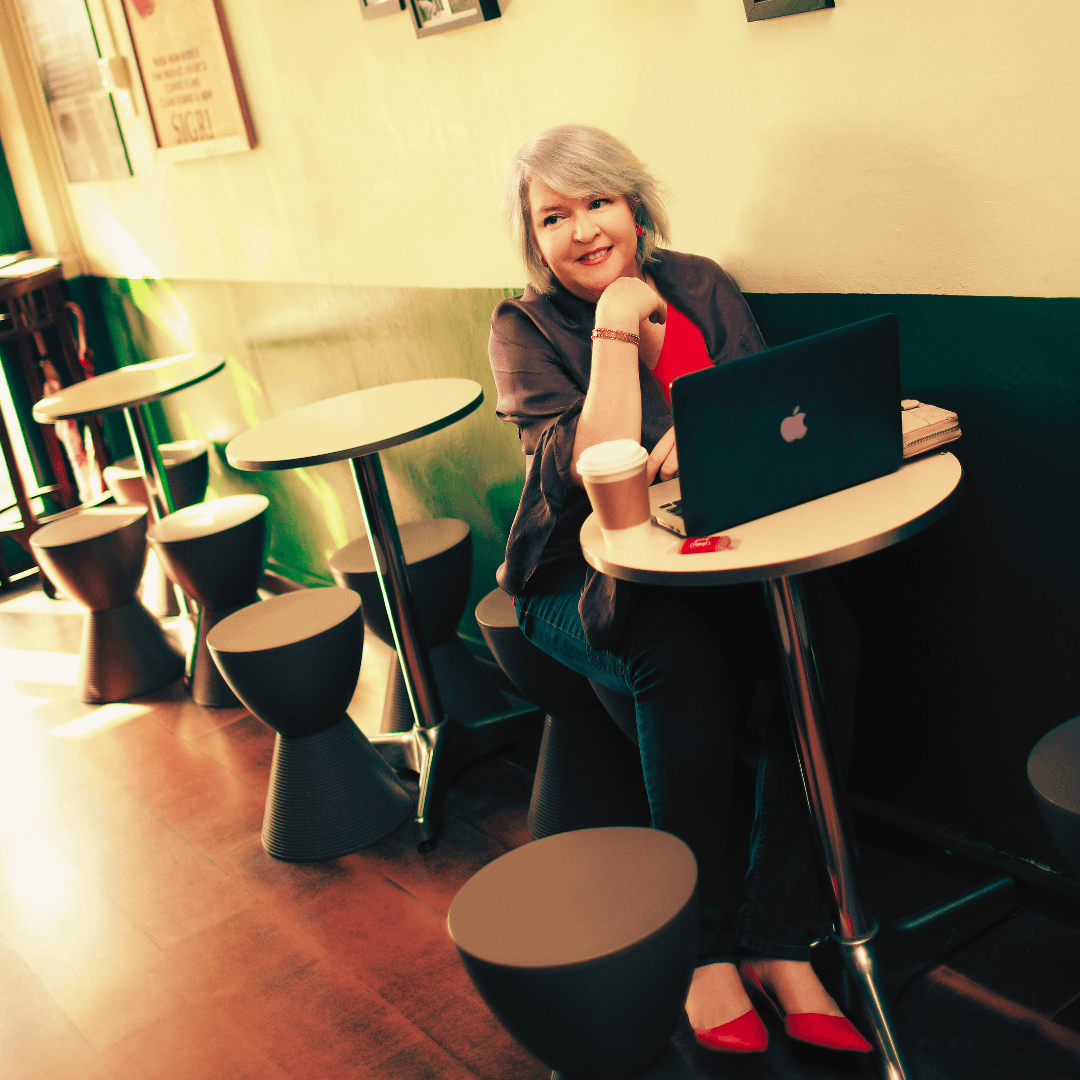
Hi there 👋 My name is Ange Dove, professional copywriter and messaging strategist. I help Gen X professionals find the words to express who they have become, and to build a career or business that owns it.

GET YOUR UNCHAINED AUDIT
Let’s have coffee online for 60 minutes on Zoom, where we'll look at your profile, your message, and your next chapter together and give you the roadmap to take your next steps.

GET THE NEWSLETTER
Straight-talking insights for experienced professionals who want to turn what they know into income, options and greater freedom over what comes next.


