Call: +65 6012 3433 | Whatsapp +65 87792453
Startup Marketing Lessons That Helped Build Multi-Million Dollar Brands
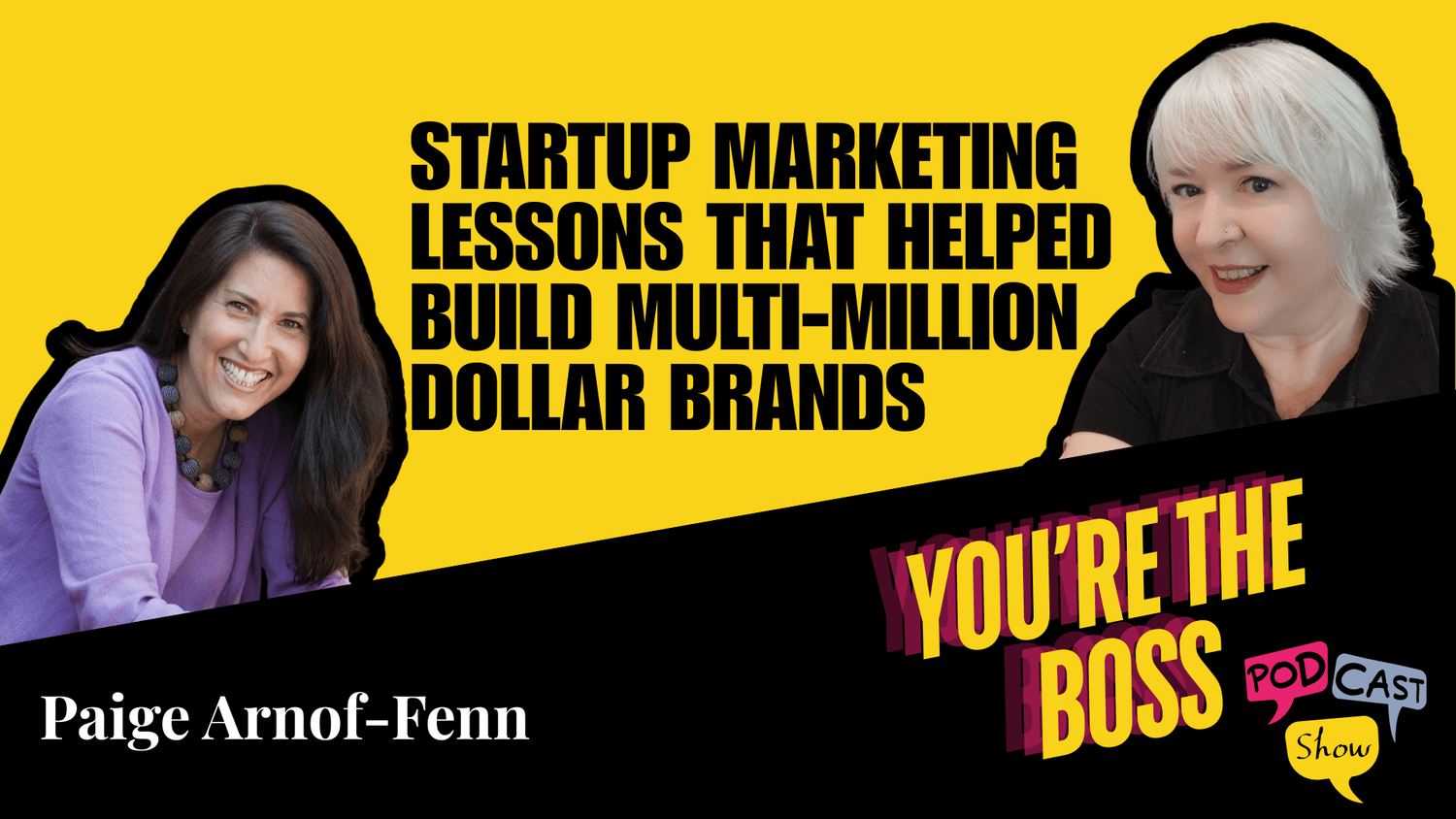
Click the image above to watch
Ange Dove (00:01)
Welcome to You're the Boss Podcast Show. And today I have Paige on our fen with me. And she is the founder and CEO of a global branding and digital marketing firm called Mavens and Moguls, based in Cambridge, Massachusetts. Is that right? Cambridge, Massachusetts, yep. Her clients include Microsoft, Virgin, the New York Times company, Colgate.
Paige Arnof-Fenn (00:21)
You got it. Yep.
Ange Dove (00:30)
and venture back startups as well as non-profit organizations. Now Paige graduated from Stanford University and Harvard Business School and she serves on several boards, is a popular speaker and columnist who has written for Entrepreneur and Forbes. So Paige, welcome to the show.
Paige Arnof-Fenn (00:52)
Thank you so much for having me.
Ange Dove (00:54)
So lovely to have you here. So with that introduction, maybe you can probably do yourself more justice than I do you just explain a little bit more about first of all, how you got to where you are today, because I'm always interested in the journey. especially when if it's helping our listeners and viewers to understand that if they're in
corporate now and that's not where they want to be. They can actually make the leap. So just tell us what happened with you.
Paige Arnof-Fenn (01:32)
Yeah, that is definitely part of my journey and backstory as well. Yeah, I I didn't start in marketing. I actually started on Wall Street in finance right after college. It was the nineteen eighties and a lot of people were taking finance jobs in New York City and I just followed the the stampede, but I realized very quickly it was not gonna be
kind of my life journey, but I had signed up for a two year commitment. So I honored my commitment and then went back to business school to kind of rebrand myself because my whole student life, I really thought I was going to go into finance. I had never taken a marketing class. I didn't really know marketing was a career. So my summer internship, so an MBA is a two year program.
when you go full time. And you have a break that summer in between to try an internship. So I got an internship in marketing at Proctor and Gamble, which is probably the most recognized consumer products marketing company in the world. All of their products are beloved brands. you know, Pampers and Charmin and Panteen and Tide and Crest. So
You know, every category they compete in, their their products are like the biggest, or sometimes even number one and number two. So they invented the concept of brand management. So it was like marketing boot camp. So I was an intern and they made me an offer to come back. And I went back after graduation and stayed for about three and a half years and loved marketing, but you know, as you said, that is a big
corporate entity and you know very hierarchical and a bit stifling. You learn everything the PG way, which obviously, you know, is a blueprint for success. But, you know, if you had talked to my boss, you know, any of my bosses from those early days, they would have said, you know, Paige is really smart, hard worker, but boy was she a pain in the butt.
Paige Arnof-Fenn (03:59)
Every time they gave me a project, you know, they'd say, okay, here's what we want you to do. And PNG had a way to do everything. Packaging copy, advertising, pricing, promotion. They had perfected the system. And I would say to my boss, you know, that's a you know, a great project. Here, I have this idea. What if we tried? And he he would shake his head and go, No, Paige, don't try anything.
We don't need you to reinvent the wheel here. We know how to do this. You just need to execute it with excellence. And although I could do that, I found it very frustrating. So now looking back on my corporate career, I kinda laugh. I cannot believe I was as successful as I was because I really was much more entrepreneurial.
But being an entrepreneur was not really a thing back then. No you know, that it it wasn't like a term that was thrown around. People didn't like hang out shingles and start their own companies. You know, I so after PG, I ended up going to Coca-Cola, which again was another really big corporate entity, Fortune maybe ten company.
And Coca-Cola is probably the most recognized brand in the world. You know, i it's sold in about 200 countries. So again, they're not asking me to recreate the wheel there either. I love the job. And you know, when you give people your business card, they look at those logos and and you have instant credibility. which you know, who doesn't love that? But that corporate chapter.
although I learned a lot and worked with amazing smart people. it was around the mid to late nineties when the internet one point started taking off. And I I it was like the shiny object I could not stop looking at. And I got very distracted and I ended up quitting my job at Coke and I went to go work for an internet startup.
Paige Arnof-Fenn (06:17)
No one had ever heard of it before. I think my boss and my mother thought I was having a nervous breakdown and just needed a vacation. But I said, No, I think I'm gonna regret it the rest of my life if I don't try this because I had been so risk averse in my career. I went to good colleges, I had blue chip brand names on my resume. I had never taken a career risk in my life, and I just felt like
You know, I'm in my early 30s. If I don't do it now, when am I gonna do it? And it was the next chapter. So I left the corporate jobs behind and I ran marketing at three different venture-backed tech startups. And they all were a wild ride. They raised tens of millions of dollars, which got put into marketing, and I helped make these brands, you know, known on the map.
two of them went public and were sold to bigger companies. And the third one was sold to a large private company. So that chapter was super fun. you know, when you work for Coke and PG, you don't know how much of what you're doing is just, you know, legacy, inertia. Like that brand's gonna be successful with or without you. Even if you make great decisions.
you can't really separate yourself from the power and of the brand and the budgets that they put behind it. Those companies can they sponsor the Olympics and the Super Bowl and World Cup soccer. Like, you know, they have huge purses, huge wallets. So startups, you know, it's scrappy, it's resourceful, it's much more entrepreneurial.
Ange Dove (07:49)
Yeah.
Ange Dove (07:54)
Hmm.
Ange Dove (08:06)
Yeah.
Paige Arnof-Fenn (08:13)
And all three of them were dot com survivors and success stories. So I realized I learned so much in my corporate chapter that I could apply to the to the startups. And then nine eleven happened. And when nine eleven hit, marketing jobs just immediately dried up. A lot of companies fired their marketing departments because they didn't want to spend cash because they were worried they'd never be able to raise money again.
Ange Dove (08:22)
Yeah.
Ange Dove (08:26)
Mm-hmm.
Paige Arnof-Fenn (08:43)
And the stock market tanked, you know, hundreds of points. And back then, twenty five years ago, you know, the stock market didn't do that. It was not the roller coaster that it is today. Now the stock market can drop three hundred, five hundred points a week and then it bounces up, down, and nobody really even cares anymore. They don't seem to notice. Back then it was a huge deal.
And so the jobs dried up. I had just gotten bought out of my third startup. I hung out a shingle and I started helping small businesses who needed help with marketing. So here we are twenty-five years later and I'm still having fun.
Ange Dove (09:29)
that's quite the journey and I just I find it like amazing that okay so you you basically got your foundation through working through the likes of Protter and Gamble and Coke, right? So that was you're you're not just marketing one one, that's all the way up, right? You've you've learned all the foundations and everything for prospect. Yeah. So and then ironically like
Paige Arnof-Fenn (09:49)
Yeah, I got a PhD and a postdoctorate. Absolutely.
Ange Dove (09:58)
I I suppose tech startups are creative, right? But that's where you got to do your creative work because you had limited budgets and you had to make things work, right? So then you got to do the things you couldn't do at Foxling Gap.
Paige Arnof-Fenn (10:08)
Yep, you got very good.
Paige Arnof-Fenn (10:13)
Yeah. No, you get very good at what
Ange Dove (10:15)
That's how nice. So there wasn't anybody telling you, Don't reinvent the wheel page.
Paige Arnof-Fenn (10:21)
No, I was in charge and you know all of the tech startups, well t my first tech startup was started by these two guys who were younger than me who had been childhood friends. They came up with this great concept and you know, good technology, but they didn't know anything about marketing. So really the buck stopped with me. They gave me a budget.
They gave me a you know, a deadline and you know, no there was no check or balance. and it's so different than my corporate jobs where I had bosses and then my bosses had bosses and you know, a lot of people had to approve it. You had to research and test and write, you know, memos to get approval, to, you know, do everything.
Ange Dove (11:03)
Mm.
Paige Arnof-Fenn (11:16)
And it was scary, you know, three weeks into my job, I went to the board meeting of the first technology company and I laid out the plans and everyone around the table said, sounds great, good luck. And I thought, my god, this never happened to me before. You know, the the guy that I worked yeah, be careful, be careful what you wish for.
Ange Dove (11:37)
So no objections, no no feedback.
Yeah.
Paige Arnof-Fenn (11:44)
That my boss at Coca Cola was the chief marketing officer for the entire company. And huge job. He was a very well respected, smart man. And he had been with Coca-Cola for a long time. And you know, he did both new Coke and Diet Coke. Diet Coke was the most successful.
product launch ever in consumer products history and new coke was a disaster. So here's a guy who was really famous. he was a Mexican guy and you know spoke multiple languages, had lived all over the world. And you know when I I was his assistant and you know when when he gave me projects
And I would come to him. He challenged every c every assumption I made. He looked at everything and he challenged every decision. Why this? Why not that? What were you thinking? How much money? What's the investment? What's the return? And, you know, he beat me up in every meeting. You know, it was everything was a struggle. And then I go to the first meeting three weeks into my new job.
And nobody asked me one question. They they say, okay, how many, you know, how much money do you need? When can you start? And I literally panicked. And I went back to my desk, you know, it at my office, and I called my old boss at Coca Cola and I said, my God, this is really scary. Because I just and the board of my the company.
were a lot of very famous people in business and technology, in big time investors. And I said to my old boss, you know, I'm I'm very nervous because nobody had questions. They said everything looked great. He said, that's ridiculous. Of course you s you you didn't do everything right. Of course and I said, can I send you what I did and I'll tell you
Paige Arnof-Fenn (14:05)
And I said, they really need you on this board because I need a boss. I need guardrails. Like I'm scared to death. And I sent him everything. And he said, my God, you do need help. He said, I have to meet he said, I have to meet the two guys because they were younger than me. They had less experience than me. And so I made an introduction and one of the founders and I got we were living in Los Angeles.
And one of the founders and I got on a plane and we flew to Atlanta and I introduced him to my old boss at Coke. And my old boss said, You know, this guy n does need my help. He needs needs my advisory. I see why you want me to join the board. So he did. He joined the board and I got my old boss back. So that was amazing because
You know, it's just the culture is so different. The startups were like the wild west in the nineties. You know, the market hadn't crashed yet. And you know, they thought money was free. It was just gonna be easy to, you know, raise money and throw a bunch of things against the wall and see what's stuck. But it you know, I knew enough to know I needed some help.
Ange Dove (15:09)
Mm. Mm.
Hmm.
Ange Dove (15:21)
Yeah.
Ange Dove (15:29)
Right, okay. So okay, so for all the experience you had in Coke and Proctor and Gamble before that and they had all the SOPs, they had everything, it had to be done this way and there was no leeway, you had to do everything, right? Would you say that that then in a way it g it gave you the foundations, but then because you weren't really, I suppose, thinking is this right to say that you weren't really thinking for yourself because it was all there
just go and execute. Is that was that the way it was?
Paige Arnof-Fenn (16:01)
Well, it you know, they gave you the breadcrumbs and so you know, at P and G the company is a promote from within organization. So they have to train you really well because you you are going to go up the corporate ladder. They don't bring in people you know, at middle management. Like they have to train the future. So, you know, you
Ange Dove (16:05)
Okay.
Ange Dove (16:11)
Yeah.
Ange Dove (16:19)
Mm.
Mm.
Right.
Paige Arnof-Fenn (16:30)
you you're in in the queue, if you will, and when your boss gets promoted, there's gonna be a spot and somebody gets promoted into that spot. So i you know, I was learning all the PG way of doing things, but it you know, I had to think a lot because, you know, it is it was foreign to me when I got there and I really wanted to learn it. But
Ange Dove (16:45)
Mm.
Paige Arnof-Fenn (16:58)
I didn't know how much was me and how much was the company. And so, you know, you want to be able to test your own metal. You want to know, like, is my DNA in this brand at all? And at the startup, there was no framework. There was no blueprint. You had and these brands do not own any real estate.
Ange Dove (17:02)
Right. Okay.
Ange Dove (17:13)
Right.
Ange Dove (17:17)
Yeah. Mm-hmm.
Paige Arnof-Fenn (17:26)
in the customer's brain or in the customer's heart. So you're creating that impression and that relationship and that emotional connection without all the history. I mean Coca-Cola was over a hundred years old when I started. The brand that I worked for at Procter and Gamble was over 30 years old. So I inherited something that already existed and was love.
Ange Dove (17:40)
Yeah.
Ange Dove (17:44)
Yeah.
Ange Dove (17:55)
Yeah. It's proven, right? Yeah. Yeah.
Paige Arnof-Fenn (17:57)
So it's it's different when you're you're the one so my DNA was in every one of those startups because there was no history.
Ange Dove (18:05)
Right.
Ange Dove (18:09)
Yeah. Yeah. That's amazing. So so so that was the start then really of you being able to put your own stamp on things, right, with this this these startups. When when do you think you got to the stage where you're like, Okay, now I know what I'm doing and I know what works. W when did that happen?
Paige Arnof-Fenn (18:30)
So I I think after doing it three times for someone else for something that it was not my idea, it was not my concept, it obviously resonated with me. It played to my strengths. all of those brands were ones I could relate to a hundred percent. But when the situation presented itself after nine eleven
Ange Dove (18:36)
Mm.
Paige Arnof-Fenn (18:59)
when everything got thrown up in the air and you know there was just like this pause. I felt like there there was a red flashing sign in front of me because there were people that needed help and they knew me because you know my first clients came from people that knew me from my previous experience.
They were investors in the startups I worked for. you know, they were people that ran companies that I've known for years, and they came to me after the the jolt of the 911 kind of shock and said, We you know, I've got a product that I'm launching, I need a website, I need, you know, advertising, I need some marketing materials.
I you know, I need a logo, a tagline. Can you do this? Cause I know you've done it before. Can you help me? And my first instinct was no. I I never worked on the agency side. I was always the client. And you know, I I didn't work as a consultant. When I think about people that worked on the service side, they're usually good at PowerPoint.
Like that, I don't do PowerPoint. I just roll up my sleeves and do the work. And they said that's all we need. We don't need another PowerPoint presentation. We need somebody who can help help do the research, build the website, you know, get the product ready for the market. And I said, Well, yeah, I can do that. I know the right people. And, you know, everybody that I had worked with that I really loved.
Ange Dove (20:29)
Yeah.
Paige Arnof-Fenn (20:54)
earlier in my career, everybody had been laid off. And they were, you know, just waiting for something to rebound after 9-11. So, you know, I would I would tell these clients, you know, I have three people, one's a web designer, you know, one does this, one does that, and we'd set up a meeting, we'd do a conference call, whatever. And they said, great, you're hired, how much? You know, send me an invoice.
And my husband said, quit telling them you're not a a consultant. You know what to do. Your friends can help. Just go do it. And so, you know, I called the women in my group, the marketing mavens. I called the guys, the marketing moguls. For short, I called them mavens and moguls. I thought we needed a website to be official. You know, I came out of the corporate world where, you know, you had a business card with the logo, you had a website. So
We did it. I had a college friend who wanted to learn how to be a programmer. So I said, Great, you know, I'll be your guinea pig. You can program my website. And she did it. And, you know, somebody helped me with the logo. And we just put it together, threw it out there. We looked official. And I thought after the beginning projects, we'd be done. You know, I'd figure out what to do next. I could go take another job.
But here we are almost 25 years later, and we're still doing it. And I think in a very weird way, we're probably more relevant today than we were when we started, because you look at all the ups and downs in the economy and the world. And now the concept of outsourcing marketing is like nothing. But back then,
Ange Dove (22:24)
Yeah. Yeah.
Paige Arnof-Fenn (22:50)
People outsourced legal or accounting or bookkeeping, but they didn't out that you would hire an ad agency, but you didn't outsource your marketing department. That was just not done. And now when you think about the whole sharing economy, p you know, Airbnb, like people outsource everything now. They don't even think t you know, who wants to buy sporting equipment, even your
Ange Dove (23:13)
Everything. Yeah. Yeah.
Ange Dove (23:19)
Yeah.
Paige Arnof-Fenn (23:20)
wardrobe, you can rent your wardrobe, you can you can do anything. And so now it may you know, people are like, Wow, you were a real visionary. And it's like, no, it I I just did it out of necessity. It was just that was the way the world was. And it turns out it's been a great way to build a business.
Ange Dove (23:43)
Yeah. Your story is very similar to mine in that respect. So when I sa you you call yourself an on an accidental entrepreneur, and I'm the same. And I really just wanted to work from home and look after my kids. I had no intention of actually setting up a business, but the same thing happened. It just appeared step by step by step. Yeah.
Paige Arnof-Fenn (23:51)
Mm-hmm.
Paige Arnof-Fenn (24:02)
Right, nobody talked about Yeah, nobody nobody talked about being virtual before COVID. And yeah, it made sense. You were able to set up your business and here we are.
Ange Dove (24:09)
Yeah. Yeah.
Ange Dove (24:19)
So cool. So, okay, so you you mentioned virtual, right? So you're you're outsourcing to different people. You haven't got a physical office that you work from, is that correct? Yeah. So everything's done remotely. Yeah. So what advice would you give to listeners if they're running a business or thinking running a business and they're at the stage where they need to start hiring? What advice would you give them about hiring remotely?
Paige Arnof-Fenn (24:32)
Correct. Yeah. I'm just working Yep.
Paige Arnof-Fenn (24:50)
So, you know, the common thread to hiring in general is you want to find people who really are strong where you're weak. You want to make sure that as a team, you know, you've got a well balanced group that culturally really fits together well. and the thing that
you know, you j if we learned anything during COVID, it's that if you don't exist online, you don't exist. So you've got to put a stake in the ground. And, you know, people won't know if you're a mom and pop or, you know, the world's, you know, Amazon, a huge company. They have to be able to go into, you know, AI or Google or whatever you're using for search.
and find you. So if they put your name in, if they put your company name in, what's gonna come up? You know, and that, you know, is that the way you want to be known and thought of? because if if if you don't exist, like I said, if nothing comes up, or if you have a name like Bob Smith or you know Susan Jones,
There's gonna be a million things come up and they're not gonna know which one's you. So, you know, those are two extremes, but you don't wanna be in either of those boxes. with a name like mine, with a name like yours, chances are if they Google us, they're gonna find us. And what are what is it gonna say? Is it gonna be consistent? Will it lead them down the path that you want them to think of you?
Ange Dove (26:16)
Yeah.
Yeah, yeah.
Ange Dove (26:25)
Yeah. Yeah.
Ange Dove (26:34)
Yeah.
Paige Arnof-Fenn (26:45)
you wanna be a really good solution to a problem that exists already. You don't want to be something generic or something that doesn't really solve a known problem. you know, the you you wanna be a brand that breaks through versus your competition and you you wanna be
Ange Dove (26:52)
Mm.
Ange Dove (27:09)
Mm.
Paige Arnof-Fenn (27:13)
In a situation where the real estate in your brain, in your customer's brain, that your your your solution, your brand, your name comes up first when they have a problem that you can help them solve. You want to connect with them on an emotional level. And so when they see what you offer, it immediately resonates. If you do that well,
you're gonna be able to really set up a successful business in my experience.
Ange Dove (27:48)
So key is solve a problem, right? Solve a problem for people. And how is AI a real problem?
Paige Arnof-Fenn (27:53)
A a real problem it's a re a real problem that people want to pay to fix. You know, like if it's not really a big deal and they w you know, it's not worth the money, don't go there because it you will not be able to have a sustainable, profitable business.
Ange Dove (28:01)
Hmm.
Ange Dove (28:18)
So so how has AI changed your business, if at all? What's what's happened in that room?
Paige Arnof-Fenn (28:24)
So, you know, AI is here to stay. I think we have now learned it's not it's not gonna go away. You cannot put your head in the sand. The challenge that I talk to with clients all the time is there are a lot of great ways to leverage AI and a lot of AI tools that can help save time and you know be very helpful to your business. You know, if you've got
Ange Dove (28:32)
Yeah.
Paige Arnof-Fenn (28:54)
something that you wrote and it's 600 words, but you really only need call it 250 to go into a newsletter. You know, AI can help you really edit that down and make it punchier. If you're trying to decide between different headlines to use on an email or in a newsletter, it can help you generate ideas.
There are lot of great ways to use AI. The problem is though, you know, AI, if if you're not using it in a helpful way, it's just gonna make you sound like everyone else. So the risk for my clients is, you know, if you're using the same hashtags, the same keywords, that, you know, it it becomes kind of generic.
And everybody starts sounding alike. So the key to building a compelling sustainable brand is you need to put your personality, you know, you you want to get the human element, you know, your origin story, your backstory, what is unique and special and different about your story that nobody else can tell.
Ange Dove (30:13)
Yeah. Yeah.
Paige Arnof-Fenn (30:23)
And AI can't do that. You know, so if you're if you're competing with the robots and the generic technology, you need to dig in and really think about how you're gonna again connect with your audience and touch them on an emotional level and own that real estate in their brain. So when they have a problem that you can help them solve, they think of your product or service.
right away. If you can do that, you're doing great. But you're never gonna be able to really stand out and connect with them if all you're doing is sounding like everyone else.
Ange Dove (31:08)
Yeah, yeah. And it's not just with the copy now as well, it's with the design because I've noticed now I've seen so many very similar designs around where you know it's AI just because of the way it's laid out, right? And the the different icons and and stuff. It's all very generic now.
Paige Arnof-Fenn (31:27)
Yep. And you know, like you said, they're telltale signs, you know, with kind of the AI generated images. and you you have to look, you know, when the fingers and toes you know, they end up with extra digits. you know, on the faces. It can really just not look
Ange Dove (31:37)
Yeah.
Ange Dove (31:46)
I have that. I get I get my VA to generate some images for me and it's the same thing as okay, put something over those hands 'cause they're not right.
Paige Arnof-Fenn (32:00)
Exactly. And and you know, w with with the copywriting, you notice different kind of ticks that AI has and you know when you start seeing the dashes and the you go, no, this is a it doesn't sound it doesn't sound human. It's more robotic, it's more rote and people pick up on that and
Ange Dove (32:12)
Yeah.
Ange Dove (32:16)
Yeah. Yes. The dash, right. Yeah.
Ange Dove (32:29)
Yeah. I I've had so sorry, go ahead.
Paige Arnof-Fenn (32:30)
You know, you wanna build a brand
No, go ahead.
Ange Dove (32:36)
Yeah, so I saying, I've had two people this week tell me that they used to naturally put dashes in their writing and now they don't use them because they'll think that everyone will think that that they've used AI to write what they've written. Yeah, it's it's crazy, right? So
Paige Arnof-Fenn (32:51)
A hundred percent, absolutely.
Ange Dove (32:59)
So Paige, where can we send people to to find out more about you and and for them to see if they want to work with you?
Paige Arnof-Fenn (33:06)
the two best places are my company website, mavensandmoguls.com. It's A V E N S A N D O G U L S dot com. And my platform of choice is LinkedIn. and you can find me. my name is hyphenated, but it's all smushed together on LinkedIn. Page Aren't off then. And if if all else fails, just Google.
Page and Mavens and I'll pop right up because search engine optimization works.
Ange Dove (33:38)
And he'll pop out.
Yeah. And LinkedIn also is just great for you it it's usually one of the top on the list when you Google yourself, right? It's your LinkedIn, it's really strong. So so thank you so much for your time. The the links to Paige's LinkedIn and website will be around wherever you're listening or you're watching this. So do click on the links. So Paige, thank you so much for your time today. It's been amazing to listen to your journey.
Paige Arnof-Fenn (33:48)
Exactly.
Paige Arnof-Fenn (34:09)
Super fun. Thanks so much. I loved it.
Don't leave without your free gifts

Check out my page of freebies designed to help you make progress towards your goals.
From free training on making $10,000 months to how to create your brand message to access to the resources I use in my business that may help you too!
I've got some
gifts for you!
Check out my page of freebies designed to help you make progress towards your goals.
From free training on making $10,000 months to how to create your brand message to access to the resources I use in my business that may help you too!
About me

Hi there 👋 My name is Ange Dove, professional copywriter and messaging strategist. I help Gen X professionals find the words to express who they have become, and to build a career or business that owns it.

GET YOUR UNCHAINED AUDIT
Let’s have coffee online for 60 minutes on Zoom, where we'll look at your profile, your message, and your next chapter together and give you the roadmap to take your next steps.

GET THE NEWSLETTER
Straight-talking insights for experienced professionals who want to turn what they know into income, options and greater freedom over what comes next.


