Call: +65 6012 3433 | Whatsapp +65 87792453
How To Scale Your Start-Up Internationally
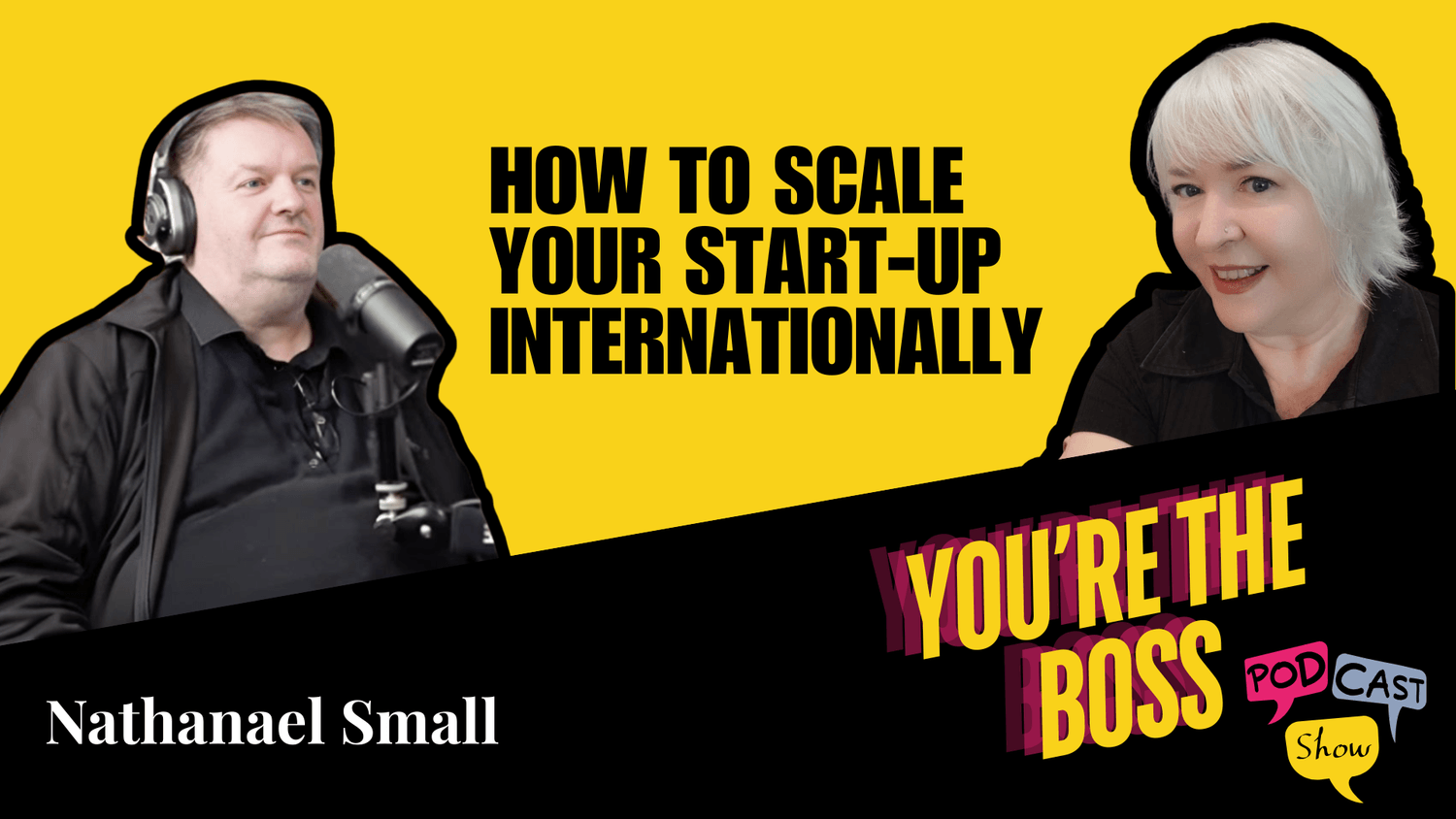
Click the image above to watch
Ange Dove (00:01)
Okay, welcome to Your The Boss Podcast Show. And today I have with me Nathaniel Small, known as NATO to his friends. And Nathaniel or NATO, welcome to the show.
Nathanael Smal (00:14)
Thanks, Ange, glad to be here.
Ange Dove (00:16)
Yeah, it's good to have you here. So just tell us a little bit about just an intro to who you are so we can understand how we're setting up the context to today's c talk.
Nathanael Smal (00:27)
Sure. Okay. Well, the headline is look at my LinkedIn profile 'cause the whole story's there in black and white warts and all. I guess I I exist to serve founders. and I think what I bring to the table is deep understanding of the founder's journey, and understanding the different kinds of preneurs that exist, because there are five.
your solo, your info, which is a consultant, your Entra, you start s some scale and sell. Your intra, you help o you help entreas succeed, or your social. but all of them have a preneurial DNA that is similar. Like all human beings share ninety eight percent of the same DNA. so there's there's a way to under and you've got to understand which one you are because your model of go to market is completely different depending on
depending on that. So I exist to serve founders and to educate equipment, empower them to build thriving and flourishing entities. yeah, that can make sure they're living life to the full.
Ange Dove (01:39)
Okay, nice. So I'm just interested what you said just then about you have to know which one you are because that's going to affect how you move forward. So can you explain, give us some examples of how that would differ?
Nathanael Smal (01:45)
Hmm.
Sure. Well what's interesting is that the world experts in teaching people how to do several of those are Australian. so my first encounter with the preneurial world outside of intrapreneur was through a guy called Matt Church. You can check out his website, Matt Church dot com or Thought Leaders Business School, which is the movement he founded. thoughtleaders dot school. he's the world expert in the infopreneural consultant.
Ange Dove (01:58)
Hmm. Okay.
Right.
Nathanael Smal (02:21)
And a consultants model, you're running a practice, not a business. and a practice, you need to think like a brain surgeon. You're a super specialist. it takes people six months to get in to see you. when they when they finally get in to see you because they're you're referred by a GP, they get you to f do a diagnostic before you get into the room. You meet with them for 15 minutes, they tell you what's wrong with you and what you need to do. You pay a thousand dollars for the 15-minute consult.
And you t you do exactly everything you tell them. And if it's brain surgery, it'll cost you 10 grand out of pocket and and a hundred grand with your private health fund covering. and it'll change your life. so that that's the infopreneur. the solopreneur is a guy called Cole Fink, C O L first name Fink F-I-N-K. he helps individuals who wanna who want to be a one-man band.
Ange Dove (03:03)
Okay.
Nathanael Smal (03:21)
grow over a five year period to the point where they're generating enough cash flow with real net profit that allows them to live with freedom and to do it in a way that's integrated with their lives.
Ange Dove (03:33)
Okay.
And would they still
be a solopreneur at the end of the five years or
Nathanael Smal (03:42)
Well, you can you can stay like that, but it depends. Like with infopreneurs, once you reach it's a it's a martial arts journey from white belt to black belt. other levels you go through as an infopreneur. and once you reach black belt, there are four different pathways you can take. one of them is flip it into a business and become an entrepreneur. so or entrepreneurs will start charities, because they're like founding things.
Ange Dove (04:01)
Mm.
Hmm. Okay.
Nathanael Smal (04:11)
And they'll and they'll become a social preneur. So really people who hard who understand their preneurial DNA are rarely one form of preneur. They exist on a on a map. it's not it's not like Gartner's Magic Quadrant. it's a GPS, and you need to triangulate your preneurial ship to get a lock on your dominant and your secondary preneurship and
And what's the smartest next thing you can wisest next thing you do? Not smart, there's plenty of smart people in the world. what's the wisest next thing you can do to ensure that you stay on track? Okay. So my hallucination is that there's a movement called region preneurs. and a region has a population base of a million people. and within that region all five of these preneurs exist and they're all solving problems and doing it in their own way through their own model.
Ange Dove (04:48)
Okay. Okay.
Nathanael Smal (05:08)
And if you can get the if you can get the right groups of them in a room and solve regional problems, then you see exciting things happen. So just to close the loop on that, Australia just clicked over 28 million people last month. and Australia is overgoverned. We have federal, state, and local governments. we actually need federal and regional. We don't need state and local. and there are 28 regions in Australia. So
Ange Dove (05:15)
Right.
Uh-huh.
Yeah.
Mm.
Nathanael Smal (05:34)
If if I was in politics and I was our Prime Minister who has huge social political equity at the moment, I w I would be going into the filing cabinet and pulling out the nineteen ninety-five white paper when we were twenty million people who put forward this case. and I would be going to the Australian people and saying, By the time I'm I'm finished serving as Prime Minister, I want to have laid the groundwork that we can get to here. No. That's being a statesman. Okay. yeah. So
circling around a lot of things there, but I guess my my passion, my heartbeat is to help people find their ideal preneurial mix and accelerate their journey to living a full life in whatever that looks like for them. Does that make sense?
Ange Dove (06:18)
Yeah.
Yes. I think that's that's the goal is too, especially at this this time of life is you want to be living life on your terms, right? You wanna yeah. So definitely if if if you can help people do that, that is a great mission. So how did you get into this? Because you weren't always running your own business, you were working for others. So what was that transition? How did that happen?
Nathanael Smal (06:33)
Hmm. Hmm.
Mm.
Yeah, I mean I've been an intrapreneur for most of my career, or or my vocational journey, I would say, because you have survival jobs, transitional careers, and a career you're climbing the ladder, but career also means to flail about aimlessly. and a lot of intra and a lot of entrepreneurs get stuck on the ladder at that on those three rungs of career.
Ange Dove (06:46)
Amen.
Right.
Nathanael Smal (07:08)
But the the three levels above that are your vocation and vocation from the Latin vocare to call. so I've been obsessed with knowing the truth about me ever since I was nine twenty twenty-two years old in my first entrepreneurial role, which was working with a global mission organization mentoring, training and coaching university students. yeah. And I was always
Ange Dove (07:24)
Right.
Nathanael Smal (07:35)
I what I've learned about myself is that I thrive in the innovative spaces and innovation happens in the liminal spaces on the fringes. and I love getting it on the ground floor of something that's new and cutting edge. And I'll read my my favorite newsletters are the ones which are saying, here's the science on the latest new tech, or here's the new exponential technology that's coming through VC funding. or
Ange Dove (07:58)
Mm.
Right.
Nathanael Smal (08:05)
Here's what's here's here's the levels that Trump is pulling that are gonna radically shake up the US economy. And as an investor, this is what you need to do. I mean, anything that's anything that signals from the front line, scouting, finding the next big thing. I love identifying those and getting it on the ground floor and helping a founder get the get their movement to a point where it can scale.
Ange Dove (08:32)
Right.
Nathanael Smal (08:33)
so in the V C world that means I love getting in at founder stage when they're looking for seed funding, or angel investors. I kinda top out around Series C. because by then they've they've got a proven technology, they've got enough of a of a funding platform that they the and but it's about getting the architecture right 'cause the way you lead a
Ange Dove (08:41)
Mm-hmm. Yeah.
Right.
Nathanael Small (09:02)
As an entrepreneur, the way you lead changes depending on your full-time equivalent headcount. because when it's just you, you're solo, when it's three to six people, when it's two people, it's a partnership, when it's three to six, it's a family. When it's seven to nine, it's a team, and the elite teams are the US Navy SEALs. but when it's ten to a hundred, it's a tribe. Okay. and a hundred to a thousand is a village, and a thousand to ten thousand is a town.
Ange Dove (09:08)
Mm.
Right.
Okay.
Okay. All right. Okay.
Nathanael Small (09:31)
10,000 to 100,000 is a city. And a lot of this comes from sci the science of individual and organizational growth. The guy who wrote the Bible on called Blitz Scaling was Reed Hoffman, the co-founder of LinkedIn, who's a venture capitalist for venture capitalists now in the valley. And Blitz Scaling came out 12 years ago and its thesis was how did Facebook, Airbnb, Spotify, and
Ange Dove (09:46)
Mm.
Nathanael Small (10:01)
go from a garage to global at a turbocharged rate. yeah a and he spoke VC language, whereas to me it's not about blitz scaling, it's about fit scaling, because if the founder is not f living a full life and is not well, then the whole thing's going to come apart at the seams. and if you're not leading properly at those different levels, the your org your organism is unhealthy and people will break.
Ange Dove (10:16)
Yeah. Yeah, yeah.
Hmm.
Nathanael Small (10:30)
It's
Ange Dove (10:31)
So
basically you're you're taking people from like if you're taking it from a solopreneur and then taking them up through that growth stage, right? They have to wear different hats, they have to get used to doing different things and changing how they operate the business, right? So you help them to navigate that 'cause I would imagine that's quite difficult to sort of do if you've got blind spots and you don't see something.
Nathanael Small (10:36)
Mm.
Hmm. Hmm. Hmm.
Hmm. Hmm.
Yeah, and and
critical is getting the thinking right and understanding the mental models and and of of how all this works. because Australia, for example, our startup ecosystem is very mature. We've got a hundred or more incubators out there, each doing their own version of reality. Western City University, where I worked for nine years, is called Launchpad.
Ange Dove (10:59)
Mm.
Right.
Mm-hmm.
Nathanael Small (11:23)
What's unique about Western is that it's a distributed network, a federated network of campuses, and we have an incubator s incubator presence on all of those campuses. and Greater Western Sydney is the fastest growing economic engine in Australia. and every one of those campuses is part of a precinct, and the incubator is nested in the precinct. So Paramatter, which is where HQ is, is Proptech.
Ange Dove (11:27)
Mm-hmm.
Nathanael Small (11:49)
Westmead, which has got the largest health in health precinct in the Southern Hemisphere, is Medtech. Hawkesbury, which is periurban, is Ag Tech. Bankstown is is Manufacturing Tech, Advanced Manufacturing Tech. which is also the same out of Bradfield, which is where the new international airport is coming in, which is an absolute game changer. So,
So but there's but there's national incubators like Stone and Chalk, and Stone and Chalk have a contract from the New South Wales state government to fill Tech Central, which is a massive building that the government built to house startups. the challenge that they've got is that startups you can go global from a garage and still stay in a garage these days. I mean the first one person, one billion dollar annual recurring revenue business has already been founded.
Ange Dove (12:42)
Right.
Nathanael Small (12:42)
And the first one will achieve that metric by twenty thirty. Because they'll have a super agentic ecosystem of tools. That means they don't need other humans. so getting us getting a startup to come and pay a premium in rent, when they can do it from a garage, like Safety Culture did with three guys in Townsville, who are now global, or Atlassian, who's a brand you probably know.
Ange Dove (12:50)
Mm.
Mm-hmm.
Yeah.
Okay.
yes,
yeah.
Nathanael Small (13:12)
Yeah, two Australian founders. yeah. So the the deal the organized businesses only grow one of three ways. They grow organically, they grow through partnerships and they grow through mergers and acquisitions. And if your organic growth is not healthy, if your if the founder is not if the founder is not healthy living a full life, and is not growing organically, then
Ange Dove (13:24)
Hmm. Hmm.
Yeah. Yeah.
Mm.
Mm-hmm.
Nathanael Small (13:41)
their business will not grow organically and every person who joins will have their own pathologies and and blind spots and weaknesses because they're just because they're just a tr the center of gravity of the founder attracts that. and yeah.
Ange Dove (13:47)
Right.
So when when you're saying that the founder is not healthy, you mean like
in in holistic terms, in terms of general physical health or mental? Yeah.
Nathanael Small (14:00)
Absolutely, the whole the whole person.
and it's not rocket science, it's sleep move eat. Like, how many founders do you know who are doing eighteen hour days, seven days a week, trying to expand globally and and on sales call after sales call after sales call all over the world. not sleeping. their movement is awful, they're sedentary most of the time. or they'll go to the gym and punish themselves, at two o'clock in the morning.
Ange Dove (14:06)
Right.
Yeah. Mm.
Not sleeping and yeah. Yeah. Mm. Mm.
Ha ha.
Nathanael Small (14:28)
Because they can't sleep because they're so charged up from being on their tech tools all day. And their diet is hopeless. they don't understand the benefits of fasting, intermittent and extended fasting. They're eating takeout all the time around getting getting Uber to deliver to the garage, junk food. and sleep move eat is the foundation. Like it's very, very simple. but we live in a complex world and people over
Ange Dove (14:29)
my God. huh. God. Right.
Mm.
Mm-hmm.
Right. Right.
Nathanael Small (14:58)
Over cons complex things. Hmm. Yeah, we're always on. So this is why things like digital, this is why things like digital detoxing is becoming so popular. And and and all and all AI is doing is helping really high performers get sick faster because they're creating agents to do their work, but they're not actually using the they're not actually saying
Ange Dove (14:59)
Yes. And I think as you say, all these devices are the problem as well, right? All the electronic devices. Yeah. Yeah.
I yeah. Yeah.
Yeah. They can do more. Yeah.
Nathanael Small (15:25)
the agents working like working like a s chief marketing officer is, I can actually disconnect from that part of the business and do and work less hours. it's like Tim Ferris's his four hour week, which was a breakthrough book fifteen years ago. it's possible now with AI to to only do four hours a week. but but most entre but most entrepreneurs just double down and work harder and and pick up something else.
Ange Dove (15:35)
Mm.
Mm.
Yeah.
Right. But people aren't doing it, right?
Yeah. Try and do more.
Nathanael Small (15:54)
They have shiny
object they have shiny object syndrome, which is which is the human form of of SOS distress signal. no, no, so so the founder being fit is is absolutely foundational, because the body keeps the score and it does not lie. which is why all this wearable health tech is is getting so much traction now, like starting with the Uru Ring.
Ange Dove (15:57)
Yeah.
dear. that's not very healthy.
Yeah, is important, right? Okay.
Right. Yeah. Yeah.
Yeah.
Nathanael Small (16:24)
And now there's things like eight sleep, which is a cover you put over your mattress, with some tech by the bed, which optimizes your sleep conditions. So cooling, darkness, soundscapes, like that's why it's such a huge hyper exponential market, because people, human beings in the Western world are sick. their charge is in the red zone. If you look at their look at them holistically, their spirit, their soul, their mind, emotions, and body are all in the red zone.
Ange Dove (16:28)
Okay.
Yeah.
Nathanael Small (16:54)
there's an emerging condition called chronic depletion syndrome. which is burnout on steroids.
Ange Dove (16:54)
Right.
my god. So then
there'll be more technology to to counter that then, right?
Nathanael Small (17:09)
But but you've
got to get the human optimized first. Tech is a tool. and the tool serves the work. and AI is a tool, all this wearable tech of tools. And in the Aussie vernacular, just don't be a tool when you're using the tools.
Ange Dove (17:12)
Yeah. Yeah. Mm.
Love
it.
Nathanael Small (17:26)
Yeah, those those corporate values that were all all the rage about ten years ago where one of them was no jerks. or in Australia we'd say no dickheads. or for me it's no tools. I have a very, very low threshold for people who are tools.
Ange Dove (17:34)
Uh-huh.
Uh-huh. Okay.
Yes.
Yes. So so tell me a little bit about your business now. So you you've teamed up with two friends, right? To run your business. So how's that working out?
Nathanael Small (17:52)
Yes.
Yeah. Well I think the first thing to say it's not a business, it's a practice. so it's a marketing advisory partnership practice. So we do marketing, the science and art of marketing. We do strategy stories and growth in marketing. That's our three legged stool. we're an advisory, so we're not an agency. we don't do creative, we don't build websites, we don't we don't do PR, we don't
Ange Dove (17:59)
Okay.
Right.
Hmm, mmm. Right.
Right. Don't do it for them. Yeah. Smart.
Nathanael Small (18:24)
we do we
Ange Dove (18:24)
Yeah.
Nathanael Small (18:24)
can do a bit 'cause ahead of story comes out of a deep Marcoms background. so who understands the science and art of it. but we're a partnership, so there's three of us as co-founders. And we may add more partners as we grow, but we're but the the barrier to the door to op the open the door to our partnership house is closed and locked super tight and it will only ever be opened from the inside.
Ange Dove (18:28)
Yeah.
Mm.
Mm. Mm-hmm. Yeah.
Nathanael Small (18:52)
And we're a practice, not a business. So we're infopreneurs, we we consult. not in the Dilbert consult way when when Dogbert was sitting on his house and said, Hmm, I like to con people and I like to insult people. If you combine con and insult, you get consult. And then the last panel is he's with the pointy head manager and he says, I'm here to consult you. And the pointy head manager says, Hmm, sounds expensive and demeaning.
Ange Dove (18:57)
Yes. Yeah.
Nathanael Small (19:21)
Where do I sign? so consultants speak, the consultants speak, they author, they mentor, they train, they facilitate, and they coach. So you have one message, one market, which is your ICP, and one method, which is one of those with advisory sitting above all of them. so you have to know you have to know you go to market as a as an infopreneur, message market and method.
Ange Dove (19:26)
I love what you do.
Mm. Right.
Mm-hmm. Yeah. The one is very important, right? The no the word
Yeah. Mm-hmm.
Nathanael Small (19:50)
And you run a ninety day campaign where you launch two every nine two every and I say ninety-one because I talk in seasons, I don't talk in quarters. Seasons are much more aligned to the rhythm of creation, like it was the winter solstice yesterday. so our so our campaigns for winter kicked off yesterday. we've got our clusters and we've got our comms planned for the next thirteen weeks. We run twelve weeks, then we have a week of rest reflect, renew and reset.
Ange Dove (19:51)
Mm.
Uh-huh.
Right. yeah. Yes, good.
Okay. Okay. Nice.
Mm-hmm.
Nathanael Small (20:23)
so I'm a big believer in aligning with creation rhythm. because there's an or there's an order to creation, and you can either align yourself with it and and thrive or or you can work against it and you'll die the death of a thousand cuts.
Ange Dove (20:21)
Nice. I like that.
Nice. Yeah. Yeah.
Yeah. And I think as
well, like knowing your natural rhythms through the day as well. Like, you know, when do you work best? Yeah. Yeah. Yeah. Uhhuh.
Nathanael Small (20:43)
Yeah, your circadian your circadian rhythms, that's a that's a real data point. I'm a lark, so
I wake up at four and go to bed at eight PM. I aim for eight hours uninterrupted sleep a night, because the science says that's the minimum effective dose. If you're not getting that, you're damaging your body at a cellular level and it might take ten years, but you will break. which is why sleep is so crucial. Yeah. So
Ange Dove (20:53)
Okay.
Right. Yeah. Yeah.
my goodness. Yeah. Yeah. I'm usually up for five. Yeah. Yeah. I'm usually up for
five. Hmm.
Nathanael Small (21:10)
Eight hours uninterrupted. Like
you can get eight hours in total broken to start, but you but you have to aim for eight hours uninterrupted. yeah.
Ange Dove (21:15)
Hmm.
And uninterrupted. Yeah.
Yeah. Sleep is I mean they've discovered now, right? Sleep is just so crucial. It's and I've I've heard as well if you've got the choice between exercise and sleep and you need you need both of them, you choose sleep is the one you should choose, right? Yeah.
Nathanael Small (21:33)
Well well sleep is energy charge, move
is energy out, eat is energy in. Like and your battery will go up and down depending on how you manage those three.
Ange Dove (21:38)
Yeah. Yeah.
Yeah.
Yeah. I did a a retreat just two weeks ago now. I came back from a five day retreat in Malaysia and it was fasting for five days. So tell you we were just so crystal clear at the end of it. It was you know yeah.
Nathanael Small (21:54)
Well
The longest I've ever done is four.
Hmm. So did you do the drink water, soak cheer seeds for thirty minutes, drain
and then drink the water. then wholly organic liquids in gentle sips, bone broth. did you break it well or do you
Ange Dove (22:21)
No, it wasn't even any bone broth,
it was supplements. There were supplements and water, that was it. And then but we never felt hungry for whole of the five days. Yeah.
Nathanael Small (22:30)
Mm. No, you don't. And I because after
twenty-four hours the autophagy kicks in. and after two days you start getting complete cellular regeneration at a DNA level. So your body heals and reinvents itself. Like in twenty nineteen I fasted, I did intermittent and extended fasting for five for five months. I dropped twenty six kilos. I got off my type two diabetes meds and my blood pressure meds.
Ange Dove (22:34)
Yeah.
Yeah. Yeah.
Yes. It was amazing, actually it was really good.
Right.
Cool.
Nathanael Small (22:57)
The body's ability to rapidly heal when you follow natural protocols is profound. It's utterly profound.
Ange Dove (23:03)
Yes. Yes. I agree. Yeah, that's
what they were saying. and they had like a bioresonance machine. They measured us before and after. And that that revealed some things. I'll send you the details actually. He's doing he's doing one in Spain next.
Nathanael Small (23:14)
Hmm. Wow, that's hardcore. where do I sign?
Absolutely. I mean I'm sure somebody's doing it in
a I'm sure somebody's doing it in Australia, somewhere like Byron Bay on the north New South Wales coast and which is where Chris Hemsworth lives and
Ange Dove (23:30)
He's so this guy's from the UK. He's from the UK but
he's doing he's he travels around the world and he does
Nathanael Small (23:38)
Well, he must come to Australia, we'll host him. Huh.
Ange Dove (23:41)
Yeah.
I shall tell him. I shall tell him. It's really good. It was really good fun. It was like mind and body detox. So it was the two working together. And as I said, we just felt so refreshed. Yeah, yeah. Okay. Nice. Yeah, I think it's really important that you you listen to your body, you listen to what's going on, because it's it's so easy, especially when you're running a business, to focus just on that, right? But
Nathanael Small (23:47)
Hm. Yeah. Yeah, I'm going on retreat next week for two days. to a place called Eden Waters.
Mm.
Ange Dove (24:10)
That can kill you, isn't it? Right.
Nathanael Small (24:12)
Yeah, yeah. And you've got to be really, really clear. I mean, we live in an age of information overload where people suffer from infobesity. and they're relying on AI to give them intelligence. Like ten years ago, all the data analytics platforms like Tableau and Power BI and all of them were saying, Data will give you insight. Well, no, no. It's if if you're if your body's overwhelmed, it's all white noise. Like the like when TV used to shut off when we were kids at ten o'clock at night.
Ange Dove (24:18)
Mm. Mm.
Mm. Yeah. Yeah.
Nathanael Small (24:41)
And they had the test pattern and then it was just snow.
that's white noise. And then in our then when we were kids, when TV came back on again, there were only three stations in Australia four stations in Australia, including the public broadcaster. and you'd turn to each of the channels and and you'd get the signal. Okay. So in white noise you're looking for signals and signals and AI is really, really good at at at picking up signals.
Ange Dove (24:58)
so the way.
Yeah.
Hm.
Nathanael Small (25:10)
It's really, really good at analyzing data. It's really, really great at organizing information and generating artificial intelligence. But human intelligence is vastly superior to any AI at this point in time. Because when you're born, you have a hundred trillion neurons in your brain. By the time you're 18, 19 trillion neuroconnections have been made. and they are unique to you. Nobody else has that same pattern.
Ange Dove (25:18)
Mm.
Right.
Right.
Right.
Okay. Yeah.
Nathanael Small (25:39)
And then as you grow, those neuroconnection pathways strengthen and deepen. And you can access new connections through all that wonderful neuroplasticity that the science was raving about 15 years ago. And then but those connections strengthen and deepen. And when you turn 40, your RAM, your random access memory starts to slow down, and your ROM, your read operating memory starts to speed up. And the connections between the left and right hemispheres of your brain start getting forged at an accelerated rate.
Ange Dove (25:44)
Mm-hmm.
Mm, mm. Yeah.
Uh-huh.
Okay.
okay.
Nathanael Small (26:09)
So that's why
you're young until you're forty and then you're an adult when you're forty. whereas in the world today we say you're an adult when you're twenty one. No, you've still got another nineteen years of being a y being young, I'm sorry, according to bot chronobiology. so yeah, so
Ange Dove (26:17)
Yeah. That's it.
But we we were talking
we were talking earlier about you know like you're in consultancy now, right? So it's using the wisdom that you've amassed over the years of your experience that now you're at that age where, you know, you're valuable, right? You can give that information that someone at the age of twenty five would never have. They have to wait another twenty-five years to amass that knowledge, right?
Nathanael Small (26:34)
Mm, mm.
Hmm. Yes.
Hmm.
Hm.
Yeah.
And the world is slowly waking up because in the world of recruitment, ageism is real. Like, I mean I I mean, I quite deliberately have my beard trimmed close to my face 'cause there's just a hint of grey on the chin, you'll see there. I'm fifty five and if I shave my beard off, people think I'm ten years younger, which is nice. No, very flattering. But I have but I'm quite happy to be fifty five. No, I'm very comfortable in my skin. but it's it's having humility.
Ange Dove (26:55)
Mm. Yeah, yeah.
Yeah.
Okay.
Yeah.
Nathanael Small (27:20)
To know what life stage of life you're at. And humility is having a very accurate self perception, not thinking of yourself more highly than you ought, and not thinking of yourself more lowly than you ought. Being confident, not arrogant, assertive, not aggressive. Okay. And that's the foundation of everything. I've met I've met teenagers who are incredibly humble, and I've met seventeen year olds who are still arrogant. and and always have to be the smartest person in the room.
Ange Dove (27:20)
Yeah. Yeah.
Bye.
Right.
Yes. Yeah.
Nathanael Small (27:48)
And they will dominate and they will do all these really, really stupid, toolish, broken things. So humility, if you're gonna lead, is the foundation. And then above humility is character. Do you love? Do you have joy? Do you have peace? Are you good, kind? Do you h do you endure? Do you are you faithful? Are you gentle? And do you have self-control? and then there's gallops for needs of followers. So why do people follow? Humility, character.
Ange Dove (27:57)
Yes, I agree. Yeah.
Nathanael Small (28:17)
They follow people who build trust, they follow people who show compassion, they follow people who create stability, and they follow people who generate hope. That's out of strengths-based leadership. Tom Rath's book. when he was a Gallup Senior Scientist. so so humility, character, trust, compassion, stability, hope. tell me a leader you've met who exhibits those six characteristic qualities.
Ange Dove (28:34)
Right.
Nice. That's what
Mm.
Nathanael Small (28:47)
And is
mature and I'll show you somebody who can change the world.
Ange Dove (28:51)
Okay, nice, nice. Yeah. I love it. I love it. Well
Nathanael Small (28:55)
Mm-hmm. Yeah. So so
back do you want to go back to big brand theory and or do you want to talk more about founders or I mean, obviously I'm I'm I'm giving you a fire hydrant. I mean, what questions are coming up for you?
Ange Dove (29:08)
So I guess for me it's that okay, you're you're now in this space where you are guiding people that are innovating, right? In the next that coming up with the next the next technology. So you've always been in technology, am I correct?
Nathanael Small (29:18)
Mm. Founders, yeah. Yeah. Yeah.
Yeah. Well, my Zenith was with Morgan when I was the go-to-market for Australasia because they were a second tier supplier to original equipment manufacturers and and in defence what they call primes. and you could look at a you could look at an a piece of original equipment or a defence platform and they had anywhere from three to thirty components.
Ange Dove (29:34)
Mm. Mm.
Nathanael Small (29:47)
that could plug into that one device or platform like a submarine or a wind turbine or a or whatever. and my why I got so excited was that I sat down with the global technology director who gave me the tw took me through the 20 slide deck showing me the technology strategy, how they manage their portfolios globally, the and it bl and I just lit up. I my circuits were blown and I thought
I know exactly what I need to do in Australasia. so everything from the pipeline from co-developed research with universities funding PhDs through to the point where they had their first manufacturing plant in the global supply chain, through to as the cost of manufacturing increased in one country, they would move the the manufacturing plant capability to another country that was lower cost. like it was gl truly global, responding to global
Ange Dove (30:19)
Nice.
Mm.
Nathanael Small (30:45)
seas of change. and I thought this is this is just amazing. I'm so excited to be here. I can sell this. I can market this. so yeah, that gave me the in that that was my ticket to the dance of cutting edge technology. yeah. yeah.
Ange Dove (30:52)
Right.
Yeah.
Right. And that's what's driven you ever since then, I guess, right?
Just all that tech. And then do you get to think?
Nathanael Small (31:09)
Yeah, because the max before you ask another question, the simple
maxim is as a founder, if you want a billion person billion dollar company, you've got to solve a billion person problem. Okay. and there are nine problems, nine problems, one shot of a one shot of two hands that you need to solve. The client problem, I have a broken dishwasher and it needs to be repaired. The industry problem, I can't get the repairman to turn up on time. The sector problem,
Ange Dove (31:19)
Mm.
Right. Mm-hmm.
Nathanael Small (31:38)
Which is what's going on na what's going on across the broader sector, not just if I'm a plumber, but what's going on across the trade sector. can I solve a trade sector problem? The national problem. unique to Australia. What's the national problem for dishwasher repairment? the known spoken problem. If you've got a hundred of your ICPs in a room and ask them list your top three to five problems, it'd take them a day, but you didn't get them all nodding on a whiteboard saying, Yep, that's it.
The known unspoken problem, which is at the end of that day, one of them comes up to you and says, Can I buy you a drink? And when they're and and when you're leaning over the bar of them, they lean in and say, Great, I great, I agree with all those problems, but actually, NATO, our real problem is this. Which is like Voldemort, you dare not speak its name. Okay. and then there's the unknown unspoken problem, the problem that they don't know they have and they're not talking about. and if you can solve that unknown unspoken problem
Ange Dove (32:21)
It's this, yeah.
Yeah.
Mm-hmm.
Nathanael Small (32:37)
you will get loyalty. and you will get a raving fan as a customer. but then above the national problem is the global problem. And in my world at Western Sydney University, we won, we were number one in the world four years in a row for the Times higher education rankings for our commitment to sustainability aligned to the UN sustainable development goals. And that was institution wide research, teaching, assets, facilities, campuses,
Ange Dove (32:39)
All right.
Mm-hmm.
Nathanael Small (33:05)
Everything was aligned to the 17 SDGs. so if you're solving a global one billion person problem, how does it map to the sustainable development goals? Okay. that's the problem set. And if you want to be a billion dollar company, you gotta you gotta laser beam line up and get alignment across all those nine problems. And if you do that, then then it comes down to how fit you are as to whether you can scale. Does that make sense? Yeah.
Ange Dove (33:08)
Bye.
Right.
Right.
Mm. Mm. Yes. So yeah,
it was gonna be my question was have you seen like cases of really good innovation that just didn't make it because they weren't led properly or
Nathanael Small (33:47)
look, I mean the the the founder can fail but the but you've got to understand the forces at work. and I mean we do futurist reports that do five year forecast horizons across different sectors. We've done one for startups and incubators, which I'll get to you so you can have a read of that. And it's in the Australasian context, but with a bit of a global GPS. So with Australia for founders, great start up ecosystem. You can find an incubator that fit that works for you anywhere in Australia. Okay.
Ange Dove (34:00)
Mm.
Right. Mm.
Nathanael Small (34:15)
Universities have them, so there's about twenty university incubators. There's a whole bunch of independent incubators. Stone and chalk are independent. and they've got a national footprint. yeah. So you you you will find an incubator that works for you if you've got an idea on the back of an envelope that you think's got legs. Okay. The screaming gap is scale ups. Okay. When you've when you've got your first series A funding,
Ange Dove (34:22)
Mm.
Right. Nice. Yeah.
Nathanael Small (34:42)
where's the entity that exists that can help you scale globally? Stone and Shawk, as I said, have the contract for scale-ups in New South Wales. their challenge is finding startups who are prepared to move into tech central and trust that they can help them scale. Okay. so where I top out is normally series C, because I've helped the market, I've got the blueprint for them right, they've got the accelerated catalytic growth.
Ange Dove (34:46)
Mm.
Mm.
Nathanael Small (35:10)
I've mentored them and then then my role is to switch to being an independent advisor. the first the first board they should have is an independent advisory board. odd no even number but with the chair as the deciding vote. and they should be a hundred percent accountable to that board. You've got to pick very carefully. but they should be a hundred that's their that's their sounding board.
Don't forget about compliance boards, the Australian Institute for Company Directors with the fellows and governors and all the rest of it. You don't need a compliance board because no director will sign on where there's risk because they don't want to lose their house if they get sued. So so yeah, having that having that startup environment set right from the start where you've got a board, means that when you hit scale, it means you'll get your series A really, really qu really easily.
It'll get harder for B and C. but if you get C in Australia, you can expand into from A across APAC. Most of them go to the Americas first because that's fifty percent of the world market, and you've got the valley and you've got all these other places where you can land and and you've got to work across the three time zones to land and expand. EMEA is great. UK obviously is this self contained post Brexit. but you can set up office in Belgium and you've got the Eurozone.
Ange Dove (36:36)
Yeah. Yeah.
Nathanael Small (36:37)
For ex for example.
so and most people don't understand that. They're learning, they're getting battle scarred and learning through experience. and now India and China are their own unique markets. we get a lot of expat Indians coming here and a lot of India doing geo arbitrage and having all their programmers and coders back in India being paid very few rupees. whereas
Ange Dove (36:45)
Mm.
Yeah.
Mm.
Nathanael Small (37:04)
the smart ones actually onshore their capability. because as the as India and China's economies grow and strengthen the cost base 'cause your biggest cost is your is your people. but there's no such thing as human resources, they're human assets. Resources is mining and it's extractive. Assets are things that you invest in and you want to see grow and compound over time. yeah.
Ange Dove (37:15)
Mm, yeah.
Right.
Yeah. I like that. That's nice.
Yeah.
Nathanael Small (37:31)
Yeah, so the one number that a founder needs to obsess about from a money perspective is real net profit. i.e., what is your operating cash flow divided by your real net assets? and your brand can be an asset. Big brand theory has a diagnostic that does a brand valuation from a marketing lens. Like we're not finance people and we would never claim to be finance people. But we can say with our science of marketing expertise, with a rough order of magnitude of plus or minus 10%.
Ange Dove (37:37)
Yeah.
Right.
Right.
Mm.
Mm. Yeah. Yes. Yeah.
Nathanael Small (38:00)
This is what your brand's valued at. and that can go on your balance sheet for assets
and liabilities. I mean, Coke and McDonald's spend a billion dollars a year valuing their brand. why can't fast growth small to medium enterprises do the same thing? Like I've just I've just done a valuation on a on a convention I was at Supernova on the weekend, which was Australia's largest pop culture convention in six cities over 12 months. I know the founder.
Ange Dove (38:10)
Yeah. Yeah.
Yeah.
Mm.
Nathanael Small (38:29)
And they actually used AI, our AI toolkit to value their brand, which is not on their balance sheet and currently it's one point three million. Yeah. And they've kno they don't know that yet. They don't they don't know that yet, and when I tell him his jaw's gonna drop.
Ange Dove (38:34)
Okay.
Okay. Yeah. Yeah, this this is something that like
'Cause
this is something that wasn't even a concept in the nineteen seventies, right? That your brand would be part of the evaluation of your company, right? Yeah.
Nathanael Small (38:52)
No.
Yeah. But it's but think of
McDonald's. A two year old k knows what the golden arches is and they've had their first happy party.
Ange Dove (38:59)
Yeah. Yeah. Yes. My son. My son, he was
I was pushing him once in the pr pushchair, going down the the street, and we take we took him once to McDonald's, right? And then we're walking down the I'm walking down the street pushing him in his pram and he suddenly gets really excited and he's just pointing. Woo and someone had discarded a McDonald's French fries packet, right, on the ground. But he recognized the arches.
Nathanael Small (39:12)
Hm.
Yeah. Happen but mine was with my daughter Mine was with my daughter when we were driving to the big sh the the big multiplex shopping centre. and the path we took had all the big Australian brand signs up on the top on up on the wall of the roof of the car park. And we stopped at the stop sign and she said, Westfield, which is the shopping centre group, the shopping centre brand. McDonald's Woolworths.
Ange Dove (39:29)
That's why, right? Very powerful writing.
Yeah.
Hmm.
Nathanael Small (39:59)
And she was and she was two, like she learned to talk very young. I mean she's only child, so she talked in paragraphs when she first started talking. yeah. So but that's but the power of that of that recall, like, it's worth it's worth something on the balance sheet.
Ange Dove (40:04)
Yeah.
Yeah, yeah.
Hmm. The visual recall, right? Yeah. For sure.
For sure. Yeah. Okay, Nata, so we'll stop there. We're running out of time. But it's been lovely speaking to you. Thank you. Now, is there anything you want to add, perhaps, that you think you we should cover?
Nathanael Small (40:25)
Yeah. Did you have any last questions or anything?
I mean I'd just say by
way of summary, if you're a founder, you've got to be fit. And it's not about exercising more. It's about understanding the fundamentals of sleep move eat. it all starts with that. if you don't have those right, you will break and you will break fast the harder you push. and if you wanna g if you wanna connect with me, just go to my LinkedIn profile. Nathan Nathan with an AEL small.
Ange Dove (40:36)
Yeah.
Yeah. Sleep, move and eat. Mm.
Right. Yeah, it's really good.
Yep.
Nathanael Small (41:01)
There's only two of us on LinkedIn, the other one's in North America. Yeah. Yeah.
Ange Dove (41:01)
Yeah, we shall. okay. Well, I shall put a link below where everyone is listening or watching this, then we'll put the link to that. So go and check out NATO's LinkedIn profile and you'll find out more about him. Okay. Thank you very much. You're welcome.
Nathanael Small (41:09)
Mm.
Great. Thanks, Angie. It's been great.
Don't leave without your free gifts

Check out my page of freebies designed to help you make progress towards your goals.
From free training on making $10,000 months to how to create your brand message to access to the resources I use in my business that may help you too!
I've got some
gifts for you!
Check out my page of freebies designed to help you make progress towards your goals.
From free training on making $10,000 months to how to create your brand message to access to the resources I use in my business that may help you too!
About me

Hi there 👋 My name is Ange Dove, professional copywriter and messaging strategist. I help Gen X professionals find the words to express who they have become, and to build a career or business that owns it.

GET YOUR UNCHAINED AUDIT
Let’s have coffee online for 60 minutes on Zoom, where we'll look at your profile, your message, and your next chapter together and give you the roadmap to take your next steps.

GET THE NEWSLETTER
Straight-talking insights for experienced professionals who want to turn what they know into income, options and greater freedom over what comes next.


