Call: +65 6012 3433 | Whatsapp +65 87792453

How AI Can Reprogram Your Subconscious
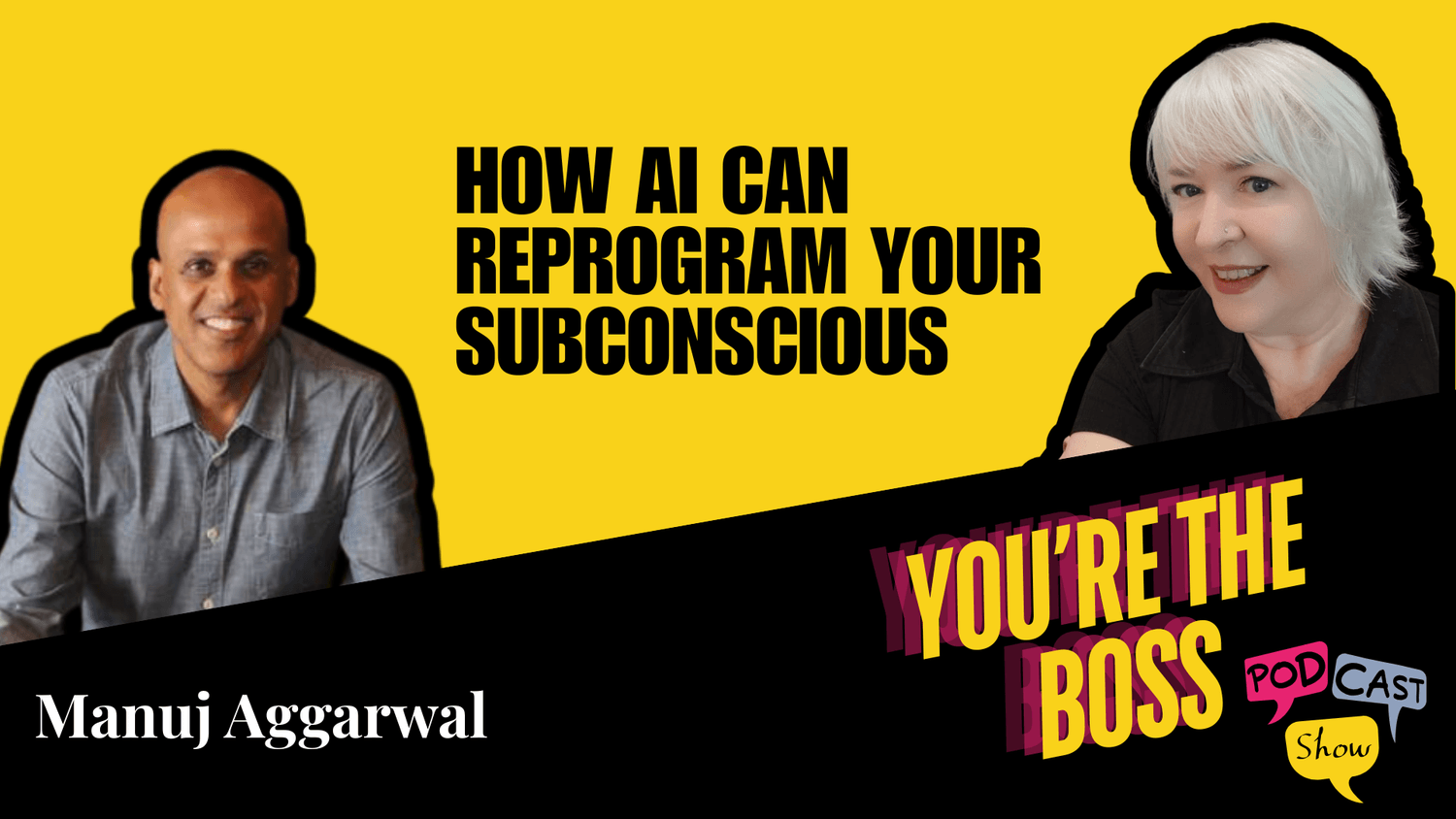
Click the image above to watch
Ange Dove (00:01)
Okay, welcome to Your The Boss Podcast Show. And today I have a very special guest with me, Manuj Agawal. So Manuj, welcome to the show. Yeah, so I'll just explain a little bit about Manuj. He's a global thought leader who's been in AI for 15 years and has four patents in AI. He served clients like Microsoft, IBM, Pearson Education, and more.
Manuj Aggarwal (00:13)
Thank you, thank you, thank you.
Ange Dove (00:29)
Producing 500 million in value for them. His work has impacted over 10 million lives, and he has been mentioned by the likes of President Obama and Bill Gates. So, Manage, that's a very impressive bio there. Welcome to the show. So, tell me a little bit about what we need to know about you in the context of the conversation we're having today. Tell me how you started and where you got to where you are today.
Manuj Aggarwal (00:47)
Thank you.
Manuj Aggarwal (00:57)
Sure. you know, like a lot of people I have a story coming from kind of like a turbulent childhood. grew up in India, small town. dropped out of college in the first three months and wh I was kind of lost in terms of what to do with my life when I was a teenager. And just a quick, you know, just sort of like a stroke of luck, computers were
Ange Dove (01:18)
Right. Mm-hmm.
Manuj Aggarwal (01:26)
already kind of like making their way, but in a small town in India it takes at least four or five years until it catches up. So by the time I dropped out, you know, a computer institute opened up in my city. And so I tried to enroll but I didn't have the money for the fee. So I c I sort of you know saved up for the next year and then I got enrolled and and the rest is history basically, you know, I really
Ange Dove (01:41)
Okay.
Manuj Aggarwal (01:54)
I was an introvert, extreme introvert. Now I'm a little bit better. But at that time I found it very appealing that I can just talk to machines rather than talking to the humans. And you know, like even have fun and help other people. so that's that's the backstory. Yeah.
Ange Dove (02:03)
Okay. See what's
Ange Dove (02:12)
Okay, all right. So so how did you then move from just getting to know computers at that early stage to I suppose now being with AI and then all the people that you've been involved with, how did that all happen?
Manuj Aggarwal (02:25)
Yeah, yeah. I think I mean there is no like I won't say there was any plan as such. I just wanted to have fun and build cool things that helped other people because I have had a quite a turbulent life, if you will, like you know, early childhood and even later in life I had you know episodes of depression, suicidal thoughts and things like that. So I had you know, a a lot of exp deep experiences if I can call it that way.
And through that, like I just wanted to help other people who have similar challenges or other types of challenges. So I've done a lot of work in healthcare and education and things of that nature. And the idea is that when you get passionate about something, I don't think it you do it for specific reasons that okay, you know, I want to get involved with this person or that person. It's like you're just following the passion and as you get deeper into it, you know, you come across other people.
Ange Dove (03:21)
Yeah.
Manuj Aggarwal (03:25)
And then one day you sit back and say, Wow, like I didn't even realise, you know, how it all happened, right? But I feel like it's a cliche saying just follow your passion, but have a purpose. Have a purpose. I think following your purpose is a is a is a key thing.
Ange Dove (03:31)
You didn't plan at all.
Yeah.
Ange Dove (03:41)
Yeah, that's very important. And and you mentioned earlier about like mental well being and that's a central theme I guess i in your life as well. So how did that manif manifest in terms of was that triggered by any events or or is it random? How did
Manuj Aggarwal (03:46)
Mm-hmm. Mm-hmm. Correct, correct.
Manuj Aggarwal (03:57)
Mm. Yeah. Yeah. I mean, you know, like so I I got married when I was very young, like I was twenty one, and it was all good. we moved to North America, but then you know, we didn't have like the relationship started to deteriorate and that caused a lot of like mental stress and everything. But then, you know, we just like any other couple, like we try to work things out. But then we had our first child and for some reason the child
My son will not kind of connect with me. He won't come to me or whatever. And again now now looking back it's just normal child behavior. But it really cut deep in my heart that okay, you know, I've been kind of like n not able to build a relationship with my with my adult relations around me, but a with a child as well, like, you know, it's gotta be something wrong with me. And so that led to, you know, kind of like just depressive state and
Ange Dove (04:36)
Okay.
Ange Dove (04:46)
Mm, mm.
Ange Dove (04:51)
Okay. Hmm.
Ange Dove (04:56)
Right.
Manuj Aggarwal (04:58)
And yeah, I mean, i it was a dark time but it also led to a breakthroughs like, you know, I I started meditating and s started learning about how the mind works, the neuroscience behind it, all of that. So it was like, you know, i in a way blessing in disguise. yeah, yeah.
Ange Dove (05:09)
Nice. Yeah.
Ange Dove (05:16)
In disguise, yeah. We always hear these stories of people going through a lot of hardship and then they can't see it at the time, but when they look back they realise that actually it was, as you say, a blessing that it happened because it it it triggered something that's start moved you forward to to a new direction or something like that, right? So okay, so from from that early time in
Manuj Aggarwal (05:31)
Yeah, yeah. Yeah. Yeah. Correct, correct, correct correct, exactly, exactly. Yeah, yeah.
Ange Dove (05:43)
Is that the the US? Was this at the time? You were living in the US. it was in Canada, right? so then how did you evolve from there? Like you had a young child and then what happened after that?
Manuj Aggarwal (05:46)
Canada, in Canada, yeah, yeah.
Manuj Aggarwal (05:55)
Yeah. Yeah, as I said, like, you know, like I was trying to figure out okay what what's happening with me. Obviously I was a new father, I don't want to harm myself or do anything like that. So I I went to therapist and psychologist, like, you know, normal things. But it it didn't really quite help me to get to a point where I say, yeah, I now I understand. But as I said, meditation really kinda changed my life, in many ways.
Ange Dove (06:05)
Mm.
Ange Dove (06:20)
Right.
Manuj Aggarwal (06:22)
And through that meditation, like you know, as as I as I started to understand that you know our mind is a pattern recognition machine and it picks up the patterns that it it thinks it will keep us safe. I mean, our nervous system and the mind and the brain is designed not to make us successful in life, it's designed to make us safe, you know. And that means that even if I'm trying to get into something growth-oriented opportunity.
Ange Dove (06:29)
Hmm. Hmm.
Ange Dove (06:37)
Yeah.
Ange Dove (06:42)
Yeah. Safe, yeah, yeah.
Ange Dove (06:51)
Mm. Mm. Yeah. Yeah.
Manuj Aggarwal (06:51)
If the mind says, this is not safe, it'll sabotage that opportunity. So understanding all that and then applying my because I I have been actually you mentioned 15 years, actually I've been in AI for 20 years. So you know I understand the algorithms deeply. And they are very, very good at finding patterns. So now if I I was able to connect the dots in this in the sense that, our mind is also an AI, and the AI is also a human mind. So there is an overlap here.
Ange Dove (07:07)
Right.
Mm-hmm.
Ange Dove (07:17)
Right.
Manuj Aggarwal (07:21)
And we could use AI to kinda do interesting things to impact the mind and and how we think about ourselves, how we think about other people, you know, those type of things. Yeah.
Ange Dove (07:21)
Okay.
Ange Dove (07:30)
Yeah. Okay. Yeah, 'cause like I myself have been reading up about like the subconscious and how it you know, you have blocks and it can actually s as you say, sabotage you. And if if even if you you know what you want to do, if subconsciously you're fighting that, it's not gonna happen, right? So, can AI help in that sense at all?
Manuj Aggarwal (07:40)
Correct, correct, exactly. Yeah.
Mm-hmm. Mm-hmm. Yeah, yeah, yeah. Exactly, exactly.
Absolutely. Yeah. So that is the breakthrough technology that we have. Like, you know, I've I've been researching this for for a deck a few decades, but last five, six years, it has been rigorous detailed research. And last year this was all published and reviewed by scientists and all that. So what we do is we use your voice. So we we create it's a it's you know the the the smallest package that we offer is a four-week protocol and
Ange Dove (08:14)
Mm.
Ange Dove (08:22)
Right.
Manuj Aggarwal (08:23)
each week you get a narrative that basically fixes the story you are telling yourself. It uses your voice and in the first week, you know, you you get your purpose. Second week you deal with your past. Third week you kind of clarify your future and fourth week you integrate into the present. And using your voice you can really change the stories that are happening in your mind.
Ange Dove (08:30)
Right.
Ange Dove (08:49)
Nice, I love that. Okay. So and then so you mentioned that's that's one of the the shortest programs, I guess, that you run. And then tell me about other ones that help people.
Manuj Aggarwal (08:57)
Yeah, yeah, yeah. Yeah.
Manuj Aggarwal (09:01)
Yeah, so you know, the the key the key invention that we did was creating a digital replica of your mind, not only your your logical mind, you know, where people 99.9% of the entire tech industry is focused on AI agents and automation, but nobody's actually talking about the human mind's capacity to keep up. so what we do is we create a replica of your
Ange Dove (09:10)
Right.
Ange Dove (09:19)
Yeah. Yeah.
Ange Dove (09:25)
Right.
Manuj Aggarwal (09:30)
subconscious mind and then you can start to talk to it as if you're talking to a per so you can actually say hey you know like hey I'm stuck here like I you know some or I don't have clarity or you know I had a fight with my spouse or like I don't know what's going on like and it's like tapping into your subconscious with a giant like mirror and say okay this is what's happening. I understand now and this is how I can change my behavior.
But this is really deep work. A lot of people when they do it, like if they're not prepared, they they get a very like visceral reaction and because it exposes so many patterns that they never thought. Exactly, exactly. So we kind of like, you know, put it in a smaller package of four weeks so that we can get the mind primed up and then people can go deeper and then it works at a team level, organization level.
Ange Dove (10:09)
Okay.
Ange Dove (10:13)
of the reality that they that they don't see necessarily.
Ange Dove (10:20)
Okay.
Okay.
Bye.
Manuj Aggarwal (10:28)
When a team team does it, it's very strange in that how the mind starts to almost like telepathically kinda like talk to each other. because everybody's it's all it's not magic. Like think about a like a football team, soccer team, any any sports team. They wear the same jerseys, they wear they have the same anthem. So it's like many humans coming together as a single organism.
Ange Dove (10:40)
Okay.
Ange Dove (10:57)
Right.
Manuj Aggarwal (10:57)
And they they start to collaborate in a way that feels like, they're all kind of their minds are joined together. So sta same thing.
Ange Dove (11:02)
Okay. 'Cause I I've I've I I've heard I was listening to a podcast recently and they were saying that your thoughts are not actually in your head. They're around there's an energy field or something, right? So that's how the the thing works, is it?
Manuj Aggarwal (11:13)
Mm-hmm. Mm-hmm. Correct, correct, correct, correct, correct. Yeah. Yeah. Well, I mean, the thoughts are the the fundamental is this. Like, you know, even if you s close your eyes for five seconds and just like notice your thoughts, there is a story happening. You know, there's a movie playing in your head, right? And that movie is either from your past experience.
Ange Dove (11:28)
Yeah.
Ange Dove (11:33)
Mm, mmm. Yeah, yeah.
Manuj Aggarwal (11:40)
So, as I'm saying my words, it may trigger any memory from the past, or it may create a visual for the future, like, this is how it's going to be. So that movie is based on your perception of the environment around you. Now, that movie is designed to keep you safe. But what what if we write a new story that is designed to keep you safe but also help you get to the next level? Right?
Ange Dove (11:44)
Yeah.
Ange Dove (11:47)
future.
Ange Dove (11:54)
Mm mm, mm.
Ange Dove (12:03)
Yeah.
Ange Dove (12:08)
Expand. Yeah. Yeah. I love that.
Manuj Aggarwal (12:10)
So the it's it's like taking a new scriptwriter and then overwriting that story. That's it. Yeah. Yeah, yeah.
Ange Dove (12:14)
Yeah. Right. That's a new story, right? I love that. Yeah. So I've heard also like you you talked about perspective and everybody can only see through through their own eyes, right? They have their own perspective. They can be very different from another person who's experiencing exactly the same thing. So this is why sometimes when there's a crime and the police interview the witnesses, the witness can have very different memories of what actually happened, right? 'Cause they're just
Manuj Aggarwal (12:30)
Absolutely. Absolutely.
Manuj Aggarwal (12:38)
Yeah, yeah, absolutely. Absolut absolutely, yeah, yeah.
Ange Dove (12:42)
They they put their own translation onto it. Yeah. That's fascinating stuff. Fascinating stuff. So this is your main work today, is it? This is what you do, yeah. Okay. And then what because you mentioned a little bit earlier and it's in in your questions here, what role of neurodiversity do what does that play in your success? Would you call yourself neurodivergent?
Manuj Aggarwal (12:45)
Exactly. Absolutely. Absolutely.
Manuj Aggarwal (12:53)
Yeah, yeah, yeah, yeah, yeah.
Manuj Aggarwal (13:10)
I will say I haven't been tested or anything like but I I think I I may have some tendencies. Like I I the only thing I will say is like I have a very logical mind but also I have an empathetic kind of like h heart. So I can I can feel the emotions and and the logic behind it. but neurodiversity, like I I've worked with a lot of new neurodiverse people and they bring a different flavor of the of understanding life. because
Ange Dove (13:22)
Okay. Hmm.
Ange Dove (13:28)
Right.
Ange Dove (13:33)
Yeah.
Hm.
Manuj Aggarwal (13:40)
Because when you're when you talk to a neurodivergent, like generally they are able to see patterns without the emotional baggage that we all carry. You know? So they process emotions in a different way. So when they look at the situation, they're like, this is what's happening. Because they their emotions are like, you know, they process them sub differently. But if a if a regular person looks at the same emotion same situation as you said, their entire like past
Ange Dove (13:51)
Right. Yeah.
Yeah.
Ange Dove (14:01)
Yeah. Yeah.
Manuj Aggarwal (14:10)
emotional baggage comes into the picture. Like, I've seen this before. No, this is not what it is. Like, you know, this I I know the something is wrong here. Blah whatever it is, right? So that perspective, just talking and being in the in the company of neurodivergent people. As I said, may I maybe myself one, but I I have no interest in like finding out because I don't want to put a label on myself. Yeah.
Ange Dove (14:12)
Yeah.
Ange Dove (14:16)
Yeah.
Ange Dove (14:20)
Yeah.
Ange Dove (14:29)
No, yeah. No. But actually sometimes it helps to put a label on as well. Because otherwise you're labels differently. People will label you how they they see then when you have a like scientific name, sometimes it helps. like my daughter was di diagnosed dyslexic and she was actually so happy when that happened at school because
Manuj Aggarwal (14:34)
Yeah yeah.
Yeah, yeah, yeah, yeah, yeah. Yeah. Yeah, yeah, yeah.
Mm-hmm, mm-hmm.
Manuj Aggarwal (14:49)
Mm mm. Mm-hmm. Yeah, yeah, yeah. Yeah, yeah. No, no, I get that. I definitely have dyslexia just for as you I know that for sure. Yeah.
Ange Dove (14:54)
Because she was going through hell because they just don't know she was stupid.
I think I'm a bit ADHD myself. I'm beginning to really think that now.
Manuj Aggarwal (15:12)
Well, I mean the work that we do actually w really helps ADHD people as well. Like not get rid of ADHD, but you know, the the noise that we have in the head, like it starts to quiet down, yeah, yeah.
Ange Dove (15:16)
no.
Ange Dove (15:20)
Yeah. Yeah. okay. Right. Yeah. Okay. And then so you like you mentioned relationships earlier. And so what is the important of r importance of relationships in our lives?
Manuj Aggarwal (15:38)
Yeah, I think you know, the human human life is human experience is unique in the sense that we we think we are i very individualistic in today's society. Like we focus on the self, but we don't understand one thing. Most people don't understand. Like we are a we are a sum total of like people around us. Like we are basically an average of five most frequent people that we talk to on an everyday basis.
Ange Dove (15:59)
Yeah.
Ange Dove (16:03)
Yeah. Yeah. Mm.
Manuj Aggarwal (16:05)
And this happens both in the positive side and the negative side. So meaning if you are an ambitious person trying to succeed, your s level of success will really depend upon how supportive the people are around you. And also if you think about how f how much further like if you wanna think about how you ca you go back in life, like you know, people fall in into drugs, into you know, other bad habits.
Ange Dove (16:19)
Hm.
Ange Dove (16:32)
Hm.
Manuj Aggarwal (16:34)
That also is directly proportional to like how much people around you not encourage you to do bad things but trigger you, but trigger you and make you feel not enough. If that happens, then you find ways to become normal again. So, you know, both ways you have to be very careful to surround yourself with people who resonate with you.
Ange Dove (16:34)
Mm.
Ange Dove (16:43)
Mm. Yeah.
Yeah.
Ange Dove (16:54)
Bye. Yeah.
Ange Dove (17:01)
Yes. Yeah. And lift you up, right? So you have the same energy and we have positive energy around you, I think is important. Yeah. And and then I'm just wondering, like, because obviously you're using AI for good, right? And the things you're doing is making a positive impact. but looking at the whole AI scenario and what we know about it today and where it's going, are you generally optimistic or pessimistic about what's going on?
Manuj Aggarwal (17:30)
Yeah, yeah, yeah. All technology, all technology is a sign of optimism, okay? Because there is no technology, even if we take weapons and things of like that nature, the origin of each technology is benevolent in in nature, right? It's the humans that use the technology to kind of create harm. I mean, even a normal car.
Ange Dove (17:38)
Right.
Ange Dove (17:50)
Mm. Mm. Mm.
Yeah, yeah, yeah, yeah, yeah, yeah.
Manuj Aggarwal (17:59)
Can be used to run over people. Right? So it's not about and AI is a like a you know, kind of like a a natural progression in the human evolution. So I'm very optimistic because the evidence is not in technology. Evidence is if you read hi human history from the caveman days, like all the way, there have been many, many instances in human history where
Ange Dove (18:10)
Okay. Yeah.
Ange Dove (18:19)
Mm-hmm.
Yeah.
Manuj Aggarwal (18:28)
Human population shrunk to less than a thousand throughout the globe. At one point, humans, Homo sapiens were less in number than Neanderthals. Neanderthals was a like a parallel species. But we surviv we survived, right? And we survived two world wars and we survived like you know, genocide across the world. Blah, you know, so much bad is happening. But the thing is, our mind is designed to fixate on the bad, but
Ange Dove (18:31)
Okay. Hmm. Mm.
Ange Dove (18:39)
Okay. Yeah. Right.
Ange Dove (18:49)
Yeah.
Yeah.
Ange Dove (18:57)
Hm.
Manuj Aggarwal (18:58)
If we were so bad, then we will not be even here. You know?
Ange Dove (19:01)
Yeah. And we always look at things like like when the computers first came in, that was, it's the end of civilization as we know it and all that kind of stuff. And and the people were still worried then it would take jobs, but it actually created more, right? And we're having the same now with AI, it's gonna take jobs. Well, yes it will, but you you just have a different role, right?
Manuj Aggarwal (19:05)
Yeah, yeah.
Mm. Mm-hmm.
Manuj Aggarwal (19:13)
Correct, correct. Yeah, yeah, exactly.
Manuj Aggarwal (19:24)
Well, I will say the definition of job or work itself is about to change. People are not realizing that what they call forty hours of work that by the way, i it's statistically proven seventy five percent of people, seventy five percent throughout the world do not like their work.
Ange Dove (19:29)
Mm. Yeah. Hmm.
Ange Dove (19:37)
Yeah.
Ange Dove (19:46)
Yeah. No. That's sad, isn't it? Yeah.
Manuj Aggarwal (19:49)
Okay, so th but they are they are clinging on to that. But let's say, and this has happened in human experience during COVID time, the definition of work was stay home. I will pay you. Just stay home. You know? And we all like all of us, mm, pretty much everywhere in in the entire world, the governments paid their citizens to just stay home. That's it. You know? So definition of work is not to
Ange Dove (19:59)
Yeah.
Yeah. Yeah.
Ange Dove (20:10)
Yeah.
Right, yeah, yeah, yeah.
Manuj Aggarwal (20:20)
keep engaging in activity that that gives you you know that takes your time and then gives you money. It could also be to live your life in a way that contributes to society that we don't yet understand how this AI technology is going to kind of like shape society.
Ange Dove (20:38)
Mm. Mm.
Yeah, yeah. 'Cause they're talking about like having some kind of like universal income kind of thing, right? Because there's so many jobs that will be taken over by AI, right? Yeah. So it's it's fascinating to see what will happen. We just have to wait and see, I guess, right? And talk to me a little bit more about the the power of the mind, because we've touched on it a little bit how
Manuj Aggarwal (20:48)
Correct, correct.
Manuj Aggarwal (20:52)
Mm-hmm. Mm-hmm. Mm-hmm. Yeah. Yeah.
Manuj Aggarwal (20:59)
Mm-hmm. Exactly.
Ange Dove (21:10)
Everything is really in here, right? It's the mind. so the power of the mind, how important is the power of the mind in h and what we achieve when we don't? Mm. Mm. Yeah.
Manuj Aggarwal (21:12)
Correct, correct, correct.
Manuj Aggarwal (21:17)
I think it's that's everything. That is everything. That is everything. What you experience in life, you know, whatever like whatever you experience like good, bad, ugly, it originated here. Okay, even even when people say, you know, how do I have control over you know the what government does or what if you take hundred percent hundred percent responsibility, it also empowers you. Now you can say, I'm I'm going to
Ange Dove (21:29)
Yeah.
Ange Dove (21:43)
Alright.
Manuj Aggarwal (21:47)
basically will my existence into into reality by thinking about this and going about how I accomplish that. So power of mine. The second thing I will say is industrialization has caused us to limit our thinking. Okay, so as much as we've put focus on critical thinking and all of that, logical thinking is and we we may have heard like all of us we have heard this saying
Ange Dove (22:05)
Mm, mm.
Ange Dove (22:10)
Yeah.
Manuj Aggarwal (22:17)
humans can only use hundred ten percent of their minds right now it's controversial how however much we can use but I can tell you empirically that there is well there are very few humans including myself who has access to entire power of their mind okay because we are always let's say if you if we if we say you know what like I will like to make you know X number of dollars I want to make ten million dollars in this year and then
Ange Dove (22:19)
Mm, mm, mm.
Ange Dove (22:29)
Mm. Mm.
Mm, mm, mm.
Ange Dove (22:45)
Mm. Mm.
Manuj Aggarwal (22:46)
Immediately your mind kicks in logical mind. You know, what are you talking about? Like you know, this is you're nuts, this is not gonna happen, you don't have this, and then all of these, you know, you spend a lot of time just satisfying your own mind, like you know, okay, maybe yeah, but maybe we try this, maybe we try that. But if you remove all that noise, you know, you remove all that noise, a lot of energy is now available to you. to say, okay, let's let's try something.
Ange Dove (23:04)
Yeah. I know it will. Yeah.
Manuj Aggarwal (23:16)
Maybe I won't make ten million dollars, maybe I'll make one million, maybe I'll make hundred thousand, maybe I'll make ten thousand. It's still better than where I am right now. So let's just start.
Ange Dove (23:23)
Hmm. Yeah. Yeah. So how do you remove the noise?
Manuj Aggarwal (23:30)
Well that's what I said about like the four week protocol, right? You cannot remove the noise, like you can talk to therapists, you can talk to counselors, but your voice, because when the world says you cannot do this, nobody is using your voice, but you internalize that story in your voice. Because when when when you close your eyes and you listen to the story, it's not somebody's voice, it's your voice.
Ange Dove (23:34)
Okay. Okay. That does that. Okay.
Yeah.
Ange Dove (23:56)
Mm. Mm. Mm. Mm.
Manuj Aggarwal (23:59)
So, what we do is the breakthrough that we have is using your voice and using a narrative that your nervous system will accept because it is based on your thoughts, your patterns, your tone, your words, everything. So it is very familiar with it, and then we use your voice to kind of like just overwrite that story. When that happens in four weeks, your mind does not argue.
Ange Dove (24:10)
Right.
Ange Dove (24:19)
Mm. Mm.
Ange Dove (24:25)
Okay.
Manuj Aggarwal (24:29)
When you say, I want to earn ten million dollars, your mind will say, interesting. Okay, go for it. let's figure it out, you know.
Ange Dove (24:29)
Yeah. Yeah.
Cool.
Nice. Nice. It's so important. It's so important. And what we tell th as you said, the stories we tell ourselves and the kind of negative talk that goes on in the mind or the limiting talk that goes on. that stops us when and and like I've experienced this myself with like sometimes when you're saying you're you're arguing with yourself or whatever and like with entrepreneurs and business owners, you know, it's it's never a straight line upright. It's always up down. It's not even up down, up down, it's back and forward, back and forward.
Manuj Aggarwal (24:49)
Mm-hmm.
Manuj Aggarwal (25:03)
Mm.
Ange Dove (25:07)
It's all over the place, right? And that could be in one day. You can feel empowered one moment and then you feel, no, I can't do this the next, right? So it's it's the mind is a powerful thing for sure. The mind is a powerful thing. it's a a fascinating topic, and especially as as we understand more about the mind now as well. Okay. So, question for you, as you're talking about.
Manuj Aggarwal (25:14)
Yeah yeah.
Exactly, exactly. Exactly.
Manuj Aggarwal (25:22)
Absolutely.
Manuj Aggarwal (25:30)
huh.
Ange Dove (25:36)
ten million dollars or whatever, what's the fastest and sure shot way to become a millionaire?
Manuj Aggarwal (25:43)
Right now I will say go all in into AI, all in into AI, you know. and the other thing is believe, have this unshakable belief that you can make a million dollars. It's not it's it's it's one of those times where opportunity is so humongous, so big and
Ange Dove (25:48)
Okay. Hmm.
Ange Dove (25:58)
Mm.
Ange Dove (26:03)
Mm.
Ange Dove (26:10)
Mm. Mm.
Manuj Aggarwal (26:12)
Opportunity is also accessible to everyone. So, because in history there have been points in time when there was opportunity. Like, even with like not too far, you know, the internet became popular in the 1990s, right? And Jeff Bezos, who's the CEO of Amazon, he started a company the in 1997. Okay. And he started selling books. At that
Ange Dove (26:15)
Mm. Mm.
Ange Dove (26:33)
Yeah.
Yeah.
Manuj Aggarwal (26:41)
Time Walmart was the biggest retailer in the entire world, and nobody could come close to Walmart. But Amazon beat Walmart in less than 15 years, right? So there was opportunity. There are cycles in in in the world when new technology comes about. There is opportunity, but that opportunity also needs a lot of resources. So you have to hire engineers, a lot of servers, a lot of but today.
Ange Dove (26:45)
Hm.
Ange Dove (27:01)
Yeah.
Ange Dove (27:09)
Mm, mm.
Manuj Aggarwal (27:11)
That opportunity is available to everyone. Basically, you you know, you can start free or maybe pay twenty bucks a month to get access to AI and then use it to create meaningful solutions. And in the next decade, more millionaires and billionaires will be made by AI than any time in history combined.
Ange Dove (27:17)
Yeah.
Mm.
Ange Dove (27:32)
Yeah. It's fascinating, right? It's really fascinating. I know one guy who who created a chatbot for a customer of his.
Just because he knew how to do it or he's just exploring, right? And he knew how to do it. So he did it for this customer, just like free of charge, kind of like here it is, I'll just give it to you. Here you can do there you go. And then as he was just exploring that, he thought, Well, I'm gonna do something for myself, right? Or for you know, for people like me. So he had ADHD. So he built an app for people with ADHD. So, you know, it's that kind of thing, these little things that people do that just help.
Manuj Aggarwal (28:06)
Yeah. Correct, correct, correct. Yeah, yeah.
Ange Dove (28:10)
Yeah, it's really good. So, Manosha, it's really, really interesting talking to you today. I wish we had more time to talk about this. I know you you have to go. But where can we send people to to find out more about you?
Manuj Aggarwal (28:25)
Yeah, so you know, we've been talking about the mind and we talk talked about how our beliefs are very important. So if people want to know what is coming, what is happening in their mind, wha whether they are ready to go to the next level, then go to aimerge dot live, www.ai merge dot live. And what it it is designed to do is it's designed to look inside your subconscious mind and give you a score on your beliefs.
Ange Dove (28:43)
Mm-hmm.
Ange Dove (28:54)
Okay.
Manuj Aggarwal (28:55)
and show you how like where you do where do you stand today and also it'll give some ideas on what to do to get to the next level.
Ange Dove (29:07)
Okay. So we'll send them there. So there'll be a link around where you're listening or watching this. There'll be a link to go and visit that site and find out about your beliefs and what is stopping you, right? And then what you can do to go forward from there. Right. so thank you so much for joining us today. It's been an absolute pleasure having you today.
Manuj Aggarwal (29:24)
Thank you, thank you, thank you. Same here. Thank you, thank you, thank
Don't leave without your free gifts

Check out my page of freebies designed to help you make progress towards your goals.
From free training on making $10,000 months to how to create your brand message to access to the resources I use in my business that may help you too!
I've got some
gifts for you!
Check out my page of freebies designed to help you make progress towards your goals.
From free training on making $10,000 months to how to create your brand message to access to the resources I use in my business that may help you too!
About me

Hi there 👋 My name is Ange Dove, professional copywriter and messaging strategist. I help Gen X professionals find the words to express who they have become, and to build a career or business that owns it.

GET YOUR UNCHAINED AUDIT
Let’s have coffee online for 60 minutes on Zoom, where we'll look at your profile, your message, and your next chapter together and give you the roadmap to take your next steps.

GET THE NEWSLETTER
Straight-talking insights for experienced professionals who want to turn what they know into income, options and greater freedom over what comes next.


