Call: +65 6012 3433 | Whatsapp +65 87792453
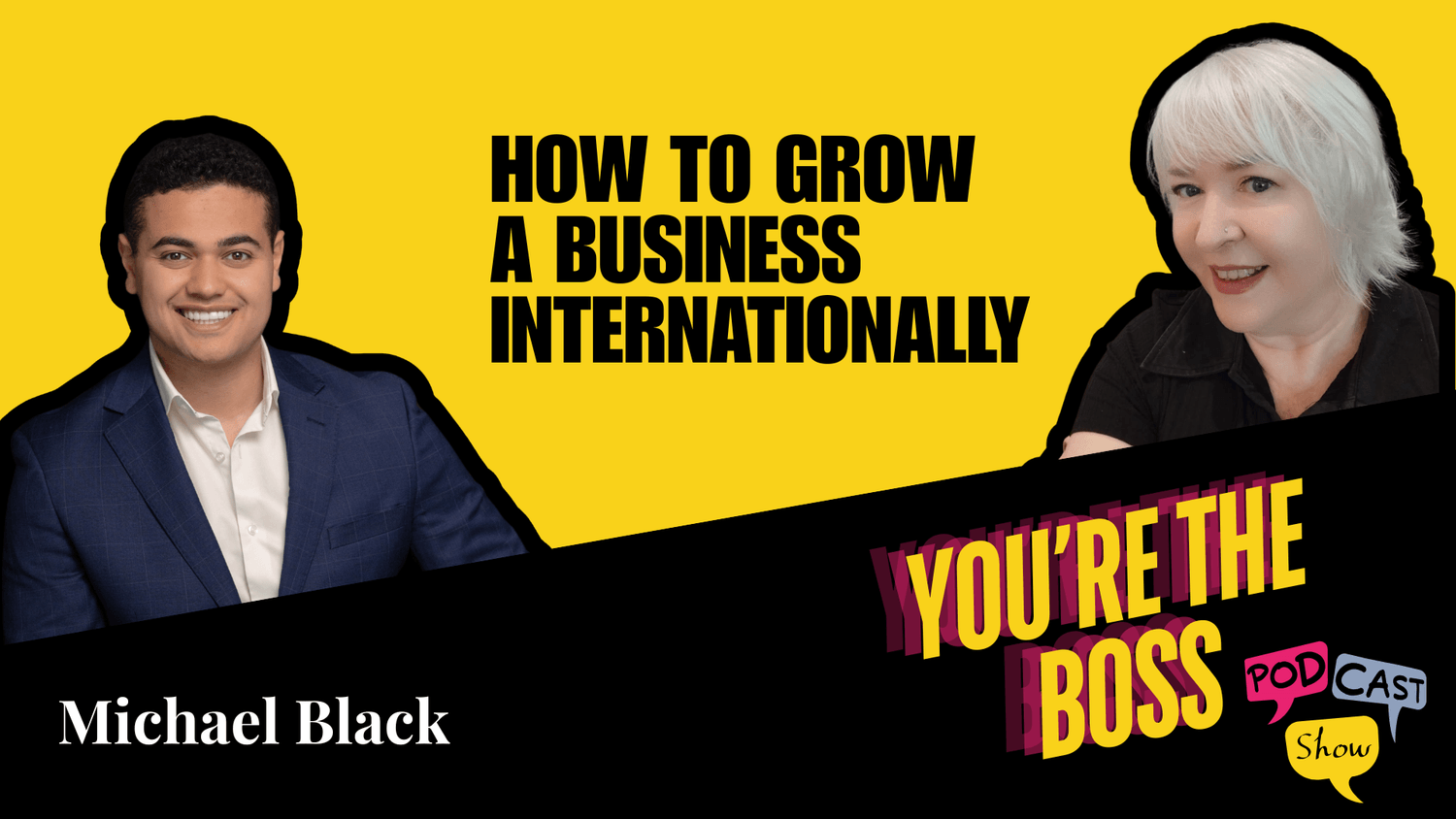
How To Grow A Business Internationally
Click the image above to watch
AngeDove (00:05)
Hey, welcome to You're the Boss Podcast Show. And today I have with me Michael Black from Success Tutoring. He's the founder of Success Tutoring. He's going to be talking to us today about how he built that business and what you could learn yourself for building your business out. So Michael, welcome to the show.
Michael Black (00:25)
Thanks, Ange. Happy to be here.
AngeDove (00:27)
Yeah, it's good to have you here. So just explain a little bit what about what we need to know in context for our conversation today about who you are and how you got started with your tutoring company.
Michael Black (00:40)
Absolutely. So my name is Michael Black. I'm the founder and CEO of Success Tutoring. We're an education franchise system that started almost ten years ago. and I started the business when I was seventeen in a spare room in my parents' home in a suburb called Bosley Park in the western suburbs of Sydney.
I started straight out of high school. I did a Bachelor of Commerce, majoring in management and law at the University of Sydney. And at a young age I always had a passion for business. So I decided to start a small business in my parents' spare room, tutoring kids.
That some went to my school, others were just sort of local, and helping them out in English and maths. And while I was at university, I quickly found out that I had a really strong passion for business and I really enjoyed growing the business and seeing the smiles on the kids' faces. So I kept kept growing it and kept investing a lot of time and energy into it and
Fast forward 10 years, we've got locations all across Australia, New Zealand, we're expanding in the States. We've got a location currently operating and opening in Vancouver and Canada, and will be launching in Singapore next year, in 2027, which is super exciting. currently we've got 75 operating locations across multiple countries.
AngeDove (02:15)
Nice. Seventy-five locations. Just from starting in your bedroom ten years ago. That's that's wonderful. So so when you were at university and you said you you kept it going, so was that continual all the way through uni that you you kept tutoring people? and had it grown at that point at all, or were you still kind of just doing it? Was it online that you were doing it or?
Michael Black (02:40)
Yeah, so some context. So when we when I first started the business, I first thing I did was I created a Facebook page. and I went, you know, sort of community groups and and started, you know, looking at advertising it. And it it took roughly six months for me to get my first customer actually. and and it was all in person. So we didn't do any online. and basically it was it was tutoring in person at my parents' house. So
what would happen is is I'd bring the you know the students and the parents into the home and I'd provide the service. And and you know, luckily enough we had a a spare room, you know, so that that room was then utilized as a tutoring room, which we would use to provide the service out of there.
AngeDove (03:29)
Nice. Okay. So I I guess you you recognize then pretty quickly that that's hard to scale if you're in person and one person. There's only so many hours in a day, only so many students, I guess you can tutor, right? So how did the idea grow about expanding? How did how did the expansion kind of happen step by step?
Michael Black (03:53)
Yeah, well, so I think it stemmed from wanting to do something a bit better every day. So every I really is sort of passionate about improvement, continuous improvement. And so what that would mean is is every day doing something that pushes, you know, moves the needle forward and wanting to make it better than it was yesterday. And and that's what it was all about. I, you know.
AngeDove (04:17)
Mm.
Michael Black (04:21)
Really found a passion for wanting to see the business grow. And by doing so, and and the way of doing so was basically reinvesting time, money, and energy back into the business. So you know, a lot of people say growing a business is like growing a plant or or having a child. I I I think of it yeah, quite similar because you you sort of see it grow and you want it to grow. And so what you do is is you, you know, you you
you try to give it the best possible chances of success. And by doing so, what you do is is you basically reinvest time, energy and money back into it to see it grow. And so, yeah, it was just the small things. Like, you know, I remember the it was very the small things that made me really excited. Like I remember purchasing a whiteboard, with wheels, from you know, local shops that and, you know, that was a really big investment for me. It was it it cost a hundred and
AngeDove (05:00)
Hmm.
Michael Black (05:21)
$25. And I was I was thinking, should I buy this whiteboard? And it it seems so small and insignificant now because most people would say, well, that's not a lot of money or or why would you be thinking that way? But actually at that sort of age and seeing the business grow, like it's it's having it's also having the audacity to invest in things before you need them.
So at that point I only had maybe three or four students. Like why would you need why would you possibly need a whiteboard? which would take a lot of space. And by the way, my parents' home, I mean, it's it's not a business like it's not a place of business. Like it's it's a home. So purchasing a whiteboard like that seems a bit weird. Like, why would you need to do that? And you know, but it's having the audacity of saying, Hey, look, actually, this is something I might not need right now, but it's something that I might need in the future. And then
AngeDove (05:46)
Yeah.
Michael Black (06:15)
seeing that and then having that sort of being a bit crazy and having that vision where other people may not see that but you can see it so you're like, Okay, I'm just gonna do it and see what happens, you know.
AngeDove (06:26)
This is gonna help my business. Yeah. I I was the same. And it it's this idea of you're you're stepping out of your comfort zone and you're getting used to a new way of operating, at least a new way of thinking, a new way of operating. And then as each time you move forward and step out of that comfort zone, again it's like rings going around in a circle, right? And then you you become more comfortable.
once you're out of that comfort zone, that's your new comfort zone, then you grow again, right? So looking back now at you investing $125 for a whiteboard, as you say, it seems like, well, why was I worried? Right? Or why why was this such a big deal for me at the time? But that's where you were at that time, right? And it was the same like for me when I very first started my business, I ran it from home. And then eventually I got staff and I had to have an office because I couldn't bring people into my home.
So I had to get an office. So that that first step of getting an office was really scary because that's my god, that's a financial commitment I've got to make every month, plus then staff salaries as well. So at the beginning of that, that was scary. But then you get used to it, that becomes the new norm, and that's the new way of operating the business, and you just got to find the money and pay that every month, right? And then when we eventually moved into like a really nice shop house, what they call shop houses in Singapore, which are the old.
houses that used to be stores underneath and then living accommodation above. So we had one of those. And that rent at that time, there's no way you could get this now, but at that time it was $4,000 a month. So that was a big step up as well. And when I look back at $1,000 a month, I was like, I give anything to pay $1,000 a month now. Right. So it's always growing and you you become comfortable with that new norm as you grow.
Right. So yeah, the that was a pivotal moment, I guess, for you to just make that one hundred and twenty five dollar decision to grow the business. Right. This was your first step in investing in it, right? So that that's fantastic. So then what did you do? How did you move from eventually I guess you would have moved out of the the room in your parents' home? How did that happen?
Michael Black (08:42)
Yeah, well, I think it I th I think the word I'm gonna use is like enroachment, which was basically enroaching and continuously basically pushing limits because we started off in a spare room, but then basically it quickly turned into the living room and the dining table. So basically what happened was we started in one room because that was where we did the tutoring, but then we quickly realized actually, I can tutor two students.
Michael Black (09:11)
if I used the room inside and I used the dining table and then and then it quickly sort of I I basically it it got to a point where we had multiple like there was multiple tutors at once and basically utilizing the space for tutoring. But it was yeah it was interesting. It was definitely a learning curve and something that I you know very look fondly upon you know back in those sort of days of the tutoring in my parents home.
But what happened was about two years after setting up the business, I decided that I wanted to expand it. And at that point, I'd I'd saved a considerable amount of money from all the tutoring that I had done. And I basically wanted to expand. So the first thing that I thought of to expand the tutoring business, like anybody would, they would have to sign a lease. And I had no idea anything about leases. So I I did my research. I I went on YouTube and
And and tr trying to really understand how leasing works because I've never leased anything in my life. I was at that time I was about twenty years old at that point and I just had no idea. So did a lot of research. and then yeah, just basically went out and and tried to negotiate a lease. And it was very frightening experience because I was pushing myself out of the comfort zone. But I was doing it you know, I definitely had a bit of ignorance about it because I'd
just didn't I I understand there's risk associated with business, but not to the point of like, you know, what what it means and all that sort of stuff. But anyway, I signed the lease and I ran the business. I continued to run it out of my parents' home and then I had a a center not too far about fifteen or twenty minutes from the home. So I basically at that point had two places to to do the service and then a just under a year after that I then signed a
second one and so at that point we had those three you know sites basically you know operating and then covet hit it was a very tough time for the business and then after covet and you know actually around that time we started actually franchising and so basically the business continued to grow we made a lot of changes to the model in in the early days but now you know our our model is is very unique it's very personalized to the students it it
AngeDove (11:14)
Right.
AngeDove (11:32)
Yeah.
Michael Black (11:38)
it reaps a lot of benefits for franchise partners and we're really you know happy with with how it's been going and continuously expanding it. And and and and I guess those early beginnings really you know allow me to remember okay w where we came from and what we the basic fundamentals of of business and and education. And this is why we're so excited to, you know, sort of expand and and and grow into Singapore specifically because
AngeDove (12:04)
Night.
Michael Black (12:05)
we recognise that there is a strong need for education and we want to be able to support communities there.
AngeDove (12:08)
There is. Yeah. Tutoring is very big business here. Yeah, there's a lot of demand. Yeah. So it's a good place to be. just take a step back for me a minute on so you you had you got two different locations and you got three. So obviously at that point you must have had additional staff to help you. How did that start happening?
Michael Black (12:31)
Yeah, well, I hired those that were basically like from schoolmates from school. So brought brought them on board. I said, Hey, like, do wanna you know do a bit of tutoring on the side? They said, Yeah, why not? I'll do that. And then basically, yeah, brought them on board and they they did the tutoring. it was it was pretty simple, I I guess. But then it at it started getting a bit more complicated. you know, as as the business grew, we had more more staff.
AngeDove (13:01)
Hm. People are complicated.
Michael Black (13:01)
Sort of yeah, wanting
Yeah, that's right. And we had yeah, so we had a considerable number of team members. I think at some point we had a sixty staff members that were employed across those three sites. But then I you know, made sort of the decision to sort of pivot and and want to go more into the franchising space. I I found that that would have you know, been able to sort of impact more people, and it's more scalable and
AngeDove (13:11)
Yeah.
AngeDove (13:17)
Right.
Michael Black (13:32)
not only are we impacting the lives of students, but we're also impacting the lives of franchise partners so they get the opportunity to run their own business. So we don't just we don't just you know tutor, we mentor, we encourage, we motivate. We want not just the students, but also the franchise partners. And that's one of our core things as core values at Success Tutoring. And there's three of them: it's motivate, inspire, and uplift. And basically,
Those are the three things that we stand by and those are the things that we have across the the business when it comes to any any any stakeholder that we work with.
AngeDove (14:09)
I like that. So when you first started in your your spare bedro spare bedroom or spare room in your home, did you ever envision franchising or was that something you didn't even know about at the time? How did how did you learn about franchising and decide that was the model you wanted to take on?
Michael Black (14:30)
Yeah, so didn't know much about franchising. I mean, I didn't really understand I mean I I got an idea of the basics of business, but I I didn't even know what how to what a commercial lease was as an example. So let alone what franchising was. So it it was definitely a steep learning curve. And I think every every year that I've been doing business and you know I've been in business for close to ten years now, I really think every every year it's been a very steep learning curve. Like the time that I started
AngeDove (14:42)
Hmm. Hmm.
Michael Black (14:59)
lease, I'd been doing a bit of research for probably a few months, but it was definitely a steep learning curve because I had no idea what commercial leasing was. And the same thing with franchising. So, you know, that's why we brought on advisors and people that, you know, sort of had that experience in franchising to give us that app to ensure that we yeah, we we right have the right systems and processes. Now you don't always get it right all the time, but at least you get some of the fundamental things down pat.
AngeDove (15:17)
Just gonna ask you that. Yeah.
Michael Black (15:28)
And then we can basically sort of expand there. So I think that's the key thing really. it's it's just about making sure that you know, like you we I recognize every day that I'm in business that I don't have all the answers. And you just keep learning and you keep adapting and you keep improving, and just never stop. You never stop learning. You just keep improving. Yeah.
AngeDove (15:47)
Mm.
Yeah. You gotta keep an open mind and know what you don't know, right? And learn what you don't know. So so you hired a company to help you to set up the franchising, is that right?
Michael Black (16:02)
Yeah, we brought on a consultant to help us with that and and that really assisted because then the best sort of advice I ever got was make sure like if if there's if there's a place you want to get to, speak to the those that have actually got there. Like instead of instead of trying to find out yourself, why don't you like try to speak to somebody and you know pay for a consultant because
AngeDove (16:20)
Yeah.
Michael Black (16:29)
These people like have the experience and the understanding, and they've been where you want to go. So there's no point trying to figure out yourself. Because if you try to figure it out yourself, the way you're gonna figure it out is by making mistakes. And mistakes are great, you know. I I love making, I mean, I I I do. I I like making mistakes because then I get to learn from them. Because the only way to make, you know, a a success story is not a success story by just being successful. The success story is successful.
AngeDove (16:29)
Mm.
AngeDove (16:35)
Yeah.
Michael Black (16:58)
You're successful because of all the failures that you make. otherwise there's no point of being successful. Like so you know, so I believe basically that, you know, you you are made the more mistakes you make, the more you learn, as long as you don't make the mistakes more than once. but but consultants are a great way to expand knowledge because they've made the mistakes and they'll tell you unless you just like to make the mistakes and not want to
you know, hear what other people say. I mean some people are like that. I've sometimes I fall into that trap. I'll be, you know, I I think I've got that sort of emotional intelligence and reflection to understand. Sometimes I am like that, you know, you know, any any business leader, entrepreneur or CEO is not always perfect. So it's also understanding how you are as a person and and being able to actually recognize that and not being, you know, blinded by your by your like the
AngeDove (17:29)
Yeah.
Michael Black (17:57)
But you know, the things that you're not as good at. But but I think I think at the end of the day, just having the right people around you and and and learning and learning from these things.
AngeDove (18:08)
Okay. Nice. And and how how I mean, do you do any tutoring now? Are you completely off that and just building the businesses now? How does that work?
Michael Black (18:19)
Yeah, well, we I I don't tutor anymore, but but I am very in touch when it comes to the training and programming around success tutoring. So creating the operational know-how and what we like to call operational excellence across success tutoring. So understanding what makes a perfect tutoring service, what makes good customer service, and being able to replicate that and and codify it in some sort of operations manual training guidance for franchise partners to follow.
AngeDove (18:48)
Nice.
Michael Black (18:48)
It's being very good at something and being very good at it and being special like specializing in that thing. because yeah, the the what we offer is a it's a it's a franchise system. So by default it must be consistent and it must be it it must feel like the exact same service wherever you go, wherever success tutoring centre you walk into. It it it must feel the same.
AngeDove (18:55)
Okay.
AngeDove (19:15)
Yeah, that's important. so how far into the business were you before you decided to give up the tutoring yourself?
Michael Black (19:25)
so I I did a lot of tutoring. it it basically sort of so sort of started to slow down like for me as a tutor when I had w more administrative responsibilities around the business. So supporting franchise partners is a really big thing that we do as a head office. And so you know being able to, you know, tutoring and then doing that, they're two different very, very different things. So we think of our
franchise system as our franchise partners are our customer, so we assist them so then they can assist their staff and their students to grow their business. So at the end of the day as a head office our our key stakeholder is our franchise partners. and then our s you know, and then we've got other stakeholders, but I'd say arguably they are the most important.
AngeDove (20:19)
Yeah. so just for anyone who is not familiar with what a franchising model is, can you kind of explain what franchising is? And and what kind of systems you have to set up as well.
Michael Black (20:29)
Yeah. So franchising Yeah, franchising involves having a a repeatable business model where you share with other people, like licensing, where you give them the rights for a set period of time where they can utilize the trademark, the training, the the systems, for exchange for a royalty fee, usually a fixed amount or a percentage. And then what happens is the head office, which is the franchiser, which holds the IP and
And owns the system, licenses that to you so then you can benefit from the reputation and goodwill and the systems and processes and operational know-how and and and you know, history of the mistakes that they've made. They you you you get to not make those mistakes because they've they've made them themselves or they've created systems to assist you. and then basically, yeah, it's it's basically to
AngeDove (21:17)
Yeah. Yeah.
Michael Black (21:24)
put it very simply, it's like McDonald's. McDonald's is a franchise. It's arguably the most successful franchise system in the world. And so it's that's basically what it is. So each McDonald's location is not owned by the you know one person. It's all owned by different people, but it looks like it's it's the same person because how good
AngeDove (21:41)
Yeah. Yeah. So there's a common brand that goes through everything, but that each franchise tran franchisee, is it? Franchisee, has their own business, right? So they register their own business, they run it as their business, but you're paid a royalty or a fee for allowing them to have that, the rights. Yeah? That's the way it works.
Michael Black (22:04)
Yeah, exactly. And so a lot of our franchise partners are some of them are teachers, others are mums and dads, you know, that work in corporate life. very often, they're mums and dads. And, you know, it more than more than often, what we see actually is is usually like a mum and dad, both, you know, one one's working full time, other one might be doing a bit of part time and they get into a business like this, as a
AngeDove (22:10)
Mm.
Michael Black (22:31)
bit of extra income and then slowly sort of both transition to this on a more full-time basis with you know multiple locations in their portfolio. So I and and that's what we're most excited about, especially with our expansion to Singapore, because we believe that there's a very strong demand for education in Singapore. And there's going to be a lot of families there that would benefit not just from the tutoring but also from the business opportunity of being able to build
business or even a portfolio of of success tutoring centres you know ac across across across Singapore.
AngeDove (23:05)
Okay. And then how do you find your franchisees and what kind of qualities or are you looking for in them in order to decide this is the right person for my brand?
Michael Black (23:16)
Yeah. So one thing that's very important is education is a it's a really, really good business, of course. Everybody knows that. But but but what's most important thing, getting into the education space, it's all about providing a good service for the customer. So someone that's passionate about providing good service and and helping students achieve their best. And when you do that.
Everything else follows. you know, you run a successful business, you make money, you can impact the community. So the key thing is is having that passion and that love for teaching because that's really, really important. you know, being involved in the community is also important. having the ability to be able to s get the business set up, the capital side of things is super important because if you don't have the money or the funds, you can't actually.
run the business and and set it up. So you've got to it's a bit of a combination of a few things. But but we are as an as a system, we're becoming extremely selective of who we bring on board as well because we recognize that the having the right franchise partners and having the right system, you combine those two things together and you can have something very, very powerful. And that is the secret ingredient to McDonald's. I mean they've got a really good system, they've got very good franchise partners, you add them together and that's what we're trying
And we are going to build. We are building the McDonald's of tutoring. That's what we call it. We believe in the operational excellence and we wanna we w we don't wanna just be an industry leader in education. We wanna be one of the exceptional examples of what franchising should be.
AngeDove (24:41)
Nice.
AngeDove (24:52)
Hmm, nice. I like that. And for people to be a a franchisee in your business, do they have to have prior business experience?
Michael Black (25:02)
So the benefit of franchising is you get a proven business model. And a lot of fr people that come into a franchise system don't have that operational or business experience in the past. And that's not a bad thing. That could actually be an advantage because, you know, it's like a blank canvas. You don't have that thinking of of this is how the business should be. You just sort of follow that system and have that information there. So
AngeDove (25:11)
Mm. Mm.
AngeDove (25:24)
Follow the steps. Yeah.
Michael Black (25:26)
Yeah, so a lot of them are not. if they do have that business experience, that's great, but if they don't, that's okay as well because we've built the system in a way where we've got those steps, you follow the steps and and we work together to make the business successful.
AngeDove (25:42)
Nice. And how do you make sure that they do follow the steps?
Michael Black (25:47)
Yeah, well, a combination of different things. I mean, we've got growth and performance managers across our network and they're there to support and assist franchise partners in person and online. So they're they're like business coaches that provide that support. we're very tech heavy as as an organization, so we've got a lot of systems and processes and tech to be able to ensure that there is that operational excellence. We do a lot of reviews as well as a as a as a head office. So, you know, reviewing
AngeDove (26:10)
Mm.
Michael Black (26:16)
how things are going, you know, getting feedback from franchise partners, from customers, from from tutors, from head office. So it's just about creating that ecosystem where you can get that data and those reviews to better understand whether the you know, the key stakeholders are are following, you know, the processes and whether we're achieving the outcomes that we intend to achieve.
AngeDove (26:40)
So obviously you have very much a growth mindset. You've built this business to an incredible fifty plus centers so far. What's your plans for the future, like beyond Singapore now? What what are your plans?
Michael Black (26:54)
Yeah, well, we're very focused on Singapore early next year because what we want to do is is we want to be able to share the success tutoring model across across Singapore. we've you know as I mentioned, we've got locations in multiple markets. We've achieved remarkable success in Australia, New Zealand, and you know, with our expansions into Canada and the US, Singapore is our next natural step. And we believe there's a very, very strong demand for the service there. And we're super excited to be launching there.
The start of the year. so that that's what our key focus is at the moment. I mean, when it comes to our business, we're very, very focused on franchise partner success because their success is our success, and vice versa. So making sure that they're very successful and our operation and our systems basically continue to provide that support that they're meant to. So it's about having the
Having the guidance and the you know guide rails and the support for franchise partners to scale because at every stage of growth, wherever we are, you know, going into any new market, it's not something that is done on the fly. We do a lot of preparation wherever we expand and we want to make sure that our model resonates very well with the local people of Singapore so we can provide that very good support, grow the business there, and then we can, you know, with our big audacious goals, we can expand across Asia.
But but Singapore is definitely our our key our key place and and our key
AngeDove (28:26)
your medium term goals now. Yeah. Okay. I love it. Now, I know you've written a book. Can you tell me about your book?
Michael Black (28:35)
Yeah, sure. so I wrote a book last year, and the the book's the book is called Millionaire Tudor. And basically I wrote the book because I believe I learned a lot in the my last ten years of business. I started at a very young age at seventeen. I'm I'm twenty seven now. I've got a lot of experience in business and I believe there's a lot of things that I've a lot of mistakes I've made that I don't want other people to make. So that's one. And understanding the mindset that goes into running a successful business.
AngeDove (28:58)
Yeah. Yeah.
Michael Black (29:05)
I've done a lot of learning myself, and I've I've read a lot of self-help business books. And and I like to think of the book that I wrote, I you know, there is a lot of insights and themes that are very common across multiple self-help books, and I'm sure people that read the book will understand what I mean by that. But it's it's it's basically a a bit of information about me, about the business, about you know the successes that we've achieved, and then also.
some of the mistakes that we've done. And, you know, I've got some insights as well around, you know, what I think of the education system, why, you know, why franchising is is a really, really good model. You know, it doesn't have to be for tutoring, but just in general, why, why it's really good. And and providing a lot of tips basically, you know, for for parents, students, for for prospective franchise partners and and being able to give back because I believe, you know,
With with experience there's there is obviously that opportunity to give back and I'm I'm all all about that. So that's yeah, that's the that's what the book is.
AngeDove (30:08)
So that tutoring and teaching part still comes through you, even though you're not doing it anymore yourself, you're still doing it in some form now through your book as well. I like that. So you just mentioned that your opinions of the education system. So can you what are your opinions of the education system?
Michael Black (30:28)
Yeah, well look, I won't I won't give too much away because you know I I I would like people to grab a copy of the book, of course, and and and and you know and read it for themselves. But basically, there is a lot of there is a lot of things about the education system and and I think a lot of people understand that the education system's been around for a very, very long time. It hasn't changed, and there's a lot of things that the education system generally, not just in Singapore, not just in Australia, but
AngeDove (30:31)
Read the book. Yeah.
AngeDove (30:38)
Yeah.
Michael Black (30:57)
c across the globe that you can make some really big changes there. And the reality is the way that kids were learning you know, back in the nineteen fifties is not the same as they are learning now. And with the change in AI and technology and the use of the internet, all of those things are par the way for a different way of learning. And I believe there is a different let way of learning and because there is a lot of flaws in the current education system. Now, will they change?
AngeDove (30:59)
Yeah.
Michael Black (31:26)
We hope, but I don't think they will. unless some major a major you know social structural change happens. Because at this pr present time, the education system is designed in a way that puts kids through a system, they must follow, they must learn that particular way. If they don't, they're considered that they've failed. there is no
AngeDove (31:50)
Yes. Mm.
Michael Black (31:52)
you dynamic learning methodology like every every the way that they're basically learning is not it it it's not conductive with how things work in the real life basically like the way things work in real life is not how the school system the school system works like as if you're working at a factory basically so that's that's basically how the school system was designed right but but but but there's a lot more of that in my book and people can agree some may disagree but
AngeDove (32:04)
Yeah.
AngeDove (32:07)
Exactly.
Yeah.
Yeah.
Michael Black (32:22)
Those are my opinions and and I'm sharing it with the world.
AngeDove (32:24)
Love it. I love it, love it, love it. okay, so Michael, where can we send people to find out more about your tutoring and also your
Michael Black (32:37)
Well, it's really simple. If you'd like to learn about success tutoring franchise opportunities, just head down to our website. It's successtutoringfranchise.com. so you can just search that one up on Google or head to our website. if you'd like to grab a copy of my book, it's available on Amazon and any other book stores that are local to where you are. as long as they're online, you'll be able to get grab a copy of the book and the book is called Millionaire Tutor.
AngeDove (33:00)
Yeah. Mm-hmm. Yeah.
AngeDove (33:07)
Lovely, lovely. And are you still looking for franchisees in Singapore?
Michael Black (33:13)
Yeah, we're gonna we're we're opening up our wait list very soon. so this year we'll be wait opening up our wait list. We will be launching our first site at the start of next year. so we're we're super excited for that as well.
AngeDove (33:28)
So anyone in Singapore that is interested in that opportunity, they can just go to your franchise website and get themselves on a wait list. Is that right? Yeah. Okay, cool. All right. So, Michael, thank you so much for your time today. It's been very insightful. And I hope people have learned a lot about the possibilities of growing a business through franchising. And thank you so much for your insights in that today.
Michael Black (33:37)
That's correct. Yeah.
Michael Black (33:55)
Thanks, Ange. Pleasure to be here.
AngeDove (33:57)
You're welcome.
Don't leave without your free gifts

Check out my page of freebies designed to help you make progress towards your goals.
From free training on making $10,000 months to how to create your brand message to access to the resources I use in my business that may help you too!
I've got some
gifts for you!
Check out my page of freebies designed to help you make progress towards your goals.
From free training on making $10,000 months to how to create your brand message to access to the resources I use in my business that may help you too!
About me

Hi there 👋 My name is Ange Dove, professional copywriter and messaging strategist. I help Gen X professionals find the words to express who they have become, and to build a career or business that owns it.

GET YOUR UNCHAINED AUDIT
Let’s have coffee online for 60 minutes on Zoom, where we'll look at your profile, your message, and your next chapter together and give you the roadmap to take your next steps.

GET THE NEWSLETTER
Straight-talking insights for experienced professionals who want to turn what they know into income, options and greater freedom over what comes next.


