Call: +65 6012 3433 | Whatsapp +65 87792453
Build An Intentional Business Around Your Lifestyle
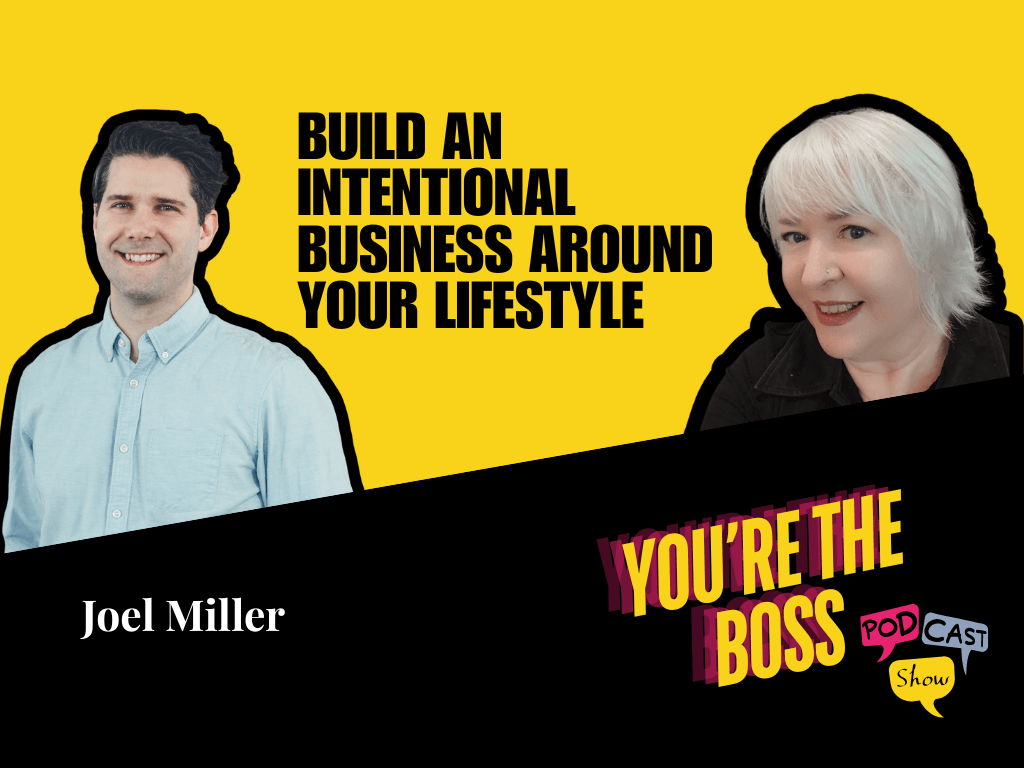
Click the image above to watch
Ange Dove (00:01)
Okay, welcome to You're the Boss podcast show. And today I have Joel Miller with me. And I think we're going to have a really interesting conversation today. So Joel, welcome to the show.
Joel Miller (00:17)
Thank you
Ange Dove (00:18)
You're great. I'm going to edit this a little bit later because I've lost my notes now.
Joel Miller (00:26)
We can start over. Clap the slate.
Ange Dove (00:27)
no, no, no, no, I'll edit it out. It's easy to edit on this platform. OK, I was there. I was in the right place. all right. OK, all right. So our guest today, Joel, he was born on a leap day. So that already makes him special. with an... I just stop laughing.
Joel Miller (00:32)
Okay, good. Good.
Okay.
Joel Miller (00:48)
Thank
Ange Dove (00:56)
with an identical twin brother and a builder of a 17-year marketing agency that defies Silicon Valley logic. And we're going to get into that a little bit more later. So while everybody was preaching scale or die, Joel and his brother Alan have built a 500K business or an agency with just the two of them. And while competitors chase volume, they turn away.
Joel Miller (01:20)
Thank you.
Ange Dove (01:26)
price shopping clients. So this is a very refreshing view on business and I'm really excited to get into this. So Joel today, he's here to challenge that bro marketing mythology and explain why hourly billing makes your expertise worthless and show why sustainable growth has nothing to do with headcount, hustle culture or sacrificing your life to scale.
Joel Miller (01:34)
Thank
Joel Miller (01:48)
Okay.
you
Ange Dove (01:56)
And this just resonates with me so much because I've been in business around about the same amount of time as Joel and I just have exactly the same reaction to that. So Joel, welcome. So let's just start with those ideas that we mentioned that, like as you say, everybody is pushing to scale, scale, grow, grow and we get trapped into this belief that we have to grow.
Joel Miller (02:20)
Right.
Ange Dove (02:25)
So just explain what your philosophy is to that. And I think it'll put a lot of maybe potential entrepreneurs and maybe entrepreneurs, it'll ease them a little bit, I think, into thinking, okay, it doesn't have to be that hard.
Joel Miller (02:35)
room.
Joel Miller (02:43)
Right. And I mean, I always start with thinking that I know so many agency owners who doing millions of dollars a year in business and revenue, and they're making less than I do. They take home less than I do. I think that's like kind of the dirty secret of at least the service business model that we run is like when you start hiring all these people and expanding through that method, at the end of the day, you're becoming you're probably not and maybe you don't want to be an operator who does the work. I don't know. But you're probably getting away from the thing that kind of attracted to you.
that idea to you in the first place, and now you're just managing people and you're managing all this overhead and hoping you can make payroll every pay period. And really at end of the day, like all the times you look at the take home and you go, I did all that for that. And we just, just how we wanted to define our lives. We like doing some of the work. We like being in that relationship with our clients. So we didn't want to divorce those things.
Ange Dove (03:24)
Yeah.
Ange Dove (03:41)
That is so refreshing to hear because you hear so many people saying, you've got to work on your business, not in it. And you're right. It's the reason you set it up was because you like doing those things. So I used to love seeing clients and I used to like doing the copywriting work as well. And they're like, no, you can't be doing it. You must be giving it to somebody else to do. And I like, want to do it.
Joel Miller (03:47)
Right, right.
Joel Miller (04:02)
Or you end up in this duality kind of mode, because I know some agency owners who are sort of like that. They started off as designers. I'm thinking of one guy, won't say the company, but he gets involved occasionally because he misses it. But it also ends up of fracturing the experience too, and it makes those clients confused because they're like, I got the owner, but he can't be there for everything. And so they're like, is this the experience I'm having or not?
Ange Dove (04:30)
Yeah.
Joel Miller (04:31)
It can work for some people. It just wasn't for us. It wasn't how we wanted to define our lives.
Ange Dove (04:35)
Right, right. Now I think you've got it right because there's only two of you still in the business, is that right? Full time.
Joel Miller (04:42)
That's right. Yeah, we've never I mean the most we've ever done is maybe like sub back before 1099 had a bigger level this year, you know, subs $200 might have someone do like data entry for like something that's super menial. That's it never hired anyone to 90 anything to do any of our work. Yeah.
Ange Dove (04:51)
Mm.
Yeah. Yeah.
Ange Dove (05:01)
Right, so basically then everything that comes into the business is yours.
Joel Miller (05:06)
Right, right. And it kind of is a competitive advantage, at least for the types of clients we're trying to attract, because I frequently say on calls, well, two things. One, I say, you're going to talk to me and then work with me, and I'll take responsibility. Full ownership, to use more buzzwords, of everything that we do together. So I'm not going to be blaming the project manager and the designer and the web developer, because I can show up and say, yeah, I just
Ange Dove (05:24)
All right.
Ange Dove (05:34)
You
Joel Miller (05:34)
misheard you or misunderstood. Right, right. And I like that, actually, I don't want to have the, the like, throw people under the bus mentality. And then it also like helps me talk people out of hiring us sometimes. Because if they're like, if I can see it sometimes on someone's face, when I say it's just the two of us and they go, and you're kind of like, yeah, yeah, go ahead.
Ange Dove (05:48)
Ha
Ange Dove (05:56)
It's this thing where I've always struggled with this actually, because people don't really seem to understand how few people you need to run an agency. People think it needs to be a great big huge team, but and even today it's even more so with AI, you can get things done a lot faster as well than you used to, but in the past, it didn't used to take that long either.
Joel Miller (06:08)
Right, well that's, that is true, right?
Ange Dove (06:22)
And you could do it with a small team or even two people. And I got to the point where, because I went down that route of people saying, you've got to grow, you've got to grow. And then I ended up kind of accidentally with 10 staff in-house. And that was a huge pressure, a huge stress, having to get the money in every month to pay the salaries for 10 people.
Joel Miller (06:25)
Right.
Joel Miller (06:39)
right.
Joel Miller (06:47)
Right. Right.
Ange Dove (06:49)
And, you know, just one day I just thought, what am I doing? It was just the realization that I didn't plan this. I didn't set myself up to do this. I just wanted to do the work and just pay the bills and have a nice life. And I'm not having a nice life.
Joel Miller (06:55)
All
Joel Miller (07:04)
Right? Right.
All right. I'll tell you, right, like sometimes being in client relationships can come with its own interpersonal peculiarities. Maybe that's a nice way to put it. All right, we're all people. But like, I'd rather focus on that than like sometimes the stuff that happens when and I only observed this, but that happens when you have employees and like some now I'm getting into like.
If I do it with a client, I'm like more of a business coach. If I do it with my employees, I'm a counselor. And I don't know if I want that.
Ange Dove (07:40)
Yeah, I mean, that's the thing as well when you hire staff, that's a whole new ball game. And I was never trained on any of that, right? So when I, you know, it was really a challenge at the beginning when I hired staff, because I didn't know who I should be hiring. I didn't understand this whole thing about different people have different personalities. And some people are good at this and not good at this.
Joel Miller (08:03)
Right.
Ange Dove (08:06)
And I'm really, really keyed into that now, but at the beginning, had no idea. Absolutely no. So that was a challenge to actually, I mean, I'd say that was the hardest thing about running a business is the people.
Joel Miller (08:10)
Yes. Right.
Joel Miller (08:21)
Yeah, right. And it's like, there's kind of a fun challenge there, but it's just fundamentally a different thing. Like, I kind of gets me excited in a weird way to think about like, the puzzle piece of how I make this team fit together with their, their strengths and their weaknesses, because we should be improving too. But you know, maximizing the strengths is obviously a good technique. And it's like, that sounds that sounds like fun, but almost from like the same business development perspective that I just like solving any problem. So again, it's like, is this the
Ange Dove (08:26)
Yeah.
Ange Dove (08:33)
Ange Dove (08:40)
Yeah.
Ange Dove (08:47)
Yeah. Yeah. Yeah.
Joel Miller (08:49)
Is this one of the main things I want to be doing that holds up the tent of the business? Or not? Yeah.
Ange Dove (08:54)
Yeah, no. Yeah. So I think definitely the way you've done it is the way to go. And it's realizing that until you need that extra support, you don't have to hire, right? And just keep it going until you feel that you can't handle what's coming in. And then also you have to make a decision as to
Joel Miller (09:06)
Right. Yep.
Joel Miller (09:15)
Yes, yeah, yeah.
Ange Dove (09:19)
What are you going to say no to? Right? Because not everybody that comes in is going to be somebody that you want to work with. Right? I've definitely had that situation happen to me. I'm sure you have as well. Right? So talk to me a little bit about choosing your clients.
Joel Miller (09:22)
Thanks.
Joel Miller (09:26)
Right, right.
Joel Miller (09:32)
Yes.
Joel Miller (09:37)
Right. Yeah. I mean, to build off of what you're saying, like at that moment when you need extra support, I mean, there's so many roads that I would take first. And one of the first ones is looking at the clients you have, you know, looking who's draining. Who am I spending 80 percent of my time on but only pays 20 percent of the bills? And you can't I mean, I'm I'm so against burning bridges. Don't just be like Molotov cocktail, throw it into their
email box and be like, I'm leaving you because you know, I need to call my business down. But you can do it strategically and kindly still. So there's things you can do before you have to hire people. But then it's just like, being a, again, knowing what you want, like defining success for yourself isn't just what it looks like, how much money you want to make, or the way your business operates, I would say that it also is the kinds of clients you want to work with. So you need to like
Ange Dove (10:14)
Yeah.
Ange Dove (10:33)
Yes.
Joel Miller (10:35)
tell yourself what that is, and then you have something to measure against when you're talking with people and you go like, okay, they're checking some of my big red flag boxes. I'm going to, yeah, all right, I'm gonna either say no, or I'm gonna ask, like if there's something intriguing there, I'm gonna ask for a lot of money and see if that gets them to say no. And if it doesn't, maybe it's worth the pain, you I know, sometimes it is.
Ange Dove (10:37)
Yeah.
Ange Dove (10:40)
Yeah.
Ange Dove (10:55)
Yeah. Yeah. Yeah. Yeah. Exactly the same. Exactly the same experience. And it is after maybe when you first set up the business, you don't necessarily know it takes some time to get to know clients and the way people work and what people say. And then you get to
Joel Miller (11:04)
You
Joel Miller (11:12)
It does.
Ange Dove (11:19)
after a time understand, okay, that's a red flag. I've had this before and that did not go well. Yeah.
Joel Miller (11:23)
Right. You're right. You're right. Exactly. Yeah. It's almost like a PTSD red flag. You feel that little thing rising up in you and you're like, I remember from that last war what happened and I'm not doing it again. I'm not doing it.
Ange Dove (11:36)
Yeah.
Ange Dove (11:41)
Yeah, so I've done the same as you and I've quoted a ridiculous price. So not saying no to them, just quoting a really high price. And sometimes that's worked and sometimes it hasn't. And as you say, it's that, okay, do you take it and suck up the pain?
Joel Miller (11:46)
Yeah, Right.
Joel Miller (11:53)
Yes.
Right, right. some of the yeah, in those cases, we've had that happen too. And you just kind of like, either sometimes it's a lesson for next time to say if it goes really badly, but we've had plenty of cases where it sort of panned out and you go, yeah, that was harder than the last one. But it was twice as much. And so I have a little bit more tolerance built into this project.
Ange Dove (12:08)
Yeah.
Yeah. Yeah.
Ange Dove (12:16)
Yeah, that's right. So yeah, it's definitely it's it comes down to also it's like you mentioned about 20 % like a client taking 80 % of your time and only paying 20 % of the income that's coming in. And I think that's that comes down to sort of valuing yourself, right? Knowing what you're worth valuing valuing yourself.
Joel Miller (12:36)
Right.
Ange Dove (12:41)
and just knowing that you're not going to either let somebody treat you a certain way, right? Or you're not going to let them bargain you down on price because you're worth more than that, things like that. And you've probably heard people saying, oh, but that won't take you very long to do, right? Yeah, well, yeah, it doesn't take me long to do because, yeah, I've had 20 years experience. And you're paying me for that, not for my time.
Joel Miller (12:43)
That's a
Joel Miller (12:50)
Right. Right.
Joel Miller (12:57)
Mm-hmm. Right. yeah. Just the last 20 years. Yeah.
Joel Miller (13:10)
Right. yeah. I know when it comes with AI makes me think of this immediately because it is making a lot of things faster as you mentioned and that's true. And yet, if you ask it to do something and have no idea how to audit what it said back, you probably get like a decent result. But you or I and our various expertises can look at it and say, that's a good start. What about this? What about this? It's like collaborating with a person. And so like
Ange Dove (13:10)
Yeah.
Ange Dove (13:25)
Yeah. Yeah.
Ange Dove (13:32)
Yeah, yeah.
Joel Miller (13:37)
If you don't have any expertise on your own to offer back, to hone it, to shape it, to get something better out of it, it was fast, but was it good? And so the experience, the human experience is still important. You cannot replace that. And it's your experience, right? Like the AI is never going to have my 42 years on this planet and my 20 years of business experience. It just won't have that. there's, that's critical.
Ange Dove (13:50)
Yeah. Yeah. Yes.
Ange Dove (13:57)
Yeah, yeah. Yeah.
Ange Dove (14:04)
Yeah, it is. And also, think people miss, I mean, it's kind of a little bit like writing in a way. Sometimes people tend to take the first draft they've written and go, that's it, I'm done. But in writing, a first draft is never, I mean, it's a draft, it's never the final output, right. But people seem to think that they can put something into the AI tools and get out something perfect straight, straight off the back. Right. And
Joel Miller (14:18)
Right.
Joel Miller (14:23)
Yeah.
Joel Miller (14:30)
Right.
Ange Dove (14:33)
You're saying, as you said, just recognizing when it's, okay, well, this is missing or this doesn't quite make sense. I said this and you haven't really included this and this isn't balanced or whatever. To me, I say, when I'm training on AI to my clients, I say that the clue is in the actual name of the tool. It says chat, GPT.
Joel Miller (14:39)
Right.
Joel Miller (14:43)
Right.
Joel Miller (14:55)
right. You're right. You're right.
Ange Dove (14:57)
chat. You've got to go back and forward. It's not you telling me something. So it's not like just going into Google and putting something into Google. It's compensation.
Joel Miller (15:00)
Right.
Joel Miller (15:04)
Yeah, yeah, I love that. It's right. All life basically takes editing and improvement and iterations, right? Like, this is something we recognize about anything we do. And yet, you're right, I think there's like this, well, it's artificial intelligence and it feels magical. And so it's like, if I ask a question and it pumps something back and it feels pretty good, maybe I'm done. But that's not how we treat almost anything else. Why should we do it there?
Ange Dove (15:11)
Yeah. Yeah.
Ange Dove (15:16)
Yeah.
Ange Dove (15:29)
Yeah, it still deserves the work to be put in. But at the same time, the recognition that all of these AI tools have this wealth of information, right, that is drawn from, that there's no way. I I hear people saying, like, you know, it can't be like a good copywriter, you need a good copywriter to do this. I'm like, well, no.
Joel Miller (15:33)
Right. Yes.
Joel Miller (15:43)
Right? Yes.
Joel Miller (15:57)
Yeah.
Ange Dove (16:00)
Because it can come out with things that I wouldn't have thought of. I'm just one brain, right? But the AI draws from content from 20 years and, yeah, 20 years of thought, Yeah, yeah, yeah. So it's valuable what it comes out with. It comes out with some really good things. And you've just got to recognize what you can use and what you can just strip away. And again,
Joel Miller (16:05)
Right. Mm-hmm.
That's the summary of, right, right, of like kind of human experience. mean, not all of it, but a lot of it. Yeah. Yeah.
Joel Miller (16:21)
Right.
Ange Dove (16:29)
Knowing the different tools as well. I've started recently to use Claude a lot more than JackDBT because I just find the output there. Yeah, yeah. And it tells you also why it's writing. So you get a thought process there as well, which I enjoy. Yeah, that's good. So yeah, I do like that. Yeah.
Joel Miller (16:32)
Right. Yes, yes. Right. it's coconut writing. Yeah. Yeah.
Yes.
Right. Yes. Yeah. Oh, yeah. It's Claude is pretty amazing. We'll see what happens. It's a fun war to watch progress and be like, all right, who's going to come up with what next? And how does that help me? Right. Right.
Ange Dove (17:00)
Yeah, and it's so fast. Right, everything's changing. Because you think about like 2023 when it all first started, right? And how quickly it's developed from there, right?
Joel Miller (17:08)
Yes. yeah.
I was just chatting with my brother and I was like, who's my business partner too? I think we said that, like I was like, remember when it first came out and we first got accepted into the beta and it was like just fun to have it make rap lyrics about Santa Claus. And now we're like, you know, doing these really heady tasks with it and getting like good stuff out of it. And you're like, what a rapid ascent into the world we're in now from.
Ange Dove (17:34)
Yeah.
Ange Dove (17:39)
Yeah. Yeah.
Joel Miller (17:41)
Ooh, that's funny!
Ange Dove (17:43)
So actually, so looking at that, because your main skills basically is videography and photography, right? That's the base of your? Yeah.
Joel Miller (17:51)
that's well, yeah, that's kind of how I started. So our dad is a cinematographer, and so I would go on set with him and I did a lot of video work. I did kind of at that same time. Alan, my brother, was designing a lot of stuff and then people came to us and started saying, can you do websites? And we're like, I mean, not yet. And so we started learning that like way back in the day. It was like HTML tables and see basic CSS and flashed like you make a thing and flash and you're like.
Ange Dove (17:58)
Yeah.
Ange Dove (18:14)
Yeah.
Joel Miller (18:20)
I hope it doesn't kill my client's browser when they load it. And, and then that kind of spiraled from there into like, just doing more digital marketing. started running Google ads for clients. started, you know, so like really built, we kind of do a little bit of everything, but centered around digital and, always strategic marketing, not just I can make you something because I don't really care to just make things for people. I want it to help them achieve their goals.
Ange Dove (18:25)
you
Ange Dove (18:38)
Right. Yeah.
Yeah.
Ange Dove (18:49)
Yeah, of course. So in terms of what AI is doing in terms of video, what have you noticed in that realm?
Joel Miller (18:55)
Right. Yeah.
Well, haven't experimented tons with it just a little bit, but I've seen some of the stuff people are doing, like on X and Instagram, and I am super excited about it. I think that the democratization of being able to produce visual output is gonna be good for ideas, because up until now, and this is sort of the world our dad grew up working in for cinematography,
Ange Dove (19:18)
Yeah. Yeah.
Ange Dove (19:27)
Mm. Mm.
Joel Miller (19:28)
it was about how much gear could you buy? And that was kind of the gate, right? Like, so you had a lot of people who weren't that talented, but they could afford the gear packages and they were getting work. And so like, and like also connect, like forging connections and all those things, but it was like, really came down to a lot of funding and then connections. Now, if you can get onto like, whatever all the different video models are and create something that's like,
Ange Dove (19:41)
Okay.
Ange Dove (19:48)
Mm. Mm.
Ange Dove (19:56)
Yeah.
Joel Miller (19:57)
a movie in prompts, it's a lot of noise unless it's really interesting. like, so like, I think that we're going to see some work, some stories, some ideas that we never would have seen before. And but it's going to be more on the merit of like, how interesting it is versus how much resources you had and connections you had to get through the gate. And I think that's interesting. Like, yeah.
Ange Dove (20:18)
Right.
Ange Dove (20:22)
Yeah. Okay. Yeah. So you still got to be creative. You've got to come up with an idea. Yeah. Yeah. And it's getting a very crowded space as well. And we were talking earlier when we were discussing before today about coming on to this, doing this show and what we could talk about. And we were talking about the skills of the person.
Joel Miller (20:28)
Right, you gotta be super creative, right? Yeah.
Joel Miller (20:35)
yeah, right.
Ange Dove (20:49)
right, making the difference. It's not the tools, it's the skill behind it. So I gave that story of a rock concert when I was in my 20s, yeah. And so just for the viewers here, I was at the front of the stage watching the concert. And next to me was the professional photographer who was probably from one of the rag pieces and stuff. So he just turned to me at one point because he could see me with my little pocket camera.
Joel Miller (20:52)
Exactly.
Joel Miller (20:57)
Yes.
Ange Dove (21:17)
And this is in the days when it was wind on film. And so he said, would you do you want me to take a photo for you? And I thought, well, that's a strange to me. was like, that's a strange question, right? Because it was like, well, what difference is it going to make? I've got this proxy camera here. I haven't got this DSLR thing that he had. So so I said, yeah, OK, so I handed it to him.
Joel Miller (21:19)
I can think of that sounds as you do that. Yeah.
Ange Dove (21:46)
didn't think much else of it. He took a few photos and then gave it back to me and I didn't think anything else of it until I went to get, now for the younger viewers here, and I went to get my photos developed. It was a day where you used to have to wait a week for your photos to be developed. So I went and got them and as I'm going through the photos, then I got to the ones that he took.
Joel Miller (22:04)
Right.
Ange Dove (22:15)
absolute night and day. So same camera, but his pictures were brilliant. And my pictures, taking a picture of the concert, right, but his were brilliant. So, you he was using my camera, but it was his skill as a photographer. And I think that's something we have to remember when we're using AI and all these tools and stuff. Your skills, your innate skills, what you do is still really important, right?
Joel Miller (22:17)
Yeah. Right.
Joel Miller (22:29)
Right.
Joel Miller (22:42)
Yeah, you, right, because the AI is a very powerful tool, but it's just a tool nonetheless, just like the cameras. And so two different operators can get totally different results out of it. And if you think about like the video space, you're exactly right. Because like, if we, if you go to one of these video generating services and you bring it just.
the most general prompt ever, you'll get whatever it thinks you want, or just the generic version of it. Now, if you understand, I don't know if you've played with this at all, but if you understand what different focal lengths look like, what different terms in photography, because again, it's basing what it knows off of the summation of human experience in that expertise. And so if you get a much better result, if you can talk to it like a cinematographer,
Ange Dove (23:12)
Yeah.
Ange Dove (23:22)
Mmm.
Ange Dove (23:32)
Yeah.
Joel Miller (23:38)
or like a photographer. And so you still need to learn things. If you're listening to this and you wanna make really good images, learn about photography. Learn about how to operate a video camera or film camera, yeah.
Ange Dove (23:38)
Yeah. Yeah.
Ange Dove (23:47)
Yeah, I've seen prompts where they've said, I don't know what the terms are, right? So I wouldn't be able to get these results. But the prompts actually used, developed the picture as if it was taken through a whatever lens, right? And then you get that effect. Whereas if you didn't know that, there's no way you get it, right? It would turn out flat 2D.
Joel Miller (23:54)
Right, right, right. Yes.
Joel Miller (24:06)
Right, exactly, yep.
Ange Dove (24:16)
Image is like, right? Yeah.
Joel Miller (24:17)
You're right. That's exactly right. Yeah, we one of like the side kind of entrepreneurial journeys that I've had was when my wife and I first got married in 2008, everything crashed. She wanted just a regular job. And we decided to just she was a photojournalism major. Let's start a wedding photo business for her. So I like ran that and did all the technical stuff because I grew up around cameras. So so like I know all the terms and things. And I've experienced this when I go to A.I. and I'm like, I want
Ange Dove (24:35)
with.
Joel Miller (24:46)
this to look like an 85 millimeter, you know, at 1.4. So there's tons of bokeh in the background, you know, and it changes the output drastically. so again, like then, right, right, exactly. And you can use AI to teach you too, but learn, don't just have it do it, learn what you're doing so that you can bring it to any domain or any AI for that matter. Yeah.
Ange Dove (24:55)
Yes, you've got to know what to ask for.
Ange Dove (25:01)
Yeah. Yeah.
Yeah.
Ange Dove (25:09)
That's what I like about Claude because it actually gives you the reasons why it's doing things. So it's actually teaching you at the same time of what it's doing. And the other thing as well is like, even with writing, you think that there's only so many ways you can say something, right? But then I've noticed with AI, because I now teach people how to write with AI as well. So I can be in a room with 30 people.
Joel Miller (25:14)
Yes, right.
Joel Miller (25:28)
Right.
Joel Miller (25:34)
Yeah.
Ange Dove (25:37)
and I'll give everyone exactly the same prompt. I'll say just copy and paste this into your tool and see what comes out. And every single person in the room has a different output. Every single person. And it's saying the same thing, but it's writing it a different way. It's like how many ways are there to write this? Every single person would have something different. So it's amazing.
Joel Miller (25:50)
Right. Right.
Joel Miller (25:55)
Right.
Yeah.
Joel Miller (26:01)
And that's a great example, right? As well as about like the editing process, right? That proves the point. So it brings something back. Well, guess what? That's just this flash moment in time's version of the idea from ChatGPT or from Claude. And so to just accept that is basically just like rolling some dice and being like, well, I guess it landed on five. So I guess I have a five. Well, you can then pick it up and say like, no, I don't want, I don't know.
Ange Dove (26:13)
Yeah. Yeah. Yeah.
Joel Miller (26:31)
Now I'm going to not just roll it again, but I'm actually going to wait one side of it because I need a three. You know, I don't know. Maybe that's getting fuzzy. like, but you you can change it and you shouldn't just accept like the randomness of its first output because it's powerful, but it's going to be different every time. So as the human, we get to say, here's how I want to chisel this so that I end up with the shape I want.
Ange Dove (26:36)
What?
Ange Dove (26:45)
Mm. Mm. Yeah.
Ange Dove (26:52)
Yeah.
Yeah, and I've had the opposite as well, where it's given me something good and I'm like, ah, and then I can't remember what happened, but something happened and then it disappeared and it gave me something else and I'm like, no, I want to get that thing back and you know there's no way you're ever going to get it back, right? I should have copied it.
Joel Miller (26:59)
Hehehehe
well, sure.
Joel Miller (27:10)
No.
Yeah, yeah, yeah. No, that is fair.
And it's getting better, isn't it? But I'm sure you've had this, like, especially in the, I mean, the infancy, which was three years, you know, two years ago, but where it would like degrade sometimes, not every time, but you would like be like, all right, we're going to work on making this better. And then you're like, why is this getting so much dumber every time I talk to it? It's actually not happening as much at all anymore, but there was some moments. Yeah.
Ange Dove (27:25)
yeah. Yeah.
Ange Dove (27:30)
Yes.
Ange Dove (27:39)
Yeah, I've noticed that actually. Yeah, yeah. Yeah, it used to get down to a point where it just gives you rubbish, Yeah, so I think so. Really, I think as we're moving on with our businesses, and I think this has always been the case, you mentioned 2008 and the recession there, right? And so I think one thing to know about business is it's never constant.
Joel Miller (27:45)
You're like, what? What is this?
Ange Dove (28:08)
It's never the same, right? We're always, yeah, we're facing challenges, things change, new things come in. And I think obviously AI is one of the biggest disruptors we've had, but it's something that you're constantly having to deal with. And then it's a case of what's your attitude towards it, right? If you use it.
Joel Miller (28:09)
Right. All right. It's a market.
Joel Miller (28:20)
Yeah.
Joel Miller (28:29)
Right.
Ange Dove (28:31)
then it's going to be better than if you try and fight it. There's no point fighting something that's, I I say to people all the time, like the genies out of the bottle, you're not going to get back in. So you learn to live with it and then use it, use it the way, you know, to help you because it is, you know, I mean, you think of things like the calculator. When I was at school, we weren't allowed to use the calculator in maths.
Joel Miller (28:40)
Right. Right.
Yeah.
Right.
Right?
Ange Dove (28:56)
because there's no, have to use your brain, right? And now we walk around with a calculator in our phones and no need to mentally think of how to do maths at all. So times, know, times move on, times change. And then I'm sure in the future there will be a case of people not knowing how to a sentence, string a sentence together.
Joel Miller (29:00)
Right.
Joel Miller (29:04)
Yes.
Joel Miller (29:08)
Right.
Yeah.
Joel Miller (29:17)
Right. I mean, I think that's happening. I mean, from what I hear, like in schools right now, they're having a lot of trouble with with kids just using AI for everything, which is logical. The problem is, like, if they take that away and say, like, all right, you're just going to write in class because that's the only way we can tell that you're not like pen and paper. You're in front of me writing and a lot of these teachers are reporting and it kind of makes sense. But like if they get something back and it's essentially like texting shorthand.
Ange Dove (29:28)
Uh-huh.
Ange Dove (29:35)
Yeah. Okay.
Joel Miller (29:47)
you know, full of the Gen Z like it's missing all kinds of letters and, know, to probably to meet anyone over a certain age. I don't know what that is. Thirty five. I'm not sure. You know, a lot of it would be gibberish because it's just like, I don't even know. I know these are words in your lexicon, but I don't know what it means exactly. And and so you're like, well, see, like that's a real challenge for the educational system right now. They got to figure out.
Ange Dove (30:04)
Yeah.
Joel Miller (30:17)
How do we teach? Because again, like, so we homeschool our kids. I don't know if we talked about that, but we we do no tech either. And which is wild because that's how I make all my money. But but we're like, we're like, you can wait. It'll still be here. And it's very intuitive. Yeah. And like they read constantly because they don't have YouTube to just watch. And they're so they're getting so good already at eight and eleven at synthesizing.
Ange Dove (30:21)
Yeah. Yeah.
Ange Dove (30:26)
Okay.
Yeah.
Yeah, let them have their childhood. Yeah, yeah.
Ange Dove (30:41)
Right.
Joel Miller (30:46)
complex thoughts into a new idea that they can articulate, they're gonna be the pro AI operators of the future, not someone who can only get one or two levels deep with it. Again, the human element is going, and that's gonna be the basis of AI anyway, right? It's not ever gonna just be Gen Z slang.
Ange Dove (30:58)
Yes. Yes. Yeah.
Ange Dove (31:09)
Reading is so important. is really, really important. And I used to teach English before I started my copywriting business. And I was always telling my students, read, read, read. It's the only way you're going to learn the language is read it, read it, read it. Because then you'll come up with so much more vocabulary that you can't experience in day to day, know, transactions in a shop or something, right? You need to...
Joel Miller (31:12)
So important.
Joel Miller (31:17)
yeah.
Joel Miller (31:23)
Yes.
Joel Miller (31:30)
Right.
Joel Miller (31:36)
Right.
Ange Dove (31:37)
developed this. It's got to the point where if I read Dickens or something, Charles Dickens, it's just so much more of a rich language in those days. It's changed so much. But if you don't expose yourself to that, you're losing all of these... People could communicate so much better in the past than they can today. We're losing the art of communication, really.
Joel Miller (31:46)
yeah.
Joel Miller (32:01)
Yes, yeah. Well, we are like there's there. We have so many words to communicate ideas and the more complex the idea. I mean, it's a skill to say it simply, but sometimes we need words that people have never heard of to say something. And this happens a lot to me where I never it's probably from reading. I've never stepped a day in a college or university classroom.
Ange Dove (32:11)
Yeah.
Ange Dove (32:27)
Yeah.
Joel Miller (32:28)
I have my high school diploma, that was just the route we took. But I'll be talking to a client and they're like, I had to look that up. It happens a lot. And I'm like, this is a basic word to me. they're like, yeah, they're like, it's my favorite word now. And I'm like, great, I'm so glad I could expand your vocabulary. But like, it is important because there's so many more ways to describe things than just the cursory level that we might approach something with.
Ange Dove (32:36)
Ha
Ange Dove (32:40)
I get this all the time, all the time.
Ange Dove (32:55)
Yeah. Yeah.
Joel Miller (32:56)
I mean, if I can like brag on my 11 year old daughter really quick, just as to say, like reading is so important to echo and amplify what you're saying. She wrote these poems yesterday for summer, fall, winter, spring. So she wrote them in four squares and I read it and I was just like, there are some great literary devices that you're using here. There's some like complex ideas. She did work it into like a poetic structure, but not just
Ange Dove (32:59)
Mm.
Ange Dove (33:05)
Yeah.
Ange Dove (33:11)
Bye bye. Good. Yeah.
Joel Miller (33:26)
simple rhymes necessarily, right? So there's there's all these things going on. And guess what? We have never taught her any of those things. But but she reads the classics. She reads, I don't know, 10 books a week and rereads them and rereads them. And and so it just starts working its way in. And you start having to like your brain is forced to reckon with what you're reading and what is communicating to you. And it gets internalized in a way that
Ange Dove (33:34)
Right, so it's picked up the big thing, right? Yeah.
Ange Dove (33:42)
Brilliant.
Ange Dove (33:46)
Yeah.
Joel Miller (33:55)
that nothing else can do really.
Ange Dove (33:57)
Yeah, I mean, I like one of my favorite memories and one of my earliest memories is being in a library. The first time I ever went to a library. And I just love the touch of books, actual real physical. I mean, I read a lot on the Kindle. But if I really enjoy a book, I'll go and buy it because I like to keep it as this is mine. This is not the real version.
Joel Miller (34:09)
Yes.
Yeah, yeah, right.
Joel Miller (34:23)
Yeah, and even that, we were just talking about this at home here too, like if the geography of reading a physical book I think is important for brain development as well. so you're like, yeah, yeah. I know that was, I think around this chapter and it was on the lower left page. I don't know if you do this. And so you end up scanning through in that area until you find the thing you wanted to look for. And like, there's a whole bunch of stuff going on in that process.
Ange Dove (34:32)
Yes, yes, and writing as well, writing.
Ange Dove (34:48)
Yeah.
Ange Dove (34:53)
Yes. Yeah. And that you work for the Kindle, right? Yeah.
Joel Miller (34:53)
that is sharpening your intelligence. That just saying, yeah, just searching it. Yeah, yeah.
Ange Dove (35:01)
Yeah, it's true. And it's also the same with writing as well. Like I'm constantly training people and constantly saying, I'm not giving you my slides, right? If you want this, then you write it down. Because I'm not taking, you're not taking anything out of this room, except for your own. And the reason is because there is something that happens in the brain when people transfer that those thoughts onto the written page.
Joel Miller (35:04)
Yes.
Joel Miller (35:09)
Right. Right.
Right?
Joel Miller (35:17)
Right. No, it's true.
Ange Dove (35:28)
And it doesn't even work with computers. If you type it, it doesn't have the same effect. You have to write it onto the paper. And then your brain is going to remember it. I'm always writing. Always writing.
Joel Miller (35:32)
Right. No, it's true.
Joel Miller (35:39)
Right, no it's true. Yeah, that's kind of challenging me to write more on paper. My handwriting is so bad that I can't even read it sometimes, so I need to slow down. I think.
Ange Dove (35:51)
It's what mood I'm in because I'm a real I've got real fetish for pens so I like I like this Lamy pen I love these it's like a fountain pen right but they write really smoothly
Joel Miller (35:56)
Yeah.
Joel Miller (35:59)
Okay, yeah. Sure. Right. Yeah, I've got my felt tip calligraphy pen here that I like to sign things with.
Ange Dove (36:10)
And then, yeah, so I just love the actual physical act of writing it down, right? But it is a skill I'm losing. I have to really concentrate to write neatly because otherwise it's a scroll and I can't read it. And I'm like saying to someone, what do think that says?
Joel Miller (36:14)
Yes.
Joel Miller (36:22)
Yeah, right.
Joel Miller (36:28)
Exactly, right. All critical writing in our household goes to my wife. And I always joke like I started getting mailed to Joel Miller MD and I'm like, the only thing I can surmise is that they saw my handwriting and thought this guy must be a doctor because this I cannot read this.
Ange Dove (36:37)
Ha ha ha ha!
Ange Dove (36:43)
Like that.
Ange Dove (36:47)
Yeah, it's okay sometimes. I think your brain thinks faster than your hand can write. Yeah. Yeah. So, just to finish this off then, because it's been lovely talking to you today. We knew we were going to have a good time. Yeah.
Joel Miller (36:51)
Yes, well that is true for me for sure.
Joel Miller (37:05)
Yeah, I mean, we could keep going for three hours, I'm sure, and it would be fun.
Ange Dove (37:12)
So just to finish off, think if we just go back to this idea of knowing what you want and building a business that you want to build, right? Just finish us off with that thought and why that's important.
Joel Miller (37:20)
Yes. Right.
Joel Miller (37:27)
Yeah, I mean, what kind of life do you want? Do you want the one that you accidentally fell into, the one you chased because of the little voice when you were reading all the Business Insider articles about the billionaires under 20, I don't know, 30, and you thought like, I got to chase that thing. That's what success looks like. Like, whose definition are you following? Because I would hope it would be your own. And I would challenge anyone listening to when you're defining that also to like
Ange Dove (37:43)
Mm-hmm.
Joel Miller (37:57)
really consider what's important in life. And one thing I'm harping on a lot lately is people over profits. I think like the people, the relationships, last, no matter what your worldview is on what happens to us after we die, they're still the most important thing because the relationships I've forged in my life, I don't remember the business blow up, the thing I did wrong in our first two years, neither does the client.
Ange Dove (38:04)
Yeah, that's, yes.
Ange Dove (38:13)
Yeah. Yeah. Yeah.
Ange Dove (38:26)
Right.
Joel Miller (38:27)
But the relationships that I've had since then are still going on. I've been married to Kate for about as long as I've been in business. And it's like, well, we still have this, now we have these kids. And so like all this stuff will pass away, the tensions, the things that you're might obsess about, but the relationships won't. So I'm challenging the listener to think, am I ordering my life rightly?
Ange Dove (38:36)
Right.
Joel Miller (38:55)
as far as what success means, because that will help you define what you want out of your business also in a right way that I think the world isn't telling us that much when we're out there reading and feeling that pressure.
Ange Dove (39:00)
Yeah.
Ange Dove (39:09)
Yeah, and I think you're absolutely right in that when you, if you think about what it is you want to achieve, once you get there and you know you've got there, you don't have to strive to go further, you're just then in that zone, Yeah, and I think it... Yeah. Yeah.
Joel Miller (39:23)
Right. Yeah, exactly, right. And you can redefine success for you at that point. Like set new goals, that's fine. But at least like have something that you're getting to instead of like, I think when we all first start out in business, you're like, I just need to make money and I need to make more of it. That'd be nice. But if you stay in that mode forever, I think it ends up hollow. Like it's not gonna actually be, you have to have seasons of arriving.
Ange Dove (39:40)
Yeah.
Mm.
Yeah. Yeah.
Joel Miller (39:52)
at the thing you set out to do.
Ange Dove (39:53)
Yeah, yeah. And I think also something that hit me a couple of years ago, I was doing an exercise where they said, just, you know, map out, write down what all your expenses are. Right. And when I did, I was like, actually, it's not a lot. I don't have to earn that much money, right? To be comfortable, right? What am I striving for? What am I stressing myself out over?
Joel Miller (40:04)
Yeah.
Joel Miller (40:09)
Right?
Right, yes, right.
Joel Miller (40:19)
Right. Right. Yes, I want to take care of the people in my immediate family. would like to be generous with the people, other people in my life. The next circle out. I'd like to leave a little something behind, but I also don't actually want to leave. Yeah, I don't want to. I don't want to leave my kids millions and millions of dollars. I don't think that's good, actually. So like what? Yeah. What do you what do you actually need? I think you're exactly right. Figuring out like
Ange Dove (40:20)
Alright, you don't need that much. Yeah. Yeah. Yeah.
Ange Dove (40:32)
Uh-huh. All right.
Ange Dove (40:38)
you
Ange Dove (40:47)
Yeah.
Joel Miller (40:49)
That baseline is also a great way to start by defining your success. And if you're like working at a company right now, a normal job, and you want to be an entrepreneur, figure out what's at the point where I don't have to do my main job anymore for your side hustle or whatever it is. It probably makes it a lot more achievable than just this thing that I'm going to make so much more money. Yeah, right, right.
Ange Dove (40:50)
Yeah.
Ange Dove (41:11)
Yeah, but you don't know what you're looking for. Yeah, yeah, it is. It's really true. Yeah, definitely. So Joel, it's been such a wonderful time talking to you again. And just let us know where we can send the viewers and listeners to to find out more about you yourself.
Joel Miller (41:32)
Yeah, just head to our website. That's theskyfloor.com. That's our business name. And I have blogs on there and you can read a little bit more about our business, how we think about things and also meet my twin brother. And yeah, reach out.
Ange Dove (41:45)
yeah, we were saying last time, I might be talking to your twin brother and never know.
Joel Miller (41:53)
Yeah, you don't know. You don't know. I do have a lot more beard than last time we spoke, so you don't know it could be that. Yes. So, yeah.
Ange Dove (42:00)
Okay, so we'll send people over there. I'll put the links below. Wherever you're watching or listening to this, you'll get the links that you can then click on and find out more about Joel. So it's been lovely speaking to you today. Thank you so much. You're welcome.
Joel Miller (42:17)
Thanks for having me.
Don't leave without your free gifts

Check out my page of freebies designed to help you make progress towards your goals.
From free training on making $10,000 months to how to create your brand message to access to the resources I use in my business that may help you too!
I've got some
gifts for you!
Check out my page of freebies designed to help you make progress towards your goals.
From free training on making $10,000 months to how to create your brand message to access to the resources I use in my business that may help you too!
About me

Hi there 👋 My name is Ange Dove, professional copywriter and messaging strategist. I help Gen X professionals find the words to express who they have become, and to build a career or business that owns it.

GET YOUR UNCHAINED AUDIT
Let’s have coffee online for 60 minutes on Zoom, where we'll look at your profile, your message, and your next chapter together and give you the roadmap to take your next steps.

GET THE NEWSLETTER
Straight-talking insights for experienced professionals who want to turn what they know into income, options and greater freedom over what comes next.


