Call: +65 6012 3433 | Whatsapp +65 87792453
Be Resourceful. Build A Business
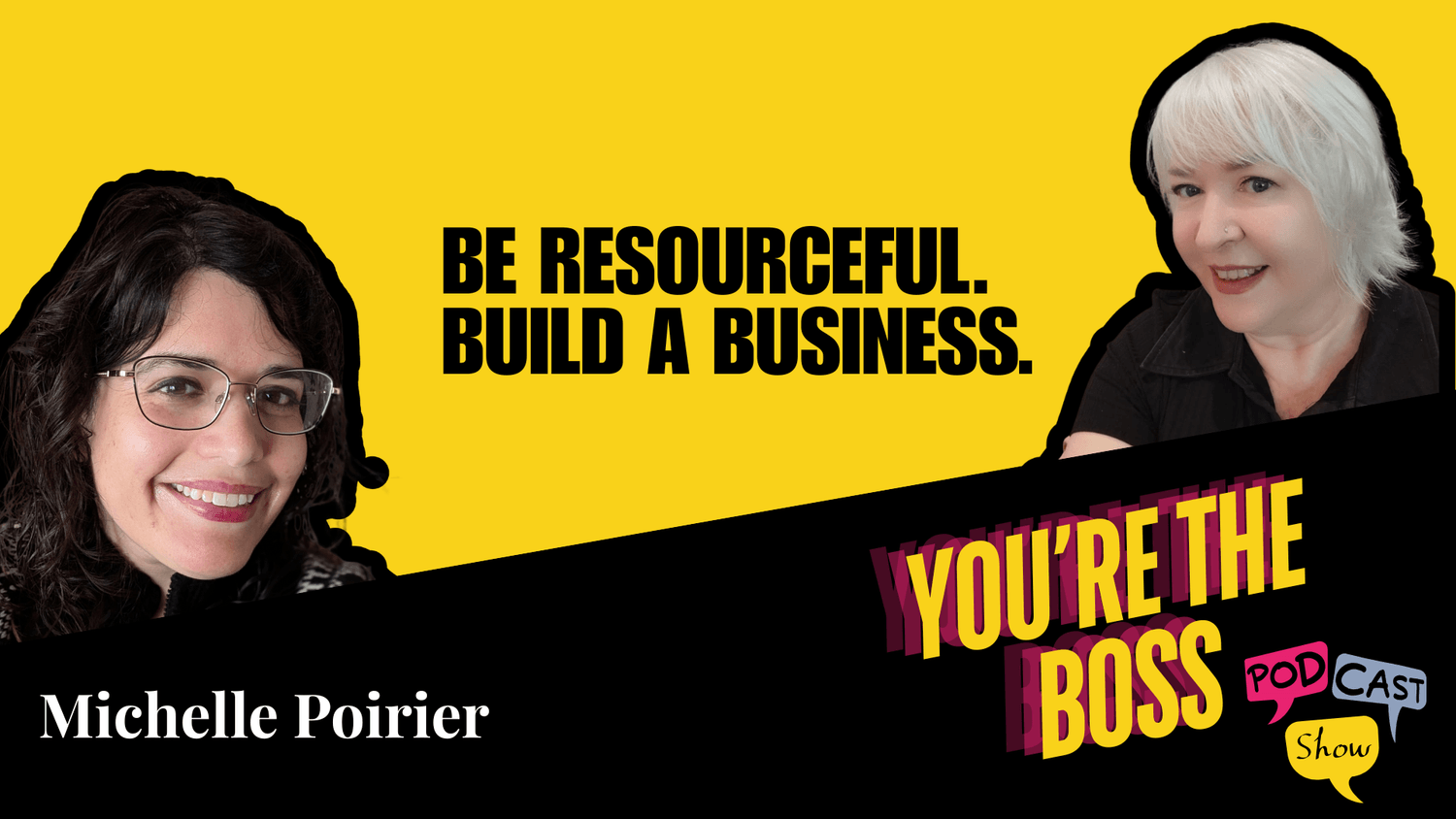
Click the image above to watch
Ange Dove (00:01)
Okay, welcome to You're the Boss Podcast Show. And today I have with me my guest, Michelle Poirier, and she helps small business owners implement effective marketing strategies to overcome the challenges of visibility and lead generation. We all need this so that they can achieve sustainable growth and increased revenue. Through SEO optimization, website development, business strategy, and social media management.
Michelle empowers her clients to take control of their digital presence and connect with their target audience effectively. So Michelle, welcome to the program.
Michelle Poirier (00:42)
Thank you for having me.
Ange Dove (00:44)
It's a delight. So tell us where you're calling in from and just a little bit more about you and your business before we we move on.
Michelle Poirier (00:56)
Sure. So I'm calling in from Santiago, Chile. I moved here about three months ago before that. I was in Massachusetts. And I am a marketing consultant, so I help with everything from social media to messaging to strategy to website build and design and SEO, of course, which is a a big one nowadays because that's how you get visible.
Ange Dove (01:23)
Yeah, you have to get seen, right, to do business. So and what prompted the move to Chile?
Michelle Poirier (01:25)
Yes.
Michelle Poirier (01:30)
So I was actually adopted from Chile as a baby to the United States. And so I actually found out last year that I had dual citizenship. And yeah. Yep. After over three decades I found out I'm actually a dual citizen. and I had contact with my birth family and I wanted to learn more about my culture and actually learn the language. So I had asked if they would be
Ange Dove (01:36)
Okay. Right.
Ange Dove (01:41)
okay.
Ange Dove (01:49)
Okay.
Michelle Poirier (01:59)
Okay with me moving in for a bit and they said absolutely.
Ange Dove (02:06)
That's so nice that so you actually manage to find them and they're okay with
Michelle Poirier (02:10)
Yes, I actually found them when I was fourteen.
Ange Dove (02:13)
Okay, all right. my god, that's fast that's fascinating. Okay. So how is life in Chile then? How are you enjoying it?
Michelle Poirier (02:21)
I absolutely love it. I love the affordable, reliable public transportation. because I hated driving in the States. I just people are crazy on the roads and I don't I'd rather be doing something else with my time than focusing on that. So
Ange Dove (02:27)
Okay.
Ange Dove (02:34)
All right.
Ange Dove (02:37)
Mm. Getting stuck in traffic and stuff, right? Yeah. Okay. Yeah. Yeah. That's the thing on public transport you can you can do things while you're travelling, right? Whereas if you're driving a car, you can't, right? You're stuck driving the car. Right. Yeah. Yeah.
Michelle Poirier (02:40)
Yes. It's like let let the bus driver deal with that.
Michelle Poirier (02:55)
Yes, exactly.
Ange Dove (02:58)
Okay, so so Michelle, just explain to us a little bit first about your journey into entrepreneurship. How did you starting the business actually happen, first of all?
Michelle Poirier (03:09)
Sure. So I would say I've always been entrepreneurial in spirit. my mom reminds me of this time in middle school when I wanted to start my own magazine and I was like, okay, this is how the magazine should be layout. These are the different li you know, sections that we need. These are, you know, the topics we should talk about and all of this sort of thing. And I I remember like I made like a logo, a tagline, like I I was designing what the pi layout should be.
I I was getting friends who would write different pieces for it and all of that. So I've always I mean, I guess you could say a little bit of of bossiness in me. but also just a bit of a dreamer in a way, because what middle school girl is gonna be able to launch a magazine with n nothing, like I didn't have experience with any of that. but I was so determined.
Ange Dove (04:07)
Yeah. I mean you had the belief in yourself, right? Which is half the battle, right? So yeah, I love that. I love that.
Michelle Poirier (04:12)
Yes. And then around that same time, the internet was starting to become more of a thing. it wasn't quite in everyone's houses, but we were starting to learn about it in school. And so we were actually learning like really basic coding and I found websites that people had made these templates, beautiful templates on. And so I would just download them, go into the code and see what I broke.
Ange Dove (04:22)
Mm-hmm.
Ange Dove (04:30)
okay.
Michelle Poirier (04:41)
basically. And that was how I I taught myself the more advanced stuff. And that's really where, you know, that entrepreneurial spirit plus that tech, that love of tech and knowledge and learning really kind of happened. And then, you know, fast forward I graduate college, you know, with my degree in digital art, my first job is is a cashier because classic. And then I
Ange Dove (04:42)
Okay.
Wow. Okay.
Ange Dove (04:53)
Yeah.
Ange Dove (05:07)
Yeah.
Michelle Poirier (05:08)
I was there until I could get a job as an admin assistant. But when I was in that job, they found out that I was actually really good at researching and putting different puzzle pieces together. And I ended up in business development. And because it was a tribally owned government contracting firm, that means that there's a billion different moving pieces and a lot of different subsidiaries. So we had
Ange Dove (05:25)
Okay.
Ange Dove (05:34)
Okay.
Michelle Poirier (05:37)
like a lot of mini companies basically under the umbrella and it was everything from IT to facility maintenance to taking care of boats. So I was responsible for doing the research for all of those different subsidiaries, finding out who would be good partners to go after this with, or if we should be on the team, or if we should be leading the team and who should be, you know, there di a million different structures and certifications for each subsidiary. It's
Ange Dove (05:40)
Mm.
Ange Dove (06:04)
Right.
Michelle Poirier (06:06)
It's different when you're tribal yo it there's so many regulations. but they found that I was really good at that. And then from there I was able to bring in my digital art aspect with creating the flyers and helping with the website and all of that. And then I ended up doing trade shows as well for them. So, and it it was a very lean company. So it's not like I had a a team that I was managing or that I was part of a team that was doing all of this. Yes.
Ange Dove (06:14)
Right.
Ange Dove (06:25)
Right.
Ange Dove (06:31)
Mm. That you're doing it all yourself.
Michelle Poirier (06:36)
really got to show my workaholic off. And then just after that, I got laid off when COVID hit because I was the only one at the company who was like, I don't think this is a passing thing. I think this is serious and I'm not comfortable traveling when there's an outbreak. And so that's how I lost my job. And then I ended up at a company, an accessibility company
Ange Dove (06:56)
Uh-huh.
Michelle Poirier (07:05)
that was franchise. So I was at the corporate level. And that's kind of where I got more like what I would consider agency experience. Because each franchise, yes, they had like the same they they were all selling the same stuff, but they were all slightly different and they needed different things for their market depending on where they were geographically. And so I got really used to dealing with, okay, this person needs this, this person needs that, this other person needs this other thing. And so
Ange Dove (07:13)
Right.
Michelle Poirier (07:35)
I got really confident with dealing with over thirty different franchisees who needed help with everything from social media to how do I do a a trade show and then
Ange Dove (07:48)
Mm. So you got lots of tools in your toolkit then.
Michelle Poirier (07:51)
Yes. And that that actually flows in great to the job after that, which was actually at construction. So I I I put together their whole marketing framework and at some point I just got really you know, it wasn't just the last job. It was all the jobs where they had these rules that just were rules for the sake of rules. And it's like, so why are we doing this? And it's like, Well, we've been doing this since we started and it's like
Ange Dove (08:10)
Mm.
Michelle Poirier (08:20)
When you started people were still using fax machines regularly and you're not in the health industry. or they would have a lot of like rules for thee, but not for me, kind of thing with the higher executives. And that rode me the wrong way too. so the status quo and the executives getting special treatment, but then having real strict rules for everyone who wasn't, yes. And
Ange Dove (08:23)
Yeah.
Ange Dove (08:28)
Yeah, that
Ange Dove (08:34)
okay. Okay. Mmm. Okay.
Ange Dove (08:46)
Everybody else. Yeah. Wow. Okay. Yeah, I think this this rules for rules' sake, yeah, I can I completely understand why that would that would drive you away from the from the business. 'Cause it's and I think this is something that people often maybe they don't have time to think about, they're running a business and whatever, but
Michelle Poirier (08:59)
Yes.
Ange Dove (09:10)
You know, as you said, over time things change and when things change, rules might become redundant. A certain rule might become redundant or it needs to be tweaked, it needs to be changed. And these are like SOPs in the company, right? And they need to be looked at on a regular basis and not just done once and that's it, we've done it and forget, right?
Michelle Poirier (09:31)
Yes.
Ange Dove (09:31)
So if you have a rule in your business and it's no longer serving the business, it's not doing what it was supposed what it was designed to do in the first place, then you have to rewrite the rules, right?
Michelle Poirier (09:44)
Well, I I think that just kind of ties into to ego as well, because I think some people when they they build this business, you know, obviously it's amazing when you can build a successful business. So many businesses fail. I think a lot of people, you know, it becomes their baby, it becomes, you know, anything that needs to change is almost like you're attacking the person. Like you're saying, you did something wrong when the reality is like, No, you didn't do anything wrong, but like it
Ange Dove (09:47)
Mm-hmm.
Ange Dove (09:56)
Hmm. Mm.
Ange Dove (10:11)
No.
Michelle Poirier (10:12)
This isn't a you issue. Like we're not saying that you made a bad decision. We're just saying maybe we update it. Yeah.
Ange Dove (10:15)
Yeah.
Times have changed. Yeah, yeah, times have changed and and and updated. Yeah, I think that is that is so true. And then on the the opposite side of that as well is when you have these SOPs in place, these rules, SOPs, systems, whatever you want to call them, right? They're there for a reason, right? And they're there to guide and help people to do their job as best they can, right? But
What I found when I put systems into my business was it also helped with staff morale. It was the opposite way around because it it gave them confidence that they knew what they were doing, because they didn't have to go and ask and it was documented and it was there. But also what happened was if things didn't work, right? It's just doesn't always work as you planned, right? And you're not you c you can't possibly foresee every single thing that's gonna happen.
Right. So there was a a like t I always tell this story. There was a time in my business where a member of staff made a mistake on a quote for a client and underquoted by five times. Right. So yeah. Yeah. So then we looked at that and said, okay, how did this happen? And what had happened was that she had she'd got a quote from a
Michelle Poirier (11:15)
Yes.
Ange Dove (11:43)
third party at as a part of the service was this third party would come in and do it but it was under our name like we were the face of the the business in terms of delivering that delivery yeah white labeling so she so she got the quote from that third party and it was for five things but the quote came in as this is the price for one
Michelle Poirier (11:52)
Yes, white labeling, right?
Ange Dove (12:07)
Right, assuming that you you'd be able to f five times it to know what the costs are. So but for one it's it's it's whatever amount. so what she did in the quote when she sent the quote out to the client is she just copied exactly what that quote was, not thinking about
Michelle Poirier (12:13)
yes.
Ange Dove (12:25)
it's there's actually five of them, not one. So just chicken that number to five instead of one would have, you know, made everything correct. But she didn't do that. So the quote went out, client accepted it, and that was it. And then so what we did with the systems is
Michelle Poirier (12:31)
Yes.
Ange Dove (12:42)
allowed her to sort it out in terms of okay well this went wrong we need to find out why so is it her is it the system so it was the system because yes she made a mistake but if there had been things in the system to catch that it wouldn't have happened right so now we know that that's a possibility we need to put a rule in place to make sure that doesn't happen again. So what we did then was got her to come up with the solution and say how do we fix this?
So then she took ownership. She was responsible for actually improving the system. So she didn't get blamed for the mistake. She fixed the system. So it's a completely different way of handling the situation. Right. So rules can be good, but not rules for rule fake. You've got they've got to have a purpose and and when things go wrong, you've got to look at your system again and and change it, right? Yeah.
Michelle Poirier (13:35)
Yes. And that reminds me of just a a a saying that I absolutely love, which is you don't know what you don't know. And I think that's just a a perfect example because you don't know everything and you're not meant to know everything and there are gonna be wrenches thrown at you, whether it's something like a global pandemic or, you know, a a system that maybe makes it a little too easy to to pass along information without getting a a second set of eyes on it.
Ange Dove (13:43)
Yeah.
Ange Dove (13:49)
Yeah. Yeah.
Ange Dove (13:55)
Yeah.
Ange Dove (14:01)
Yeah.
Yeah, exactly. Yeah. And that's what we did. We had a rule where it had to be signed off by a s a third another person if it involved a third party quote, right? So 'cause that costs us money, right? So Yeah.
Michelle Poirier (14:17)
Nice. Yes, yes. So you ended up having to eat that or were you able ooh, okay. I wasn't sure if you were able to renegotiate it or but
Ange Dove (14:22)
Yeah. Yeah. Yeah. No, the the client wouldn't have this particular client, there's no way we could have gone back to them and so yeah, so that was a case of okay, well that's what we quoted, we have to stand by our word and that was that, right? So so yeah, so so we did that and in terms of
Like what you mentioned before as well about rules for some people and not others as well. Right? That
Michelle Poirier (14:52)
Yes. Yes. I I've always heard it as rules for thee but not for me.
Ange Dove (14:57)
okay. So that was that what made you eventually leave the company?
Michelle Poirier (15:06)
Think it was a combination of that, but I think it was mostly rules for rules' sake, because at the first company where I was able to go from an admin assistant to this business developer, marketing everything person, they were so hyper like they just to say micromanaged is an understatement. They literally timed whether you were in the bathroom too long.
Ange Dove (15:34)
my goodness, okay.
Michelle Poirier (15:35)
Even when we were salary. so I dealt with a lot. but what really bothered me was there were certain rules and I just didn't understand them and I would ask questions and I would just get really like they were very frustrated with me asking. And one of the questions I had was regarding
getting reimbursed for driving somewhere. Like I would 'cause I would go to trade shows for this company as well. And so the rule was basically, I'm just gonna throw out numbers. Like let's say you commute twenty miles to work and you have to go to a trade show that's twenty miles in like a different direction. You would get absolutely no reimbursement for travel for that because you normally drive 20 miles to work. And
Ange Dove (16:32)
okay.
Michelle Poirier (16:32)
every day. And to me, that didn't seem fair because that punished people who already had long commutes. So I just didn't understand why that rule was. And and I explained it's like I don't understand why this is the rule because you know that's like punishing people because they they do have to go elsewhere. They and with new traffic and all of that. And it was just
Ange Dove (16:40)
Yeah.
Michelle Poirier (16:59)
That was not a question, apparently. Apparently I'm not supposed to ask questions about that. I got a lot of pushback. But from my perspective, it was just like, but I don't understand why 'cause it felt like a punishment kind of rule. which was a weird hill to die on because I actually had a very short commute, so it didn't affect me. But I was thinking of but we had people like driving from out of state for this job and so my brain went to there.
Ange Dove (17:01)
Yeah.
Ange Dove (17:11)
Mm. Mm mm.
Ange Dove (17:27)
Yeah.
Michelle Poirier (17:28)
I I'm a person who has empathy to the point of it being self-destructive to me. and and then the other one that really got me was we were told we all had to be in the office so that we could collaborate better. But the thing was so the executives all had their offices and everyone else was in an open space, chaos is what I call it. Cause it's it's you hear everything and everyone and
Ange Dove (17:45)
Hmm.
Ange Dove (17:53)
Yeah. Hmm.
Michelle Poirier (17:58)
So everyone's on the calls and all that. So we would have these meetings, everyone would be in the office, but the executives would insist to take it from their office. So we would all be on Zoom calls in the same building on the same floor, mind you. And it's like we all have to commute in. Again, I didn't have a long drive. So it wasn't the commute that was the issue. It was like, why are we all being forced in?
Ange Dove (18:07)
okay.
Ange Dove (18:14)
Yeah.
Ange Dove (18:20)
Yeah. Yeah.
Michelle Poirier (18:26)
The executives get in whenever they decide to get in and we'll all be here and the meeting room is like right over there, but the the executives don't want to leave their office for some reason and and walk, gosh, what a hundred feet to the to the meeting room. So now the people like me are scrambling to find like a closet we can go into so we're not having to to talk and and bother everyone else in the open floor plan.
And there were times where I would be between two executive offices. And so I would hear them speak, then hear them from the speaker. And it was just like, this is insane. Like if if someone wasn't in the office, I would understand that. But it's like, but we're all here. We're all like literally here. It's not like it's they're on like another wing of the building or anything. It wasn't that big. But it was just like, why are we all Yeah.
Ange Dove (19:07)
Uh-huh.
Ange Dove (19:13)
Yeah, yeah.
Ange Dove (19:19)
Yeah. Yeah. Yeah. They were literally a few feet away. Yeah.
Michelle Poirier (19:25)
It's like you won't even walk a across the hall so all of us could actually be there in person, but you're reasoning for us being here in person so we could be here in person and yet you won't even leave your little c your little office. It was just that was so frustrating to me.
Ange Dove (19:40)
Yeah.
Ange Dove (19:43)
Yeah. So how did you then start your own business? What what happened? How did that transition happen?
Michelle Poirier (19:51)
So it started years before because I love just doing what I do. And so if there was an opportunity for me to just offer free help, I would do that. And so over time I started having some people kind of more regularly ask for help and then it was like, Okay, this is starting to be a little bit of a a business, but not anywhere near enough to actually be like, Okay, buy corporate.
Ange Dove (19:58)
Mm-hmm.
Michelle Poirier (20:20)
and I actually stumbled upon an entrepreneurial it was like after work program. So you had to apply. It was totally free, but you had to kind of be like, Okay, this is my business plan, this is the experience I have, this is why I would like to apply and what I'm hoping to get out of it. And then you would either get brought in for an interview and then accepted or
rejected and luckily I was accepted. And so it was meant for people who work full time. So I would go to work, drive like an hour to this place, and then have several hours of of education free, which was amazing. And then I would drive home and then repeat it. and luckily for that, that was able to help me with my confidence because
Ange Dove (21:11)
Okay.
Michelle Poirier (21:18)
It was a program that had people who were experts in all different fields kind of come in and help you get a better feel for things. So we would have people who came in to help us with pricing, people would help help us with understanding some of the legal things, people who basically these were all business owners, but they they were an expert in certain fields. So we were able to have that hands-on
a conversation in that education. And as I was leaving my the company, the accessibility company, that's roughly when I I really wanted to start to to start to fly in a way. and I realized I'd still need another job because I wasn't quite there. And then the construction job was
Ange Dove (21:49)
Mm.
Michelle Poirier (22:16)
the last one before I was able to to finally get off the ground.
Ange Dove (22:19)
Okay. So you waited till you you had got some kind of like guaranteed income from the business before you left the corporate, is that right?
Michelle Poirier (22:30)
So I I had like a little bit of just because I had to leave that accessibility company, it was getting very toxic. so during that time while I was looking for a new job, that's kind of when I I tried to grow a bit and then realized, you know, the bills aren't gonna wait for the business to grow. So I need something to to supplement a bit in the in the meantime and then
Ange Dove (22:49)
Yeah. Hmm. Yeah, then it all started. So so you've s you've got this business, right? And this is what you do now full time, right? Yeah, okay. So as we were talking before, like we obviously we met before to do a pre-interview before we got on to to this. So you brought up a very interesting topic around when you're marketing your business.
Michelle Poirier (23:03)
Yes.
Ange Dove (23:19)
about the use of jargon. Can you explain that? Yeah.
Michelle Poirier (23:22)
yes.
So I've found that when you're an expert in your field, you you're an expert in your field, but you talk like you're an expert in your field. And as a result, a lot of your marketing, how you try to network with people, what's on your website. It sounds like you're marketing to other people in your field. You're talking like an expert. So experts are going to understand what you're saying, but those aren't the clients that you need. You need
Ange Dove (23:34)
Yeah.
Michelle Poirier (23:52)
The clients who need you are the people who don't understand the jargon, who don't understand the system or how things are are put together. So something that I I find very common, especially with IT and software, you know, they'll be like, I do this and this and this. And I'm just like, that sounds very impressive. I wish I knew what any of it meant. and the clients aren't necessarily going to know how to phrase things. So you need to actually do
Ange Dove (24:00)
Yeah.
Ange Dove (24:05)
Mmm, yes, yes.
Thanks. Yeah.
Ange Dove (24:18)
Hmm. Yeah.
Michelle Poirier (24:21)
the research yourself to see what are the words my customers are using, because they might not be using terms like search engine optimization or, you know, f lifecycle marketing or marketing automation or, you know, technical solutions. You know, y y you you have to understand that sometimes clients are, they have no idea and they're like,
Ange Dove (24:32)
Yeah.
Ange Dove (24:37)
Mm. Mm. Mm.
Michelle Poirier (24:49)
I need more time. But they they're going to be vague. They don't necessarily know how to describe it. You know, like I need a better website. I mean, that sounds vague to us, but that's what clients are gonna be searching. Like, how do I make my business better? How can I get on Google? You know, they're not necessarily looking like how can I rank best in SEO? How how do I, you know, become the first result on S E R P like they're not using those terms.
Ange Dove (24:56)
Yeah. Yeah.
Ange Dove (25:02)
looking for yeah, yeah. Yeah. Yeah.
Ange Dove (25:17)
Yeah. Yeah. S E R P. They w they wouldn't know what that was, would we right?
Michelle Poirier (25:22)
But but so many people they talk like all these people know what the jargon is. And I've also found that some people they'll hide behind the jargon. Like they're bad actors. They're people out there who know just enough buzzwords to sound like they know what they're talking about. And then people will trust them and and I know this 'cause I've gotten these, you know, all the time people come to me, it's like, I trusted this person, they said all the right things, but I have no idea what they're actually doing and now I've got this mess. Can you clean it up?
Ange Dove (25:38)
Yeah.
Ange Dove (25:52)
Yeah, yeah, yeah. So yeah, the jargon is there to impress, right? So and then people feel stupid because they don't understand, but they don't want to reveal that they don't understand. So they trust them. Yeah. Yeah.
Michelle Poirier (25:59)
Yes,
Michelle Poirier (26:05)
Yes. Which kind of goes back to that whole ego thing that they they want to protect that ego. But I've found that one of the most powerful things I I do in my life is to ask questions, ask the dumb questions. because sometimes well a lot of times I found that your version of, you know, XYZ is not someone else's version of XYZ. So if someone says, Can you build a website? that's very
Ange Dove (26:17)
Mm. Mm. Yeah.
Ange Dove (26:29)
Mm. Mm. Exactly.
Michelle Poirier (26:35)
different than what I think of building a website 'cause I'm I'm thinking, you know, building out workflows, I'm thinking integrating technology. I'm thinking of the accessibility, the SEO, the coding, the platform. And their idea of build a website is I just need a page where people can contact me. So I think people need to kind of set their egos aside just in general. A and be okay being like, well, 'cause one that's why I love doing the the free consults, because then I can listen it in
Ange Dove (26:50)
Yeah. Yeah.
Michelle Poirier (27:04)
really take in what the other person is saying to what they figure out what they're actually asking for.
Ange Dove (27:07)
Mm.
Ange Dove (27:10)
This is gold actually, when you pay attention to what they're saying, that's your copy, right? For your business, right? So you get to really, if you really understand your customer, the copy becomes easy to write, right? Because you know what they're they're looking for. You know what how they're expressing their frustrations, how they're expressing, you know, what they need. So yeah, it's just so important to to do that. so
Michelle Poirier (27:14)
Yes.
Michelle Poirier (27:24)
Yes.
Ange Dove (27:40)
The other thing we talked about was free resources.
Michelle Poirier (27:45)
yes, free resource. Yes. so there's I know at least in the United States, I don't know if it extends into Canada, but I know for the US there is the the small business administration, which does have free training and free resources, including legal resources. So there's also something called SCORE, which is a bun it's it's not a government program.
completely non profit and they have their it the idea is it's a group of retired executives. But they're executives it from again finance, from legal, from marketing, from sales, everything you can imagine. And you can just have a free mentor. That they they don't do any credit background checks. They're not asking for a business plan.
Ange Dove (28:22)
Mm.
Ange Dove (28:34)
Mm.
Ange Dove (28:39)
Mm.
Michelle Poirier (28:40)
You can just go in and and just be like, hey, I have no idea. I have this vague idea. Can you help me? And there are some that will that can do in-person meetings and others will do online, but they're completely free. And if you get a mentor and they're like, Hey, this is a really great question, I know this other mentor who is actually an expert in this. Let me connect you with this person because they're an actual expert and can guide you there. And then
Ange Dove (28:45)
Mm. Right.
Ange Dove (29:02)
Mm.
Ange Dove (29:06)
Nice. Nice.
Michelle Poirier (29:09)
We can come back. So you can have like that one mentor, but then you have access to all of the other networks. And then the program I was in is called E for All. So like the letter E, the number four, and then all, which is for entrepreneurials for all. So they have an English program, but they also have a Spanish program. And so that is where you do need to kind of be like, This is my business idea, and then it go in for an interview, but then they have
Ange Dove (29:12)
Yeah.
Okay, nice.
Ange Dove (29:21)
Okay. Yeah. Okay.
Ange Dove (29:31)
Okay.
Ange Dove (29:36)
Uh-huh.
Michelle Poirier (29:39)
combination of in person and hybrid classes designed for people who who work during the day and allows you to have access to those resources so that you can be better prepared. And they've done studies that that people who use these resources are less likely to fail. And I wouldn't be surprised if other countries have similar entrepreneurial resources.
Ange Dove (29:43)
Right.
Mm.
Ange Dove (30:01)
I'm sure. I mean I know in Singapore they do as well. They have free, yeah, organizations that you can go to that the same thing, you can get legal advice, you can get business advice. so yeah, with similar things. So I think most countries would probably offer something along those lines to help people. So it's just it's being resourceful yourself to actually just go and find out where they are, right? And you can Google, you can
Michelle Poirier (30:27)
Yes. Be because you don't always have to to pay, especially in the beginning. It's like if you can you know, I mean, yes, down the line when you have like these really technical specific things you might need to pay for a specific expert, but at the very beginning a lot of there's a lot of good free resources out there.
Ange Dove (30:40)
Yeah. Mm. Yeah. Nice, nice. So just know that when you're starting a business, you're not on your own. You can actually find places that are gonna help you, right? Wherever it's it's just a case of as I say, just be resourceful, get on Google.
Michelle Poirier (30:54)
Yes.
Ange Dove (31:00)
Go and find out what's out there and get get the help you need. So you mentioned these places in the US, so people in the US, you can go and check those out. But in other countries there'll be similar kind of things, mostly. Mostly. Yeah.
Michelle Poirier (31:14)
Yeah. Or or meetups or even chambers of commerce, you know, yes, there are some paid events, but sometimes they do have events that are free and open to the public.
Ange Dove (31:23)
Yeah. Yeah. And even the paid events, they're not expensive as well. So it's something that you can also look out for. and networking, I think, is another thing, right? If you're you're networking with other business owners and somebody can say, I know someone who can help you, right? So it and sometimes going to a a meeting a business networking.
Michelle Poirier (31:28)
Yes.
Michelle Poirier (31:36)
it's huge.
Michelle Poirier (31:43)
Yes.
Ange Dove (31:49)
i it can just be one meeting, meeting one person can change everything for your business as well. It can open up opportunity. You never know. Yeah, go on.
Michelle Poirier (31:56)
Exactly. Because it's not sorry. I was just gonna say that a lot of people they they think they're looking for customers, but what you really wanna find are the referral partners.
Ange Dove (32:08)
Yeah, yeah. Exactly. Like like for example, when I first started my business as my copywriting agency, my referral partners were I think businesses like yours actually, right? it was graphic design agencies, web design agencies that they would do the designing for the customer, but they didn't get involved in the content. So
Michelle Poirier (32:34)
Yes.
Ange Dove (32:36)
they would then refer the client to me. So so it's looking for partners that are that have the same target market as you, but you're not in competition, your actual your complementary, then that's that's an easy way to grow your business as well. Yeah.
Michelle Poirier (32:52)
Definitely. And I found that a lot of my referral partners are actual virtual assistants because they'll be told, like, can you just go on my website and just make these edits? And they're like, I'm gonna break something. I don't understand how to do this this edit. So they'll they'll call me in and sure these aren't like really expensive, like complicated, high paying jobs, but they're just like these little things that I can do.
Ange Dove (33:00)
Uh-huh.
Ange Dove (33:09)
Mm.
Ange Dove (33:20)
Yeah. Yeah.
Michelle Poirier (33:20)
really fast, less than 30 minutes. I still get some money and it's pretty regular. And I also then get to relieve the stress off this virtual assistant who's been given this task and it's like they're like, I don't understand how this whole thing works. I'm gonna break the website.
Ange Dove (33:25)
Yeah.
Ange Dove (33:33)
Can't do it.
Ange Dove (33:38)
Yeah, so she was on WordPress, sorry.
Michelle Poirier (33:44)
yeah.
Ange Dove (33:46)
If you don't know what you're doing, don't touch anything.
Michelle Poirier (33:49)
Yes, yes. my goodness. I I remember a one website I I went into and you there were so many plugins. So many plugins. And it was like, what are any of these doing other than causing me a heart attack from all the security, cyber security risks that I'm seeing here? And it turned out we needed like three of them. And so there there were over seventy though.
Ange Dove (33:58)
Mm.
Ange Dove (34:17)
just kept just adding, we'll have some of that. We'll have some of that.
Michelle Poirier (34:20)
C Yeah, it was they were collecting on like trading cards.
Ange Dove (34:27)
There's a there's a there's a lesson there as well. Just because it's free doesn't mean you have to use it, right? Yeah. Yeah, that's right. that's you've actually opened up another query for me here is when you mentioned about the plugins and the security.
Michelle Poirier (34:32)
Yes, d and just 'cause it's free doesn't mean you should use it. Ugh.
Michelle Poirier (34:46)
Yes.
Ange Dove (34:47)
So talk to me a little bit about that 'cause that could be something that business owners don't recognise as you know, they might be making that mistake. So what happens in terms of WordPress and plugins and how is that related to being insecure or
Michelle Poirier (34:54)
yeah.
Michelle Poirier (35:03)
Yes, so we actually I remember there was one company that I was working with and I joined recently so I haven't like quote unquote proven myself yet and there were not as many as 70 but that there were probably close to thirty or forty plugins and I remember when I first saw it I said this is a security risk but again it was one of those well it it's worked like this so far and I was like okay I have a lot of anxiety about this
And then of course, I was out at a trade show and the website goes down. So I return and and I was on the other side of the country. So so I'm returning after a week long trade show, dealing with a several hour time change. And I you know, I get back on Friday and I find out that the website's down and me growing up in in the whole, you know, be loyal to the company and work hard and and they won't, you know.
Ange Dove (35:39)
Yeah.
Ange Dove (35:50)
Right.
Ange Dove (35:54)
Mm-hmm.
Michelle Poirier (36:01)
just ditch you the the first chance they get, which I've learned since is not worth it. I I basically went from the airport with my bag still to the the office. And we had recently fired someone for corruption, embezzlement, and they were the ones in charge of the website. And so
Ange Dove (36:01)
Mm.
Yeah.
Ange Dove (36:21)
Okay.
Michelle Poirier (36:28.463)
They were like, well, the website's down. None of us can get access to it. And like it wasn't even like they they could log in, but it was all funky. Like they couldn't even do that. And so, you know, I was luckily luckily they had just a but I'm just gonna say an FTP program on on their computer. So I was able to get in that way and and fix things.
Ange Dove (36:32)
okay.
Ange Dove (36:36)
Yeah. Yeah. Wow.
Michelle Poirier (36:55)
But what took it down was a security issue with one of the plugins. So and I believe it was Elementor, which is a very popular one. which I hate for a million reasons, but that's not the point. it so the issue is when you install a plugin, it
Ange Dove (37:06)
okay. Yes. Pretty big builder, right? Yeah. Yeah. Yeah, me too. Me too. Me too.
Michelle Poirier (37:19)
Everything comes with security risks. So it's knowing what those risks are, and that's why it's important to update your plugins. Because usually it's even if it's like, but there's no new features, it's like, no, but it's probably because they found a security risk. Because for each plugin, you add a new set of potential for people to I'm trying to figure out how to say this without a bunch of jargon, but essentially it's like each plugin.
Ange Dove (37:31.522)
The security patch, yeah.
Michelle Poirier (37:47)
is like a another door into your website. And
Ange Dove (37:49)
Mm, mm. And it from from the outside. So it's an external it's an external thing, yeah.
Michelle Poirier (37:54)
Exactly. But they're all different doors. So some are big doors, some are small, some have really great locks on them. Some of them are easier to lock pick. so every plug-in is like another door. So if you're not monitoring all the doors or you don't know how to monitor the doors, there's a chance that someone could open that door. Someone who was not supposed to open that door. And then when they get in there,
Ange Dove (37:58)
Mm. Mm.
Ange Dove (38:03)
Hmm. Okay.
Right.
Ange Dove (38:12)
Uh-huh. Right.
Ange Dove (38:18)
Okay. Mm.
Michelle Poirier (38:22)
They could cause all kind of chaos. Maybe they they're just a weird because there are hackers who hack and don't do anything. They just hack because they want to see if they can get into something. unfortunately, they're not all bored hackers. a lot of times they go in and and they want to cause a little mischief or lock you out, or in terrible cases, do data ransom things where where they lock all of your
Ange Dove (38:32)
Okay. Okay.
Ange Dove (38:38)
Yeah.
Ange Dove (38:42)
Yeah. Yeah.
Ange Dove (38:49)
Mm, mm, mm.
Michelle Poirier (38:51)
information down and no one can access it until you pay them a bunch of money. And even then it's not guaranteed you'll get the data back. So it's really important. So one thing I do is I'll go to WordFence and they are specifically for WordPress plugin security. And so you can basically say, you know, like this is the plugin I'm looking at and it'll let you know how high risk it is security wise. And that's something that I
Ange Dove (38:54)
Pay the money, yeah.
Ange Dove (39:04)
Mm.
Ange Dove (39:08)
Mm, mm.
Ange Dove (39:16)
Mm.
Michelle Poirier (39:20)
I know it's another it feels like another fifty thousand steps when all you want to do is get your website running. But if you like for example, if we didn't ha if that person didn't have that FTP software downloaded with all that information on his laptop, that website would have been a hundred percent gone. And we wouldn't have I wouldn't have been able to bring it back up. And most people don't have that. Like I don't have that on mine. I just keep real good eye on the plugins and the security. So
Ange Dove (39:26)
Yeah.
Ange Dove (39:34)
Hmm. Hmm.
Ange Dove (39:41)
Okay. Wow.
Ange Dove (39:46)
Right.
Okay.
Michelle Poirier (39:50)
If you don't wanna have to figure out how to rebuild your website, if you don't wanna, you know, break it, you you gotta take that extra step. Go to something like a word fence.
Ange Dove (39:55)
Gotta look after it, yeah. Cause I I remember when I was using WordPress, I can't remember what it was now, but you there's somewhere where you can see attempts to log into your WordPress. Yeah. And I was absolutely staggered at the number of attempts. Like that was so they're always doing it, they're always on, right? There's always someone trying to get in.
Michelle Poirier (40:08)
Yes.
Michelle Poirier (40:15)
Yes.
Michelle Poirier (40:22)
Yeah, and and the thing is it's people think, well, how many websites can a person get into? But the thing is they're not going in themselves. What they're doing is they're sending these bots. They're programming countless bots because they're not looking for a specific website. They're looking for any they can get into. You know, anyone who's left their u username as admin and their password is password one two three. So they're sending out but really people are like that.
Ange Dove (40:30)
Yeah. Yeah.
Ange Dove (40:51)
Yeah, I know.
Michelle Poirier (40:52)
I know there have been companies and I'm just like, I'm sorry, what did you say the password was? It's the address. All lowercase. It's like we need to change that. I wish I was kidding too, but no, it was literally it was like one two three Main Street. You know? I know. I had a heart attack basically. and it and of course it was their password for everything.
Ange Dove (41:06)
huh.
Ange Dove (41:13)
Okay. my gosh. Okay.
Michelle Poirier (41:22)
Not just that one thing, yeah.
Ange Dove (41:24)
okay. passwords it it's yeah. It's this is something as well that I found. I I knew a coach that got hacked and that caused me a lot of anxiety because I was my god, I don't want this to happen to me and and they they cloned her website and they they started putting out her offers but at a much lower price and like
Michelle Poirier (41:26)
And it's so common. It's so common.
Michelle Poirier (41:38)
Oof.
Ange Dove (41:53)
took her business away from her basically. She so she had to hire someone to get it back. And they came in through her children's computers. Right. So she shared her her network at home, was all connected with the children's computers as well. So they got in through there. So that was one lesson was have your own router. But even then I spoke to the telecoms
company about it, just said, I come small business, this has happened to somebody I know. I just wanna make sure it doesn't happen to me. How do I protect myself? And they basically said, You can't because your company's too small. You can't afford what you would need to pay to put these defenses up. I mean there are certain things you can do, but you there's
It basically it's saying we have we haven't got a service for you. It's it would be too expensive. It's more for enterprise customers. So I was like, Okay, that's not good to hear.
Michelle Poirier (42:44)
So something I would say I would actually like to push back on that a little bit. So generally routers, you can go into their settings and you can have more than one network. So sometimes there'll be like a five gigahertz network, which is like the faster one, or a 2.4 gigahertz, which is a normal one. And so usually you can separate them. And so you could actually have them on a separate band.
Ange Dove (42:51)
Yeah.
Ange Dove (43:01)
Yeah. Yeah. Yeah. Right.
Right. Okay.
Michelle Poirier (43:13)
And so that way you don't need an extra router. Like doing that doesn't cost any money. It's just making sure that the router you have allows for that option. And
Ange Dove (43:13)
Yeah. Yeah.
Ange Dove (43:20)
Yeah.
Ange Dove (43:24)
Yeah. Which we do have actually in on our house. I've actually got four different channels. I've got two routers and each one has two different ones. So I for two.
Michelle Poirier (43:34)
Well, exactly. And and then you can have like company businesses do this because of the whole, you know, they don't want to get hacked but st they'll still want to provide Wi Fi. So that's why you'll see them have, you know, one that's locked down and one that might be open. Or maybe they're both locked down, but one is for guests and one is for for internal because yeah, they they can get in through the network and so you'd want two bands.
Ange Dove (43:48)
Yeah. Forgets. Yeah. Yeah. Yeah. Yeah. Yeah.
Ange Dove (44:01)
So yeah, so that's things to think about as well as the security of your business online and who you're letting in through the door. Don't let them in through the door. Keep your door locked. All right. So okay, Michelle, it's been absolutely fascinating talking to you today. I just love this conversation. And where can I send people to find out more about you?
Michelle Poirier (44:05)
Yes.
Yes. Yes. Yes.
Michelle Poirier (44:25)
Sure, you can send them to my website machimarketing dot com.
Ange Dove (44:29)
Okay. So we'll put the link around wherever you're listening or watching this and you can go and check out Michelle's site and enjoy her services as well. So Michelle, thank you so much for for being on today. It's been a really real pleasure speaking to you. You're welcome.
Michelle Poirier (44:44)
Thank you for having me.
Don't leave without your free gifts

Check out my page of freebies designed to help you make progress towards your goals.
From free training on making $10,000 months to how to create your brand message to access to the resources I use in my business that may help you too!
I've got some
gifts for you!
Check out my page of freebies designed to help you make progress towards your goals.
From free training on making $10,000 months to how to create your brand message to access to the resources I use in my business that may help you too!
About me

Hi there 👋 My name is Ange Dove, professional copywriter and messaging strategist. I help Gen X professionals find the words to express who they have become, and to build a career or business that owns it.

GET YOUR UNCHAINED AUDIT
Let’s have coffee online for 60 minutes on Zoom, where we'll look at your profile, your message, and your next chapter together and give you the roadmap to take your next steps.

GET THE NEWSLETTER
Straight-talking insights for experienced professionals who want to turn what they know into income, options and greater freedom over what comes next.


